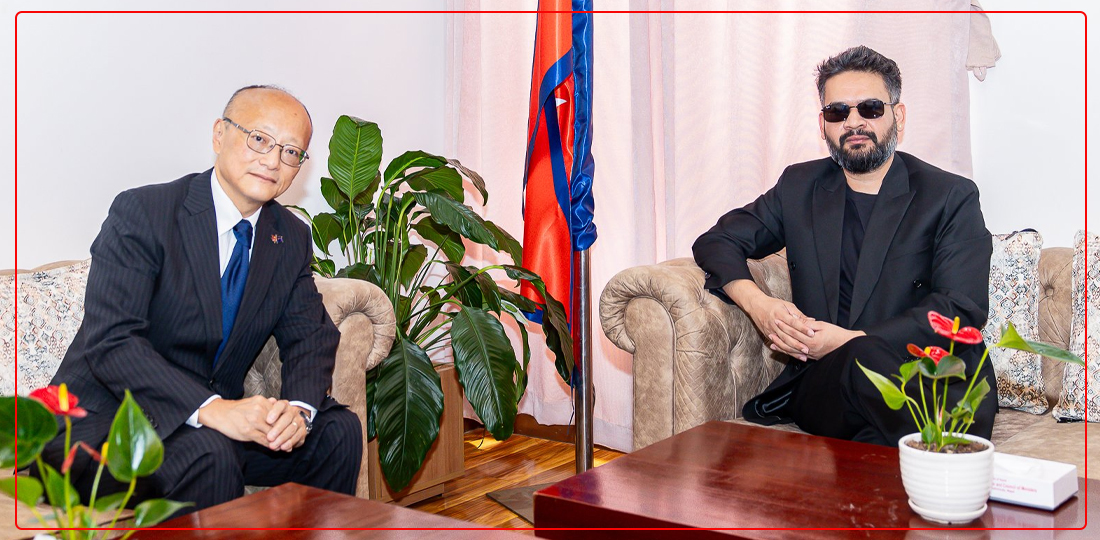
Karnali Chief Minister Yamlal Kandel marks two years in office amid mixed performance reviews


Surkhet. Thursday marked exactly two years since Yamlal Kandel became the Chief Minister of the Karnali Province government. Kandel, the leader of the CPN-UML parliamentary party in Karnali, assumed office on 2080 Chaitra 27 with the support of the then CPN-Maoist Centre.
A few months later, specifically after 2081 Ashar, he has been supported by the Nepali Congress. The Congress leads four ministries, while the UML, including the Chief Minister, leads two others. Although Kandel initially kept the Ministry of Law under his own portfolio, he has since merged it into the Office of the Chief Minister and Council of Ministers, resulting in savings of 30 million rupees.
Despite his power-sharing arrangements with two parties, Kandel's initial enthusiasm has waned. Kandel himself concludes that the lack of cooperation from coalition partners, bureaucratic resistance, and the absence of a strong team have hindered the speed at which the provincial government could have progressed.
Before becoming Chief Minister, Kandel used to say, 'We can change how the Congress-Maoist spent their two terms. We have the manpower, vision, and perspective to make that change.'
He claimed that if he were to lead the government at a time when everyone was questioning the provincial structure, he could send a positive message. Kandel had actually moved to the province in 2074 with the goal of building Karnali. Even when the UML was the largest party in 2074, he could not become Chief Minister due to neglect from the party center. Despite repeated attempts in the interim, he remained unsuccessful.
In 2079, when a coalition was formed between the UML and Maoists, the leadership went to the Maoists. He received praise for his effective role while in the opposition. However, he has not been able to demonstrate the same competence since taking the helm of the government.
Although the Congress is a coalition partner, they have not only failed to support some of his initiatives but have even gone as far as obstructing the parliament against him. He repeatedly issues directives and demands commitments from employees and ministers to focus on performance. However, in practice, neither the ministers follow his instructions nor do the employees cooperate. As a result, in most statistics, the Kandel-led government is no different from the previous ones.
He has no major strategic project to show that he has 'visibly accomplished' during his tenure. Budget implementation has not improved, and several past large projects, such as the provincial stadium, have not materialized.
Nevertheless, Kandel has attempted to bring about policy-level improvements regarding good governance, transparency, and irregularities. Believing in the state structure, he has not appointed unnecessary advisors. He focused on reducing wasteful expenditure. He has implemented standards to curb malpractice by consumer committees and introduced procedures to make project selection transparent. The trend of allocating projects based on access, as seen in the past, has ended in Karnali. Now, projects are selected from the local to the district level through established procedures, and a project bank is in operation. Similarly, to control fragmented projects, he has adopted a policy of not creating projects under 2 million rupees at the provincial level.
On the other hand, he took initiatives to restructure the provincial setup to make it efficient. He formed an expert committee and prepared a study report. However, due to the lack of cooperation from coalition partners and the bureaucracy, he has not been able to implement it fully. In the first phase, he reduced the Ministry of Law.
He is actively involved in monitoring and issuing directives to stop irregularities in project implementation and to complete abandoned works from the past. However, the ministers of the respective ministries show little activity beyond reaching the office and signing the attendance register. Those close to Kandel say, 'He did not get a team that works according to his speed. Even after repeated instructions, they do not listen; if he tries to take action or dismiss them, it is a coalition government.'
As a result, Kandel does not seem willing to take risks in some matters. Some Congress ministers agree to decisions in the cabinet but then go outside and criticize the government. Consequently, the Kandel-led government is spending its days on minor internal operations. Furthermore, after the Gen-Z protests on 23 and 24 Bhadra, the Karnali government has become quiet. Those close to Kandel say that even though he has repeatedly called ministers and employees to improve performance, the government has not been able to become dynamic. However, political analyst Pitambar Dhakal, who is also a civil society leader, says that the government has not been able to work as it should have.
'A coalition government does not work as effectively; that is a general fact,' he told Ratopati, 'because there are two parties involved; one might agree, the other might disagree. Because of that, one cannot say that work proceeds smoothly. This government is at that stage.'
It appears that even though some Chief Ministers wanted to do well, the participating political parties did not cooperate. As a result, work has been delayed. 'This situation exists in Karnali; it is the fault of the coalition government rather than the individual,' says Dhakal, 'because of that, work was not done effectively. Even though two years of Yamlal-ji's tenure have passed, it did not pass well. I understand that he himself is not satisfied.'
He states that the fact that the government is weak is evident from the poor implementation of the budget and the lack of results in other areas.
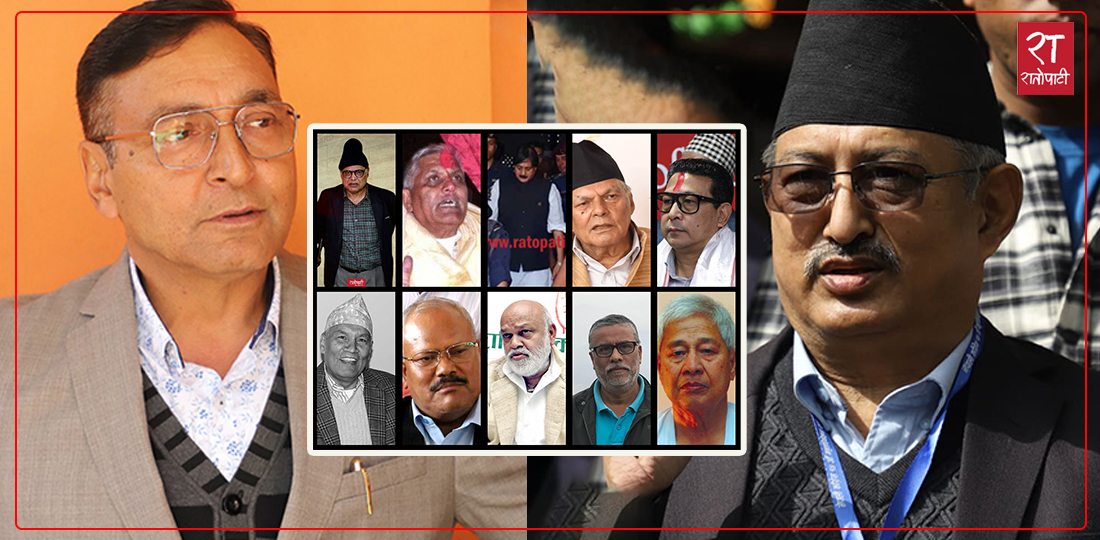
Mangal Bahadur Shahi, leader of the main opposition party, the Nepali Communist Party, says that the Kandel-led government has been a complete failure. Shahi's analysis is that when analyzing the overall development, construction, law-making, and employee mobilization of the province, the two years under Kandel have not been productive. He says, 'Budget implementation is not encouraging, and there is a lack of coordination in the drafting of some laws.'
According to him, looking at the area of employee mobilization or promotion, employees protested for 19 days. No solution has been found for that either. He mentioned that even now, employees remain frustrated and angry.
'There is no room to say that the two-year tenure proceeded very successfully,' he said, 'There is a situation where he himself needs to review it critically, acknowledging that I had many shortcomings, and how these shortcomings should be corrected.'
Shahi also says that if he does not conduct a critical review himself, there will be a major negative impact on the overall process, including development and construction in Karnali Province in the future. Opposition leader Shahi also pointed out the weakness of the coalition partner as a reason for Kandel's inability to work.
He said, 'Congress is in the government, but we have been seeing them express anger in parliament; that is for the ruling side to understand.' He says that Kandel has been unable to coordinate when various questions are raised among the ruling parties.
Shahi's view is that the dual character of the Congress—expressing anger while remaining in the leadership—has also helped make the government a failure.
Ruling party Congress MP and former Finance Minister Bedraj Singh said that while Yamlal Kandel's two-year tenure was somewhat successful in terms of good governance, there were weaknesses in other areas. 'Even though he could not fully maintain good governance, he made some policy reform efforts to stop irregularities in project planning,' he said, 'which should be considered positive.'
However, he says that the government appears somewhat unsuccessful in terms of governance, citizen-friendly behavior, employee mobilization, and capital expenditure. Additionally, Singh says that although the attempt to control irregularities in project planning is commendable, it could not be fully implemented.
When asked about the claim that coalition partners are not cooperating, he said, 'The argument that coalition partners or the bureaucracy are not cooperating is not justified; the main responsibility for mobilizing ministers and getting work done lies with the Chief Minister.' Singh says that if ministers are not working or are not cooperating, the leadership must have the capacity to remove them.
He also mentions that it is his understanding that even though the budget was allocated, employees could not work due to complex procedures and guidelines.
- Strong in good governance, some shortcomings in others: Karnali government spokesperson
Government spokesperson Binod Kumar Shah claims that the government has been successful in organizing policies and rules. 'There are no issues of irregularities; this is a good aspect,' he said, 'As far as development and capital expenditure are concerned, it is a bit slow, we admit that.'
He mentioned that the country's speed is also slow. 'That should have been improved; we may have fallen short, but our efforts are ongoing,' he added, 'The main thing is that policy reform work was done. We created methods for everything from project selection to project implementation.' Shah says that this has led to improvements in organizing government work and bringing it into a system.
Other good governance-related tasks are also in the pipeline. In that sense, Shah claims that the government is successful.
This specific news has been automatically translated by AI. As a result, there may be some inaccuracies or language errors.