Nepal Implements Strict New Guidelines to Curb Plastic Pollution


Kathmandu. To maintain environmental balance and effectively mitigate rising urban pollution, the government has issued the 'Plastic Bag (Regulation and Control) Directive, 2082'.
Introduced under the authority granted by Section 45 of the Environment Protection Act, 2076, this directive aims to bring about a radical change in the use, production, and management of plastic in Nepal.
Approved by the Ministry of Law, Justice and Parliamentary Affairs on Chaitra 19, this directive corrects the weaknesses of previous efforts by introducing stricter and more scientific standards.
The directive seeks to bring the entire lifecycle of plastic bags under a regulated legal framework. A key aspect is the standard set for the thickness of plastic bags.
The government has now completely banned the production, import, storage, distribution, and use of plastic bags with a thickness of less than 40 microns. Although the government had introduced this policy previously, it was not implemented. However, the Ministry of Forests and Environment has stated that it will now be strictly enforced.
Scientifically, thin plastic bags tear easily, turning into waste that is difficult to reuse or recycle. Bags thicker than 40 microns are relatively durable and can be reused, thereby reducing the environmental burden.
Mandatory Labeling on Bags
The directive sets clear size limits, allowing only bags of 7 by 14 inches or larger, and 14 by 28 inches or larger. It imposes strict informational requirements for manufacturers to ensure transparency and accountability. Every plastic bag produced or imported in Nepal must now feature indelible markings, including the manufacturer's name and address, bag thickness, size, and a recycling symbol or logo.
The Ministry stated that this provision will facilitate easy monitoring of product quality in the market. If non-compliant bags are found, it will assist security and regulatory bodies in tracing the source and holding manufacturers accountable.
Color-Coded Usage
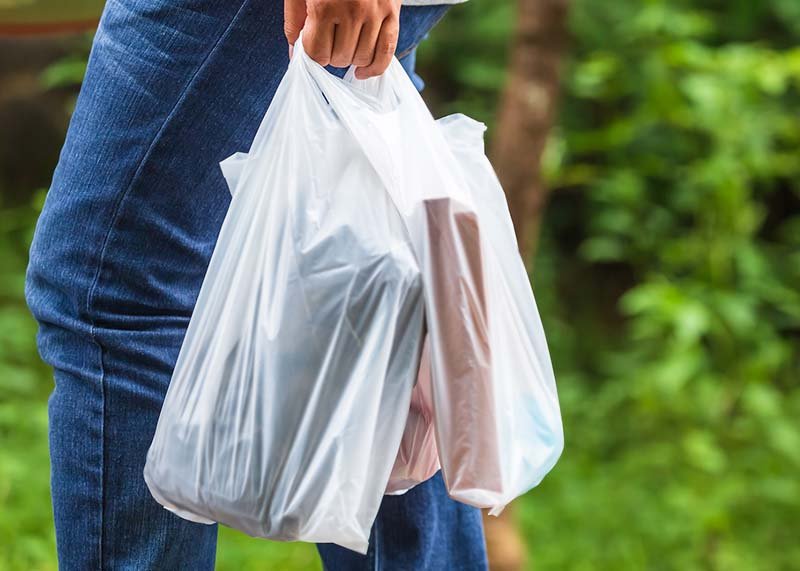
To make plastic use organized and health-friendly, the directive classifies bags by color. Transparent, 'natural' bags without artificial dyes must be used for food, drinking water, and medicine. This minimizes health risks from chemical dyes.
Conversely, garbage bags must be 'black' and clearly labeled 'For Waste Collection Only.' This color-coding helps consumers and waste collectors identify contents, making waste management safer and more efficient.
Another provision is the Extended Producer Responsibility (EPR). Manufacturers and importers are no longer free of responsibility after selling their products; they must collect and manage at least 10 percent of the plastic waste they introduce to the market. This mandates that producers contribute to cleaning up the waste they create, with annual reports required by the Department of Environment.
The 'Five R' Strategy
The government has adopted a '5-R' strategy: Reduce, Reuse, Replace, Recycle, and Recover. The directive emphasizes replacing plastic with eco-friendly alternatives and encourages consumers to dispose of waste properly and reuse bags.
The Ministry claims this strategy will modernize waste management and support the development of a circular economy.
Strict Technical Standards
The directive enforces rigorous technical standards, including specifications for 'High Molecular High Density Polyethylene' and requirements for calibrated equipment in manufacturing facilities to ensure quality control.
Integrated Government Oversight
The directive mandates integrated mobilization across federal, provincial, and local governments. While the Department of Environment regulates at the central level, local bodies are empowered to monitor markets and enforce standards within their jurisdictions. Inspectors can take immediate action against violations, with penalties enforced under the Environment Protection Act.
Importers and sellers are also subject to strict rules, including maintaining records and managing 10 percent of their plastic waste. Sellers found with non-compliant bags must report to local authorities and manage the waste themselves.
Replacing the old 2068 directive, the new 'Plastic Bag (Regulation and Control) Directive, 2082' aims to comprehensively regulate plastic usage.
This specific news has been automatically translated by AI. As a result, there may be some inaccuracies or language errors.