David Harvey: Why Marx's Analysis of Capital Remains Essential for Understanding Today's Crises


In November 2008, the world was at the peak of a financial crisis. During a visit to the London School of Economics, Queen Elizabeth asked the gathered economists, 'Why did none of you see the financial crisis coming?' No one answered immediately. After a brief silence and some pleasantries, the program continued.
Six months later, those same economists wrote a collective letter to the Queen, citing 'arrogance and an inability to face systemic risk' as the fundamental reasons for their failure to foresee the crisis.
Ignoring systemic risk is a major problem in itself. Most of us would not even board an airplane that had not been tested for systemic risk.
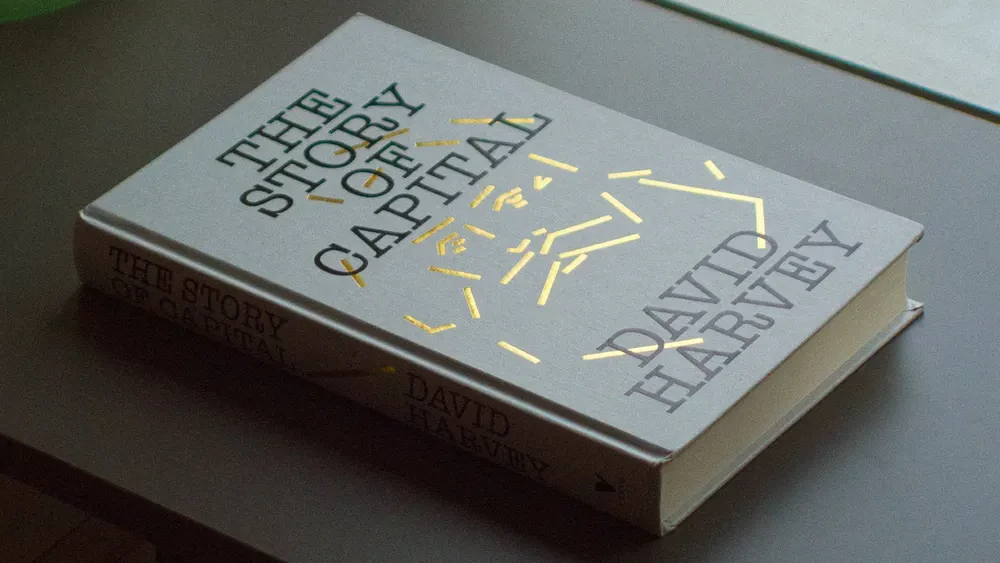
In my new book, 'The Story of Capital,' I have attempted to investigate the internal disturbances in the production relations of capital and systemic risk. For this, I have adopted a theoretical framework from Karl Marx's works on political economy. Marx himself said that our goal is not just to understand the world, but to change it.
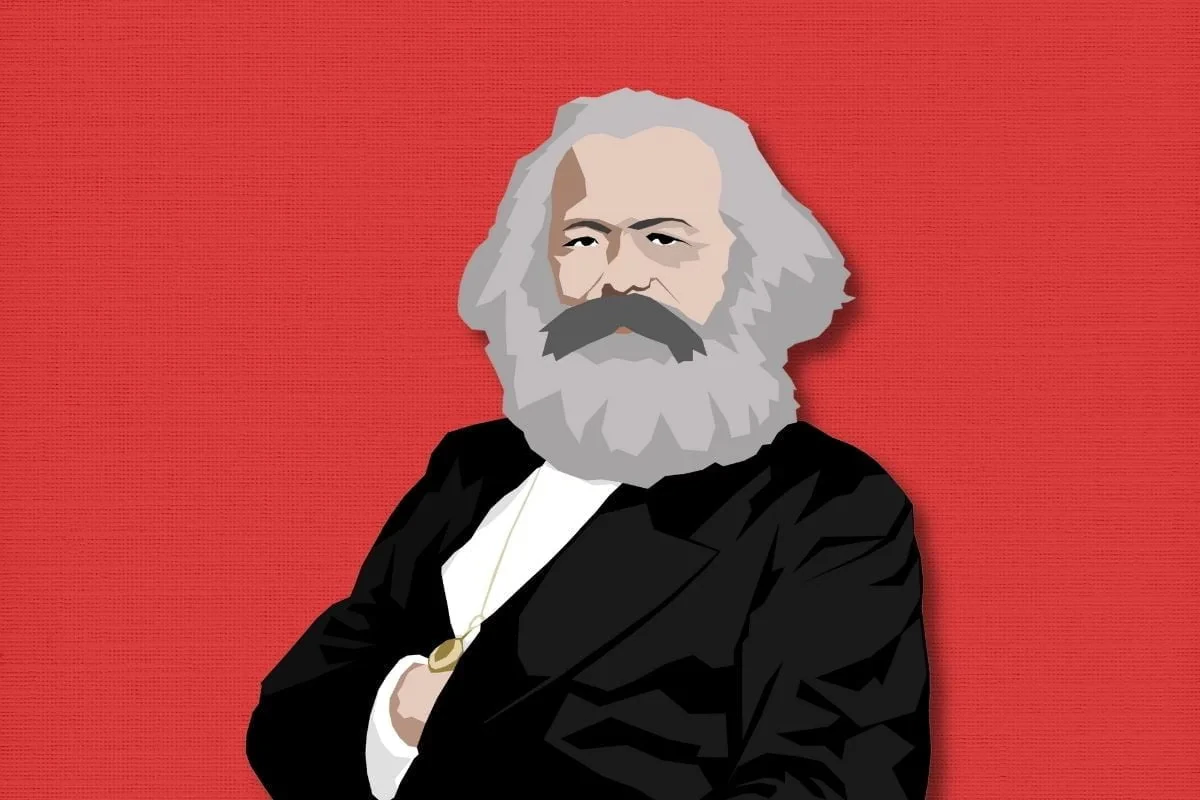
However, in his own life, it seems most of his time and effort were spent understanding the very subject he sought to change. It appears he felt it was important to understand capital in order to change it.
'The context of how the concept of capital exactly developed is very important and mandatory,' he wrote in his book 'Grundrisse.' The quotes taken in this article will also be from that book. According to him, 'The concept of capital is the most fundamental concept of modern economics, just like capital itself... It is also the basis of bourgeois society. If we can properly identify the prerequisites of capital (production relations), we can identify all the contradictions of the bourgeois production system. We can also understand its limits.'
Marx emphasizes the term 'contradictions' here. He says, 'Contradictions are inherent in capital.' He also says our goal is to 'let those contradictions unfold.' The contradiction mentioned here is certainly not in the language of neoclassical, Ricardian, or Keynesian economics. This is the fundamental term of Marx's concept of capital. So why is it so important?
Research subjects including economics, as well as policy institutions like the International Monetary Fund, are essentially created to find answers to such questions.
Regardless of the school of thought, bourgeois political economy is divided into two parts. One is microeconomics, which studies the theories of firms. The other is macroeconomics, which contains theories of national and global economies. Despite many attempts, it has proven impossible to derive macro theories from micro or vice versa.
For Marx, this is not a problem of understanding, but a contradiction in building a theoretical foundation. Every capitalist, driven by the coercive laws of competition, uses technologies that increase the productivity of the workers they employ. But in Marx's theory, labor is the source of all value. Increasing labor productivity reduces the number of workers needed, which creates less value.
As a result, if everything else remains the same, a crisis of falling profits arises. This theoretical knowledge emerges from the contradiction between micro and macroeconomics. In other words, when every capitalist tries to maximize their profit from capital, they produce a macro result that creates a situation where less and less capital is accumulated. Thus, a problem arises. Who protects capital from the destructive and rational behavior of capitalists bound by the oppressive laws of free market competition?
Research subjects including economics, as well as policy institutions like the International Monetary Fund, are essentially created to find answers to such questions. Problems have solutions. But contradictions do not.
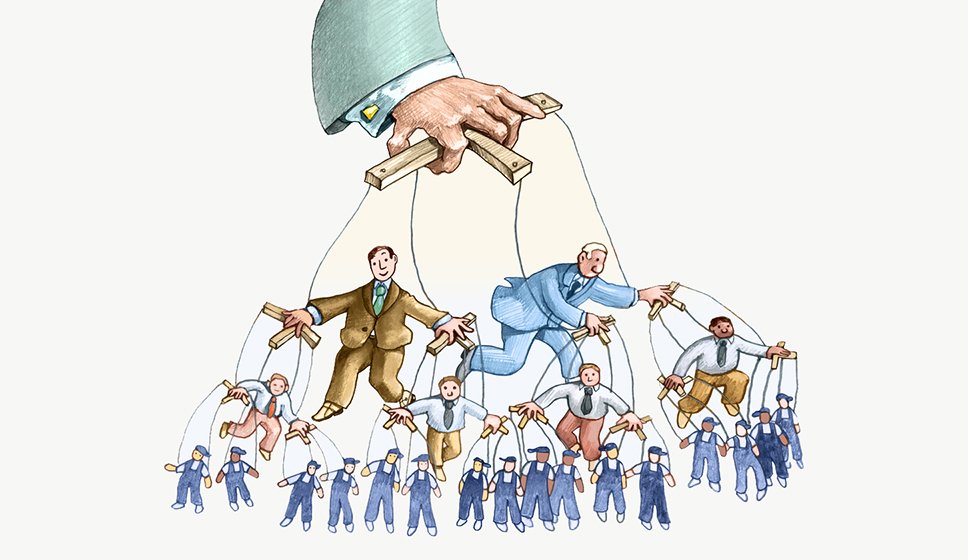
Contradictions are permanent points of tension that can only be managed within the inherent system. They do not disappear as long as the entire system remains. For example, I have been constantly managing the contradiction between the needs of my professional life, personal desires, and responsibilities. Most of the time, this contradiction remains latent and quiet. But suppose, if authoritarians were to take over my university (as happened at the Central European University in Hungary), then the contradiction in my life would appear as a personal crisis.
Therefore, the political economist faces the problem of identifying the primary crisis of capital (e.g., the relationship between capital and labor) and describing the laws of its movement. When the exchange system becomes general and systemic, its participants (again quoting Grundrisse) achieve a 'relation of objective dependence as an antithesis to the personal dependence' that existed until then. 'People who were dependent on each other until then begin to be ruled by some abstract object. That abstract object is nothing but the theoretical expression of the physical relationship that exists as their God or master.'
In the 1980s, neoliberal 'think tanks' began to be produced in large numbers through financial investment. 'Keynesians' were sidelined.
Ruling ideas are those held by the ruling class. They are also connected to the dominant state power (like the US until recently). Those 'relations can only be expressed in ideas. Therefore, philosophers think that ideas characterize an era. They also talk about throwing away that ideological power to create free individuality. This is a misconception. Such understanding is born out of ideology. In fact, ideas show the form of social and economic power relations. The reason people believe in the power of existing ideas is that the ruling class is constantly promoting and empowering those ideas using all available means.'
By adopting exactly this method, Hayek, Milton Friedman, Keith Joseph, 'The Institute of Economic Affairs,' and Margaret Thatcher created the environment to adopt the neoliberal path in the 1980s. In short, it was Thatcher's declaration of 'TINA'—'There Is No Alternative.' Many people at that time took this slogan as if it were a sentence from scripture. Thus, another idea became a 'material force' in human history.
We realized in the ideological field that these ideas belong to the ruling class. We also engaged in ideological struggle. In the 1980s, neoliberal 'think tanks' began to be produced in large numbers through financial investment. 'Keynesians' were sidelined. A class of billionaires began to emerge. Labor organizations failed. Slowly, it began to be said that Marx's relevance was over.
Looking back, 'The Story of Capital' is the latest work in my series of books under 'The Marx Project.' This may now be the last one. When I started writing about Marx, I never thought it would become a project. The question may arise, what was that project about?
To be honest, the work of understanding and explaining Marx properly had not been done. No serious work had been done on Marx. This project was started to solve this problem and to make his works easy to understand. The weak understanding of Marx's works is not only responsible for the misinterpretations or distortions made by the right-wing. The radical presentations made by various parts of the left are even more responsible.
Today, in academia, Marxism is presented in a more complex way than before. I have a hand in this to some extent. In 1982, my book 'Limits to Capital' hit the market. It was considered difficult. A reviewer joked about the book, saying it was 'a great burden for students, in addition to being an important text on geography.' Since 1971, I started teaching Volume One of 'Capital' every year.
In the 70s, there were years when I taught it more than three times a year. I taught both inside and outside the university. When teaching that way, I taught in a way that fell within my responsibilities according to the agreement with the campus. This meant that I was not failing my duties by taking the side of politics.
I realized a bit late that I was bridging the gap between Marx's two major political works. My books 'Seventeen Contradictions' and 'End of Capitalism' were published as part of this 'Marx Project.'
My goal was always to simplify and clarify Marx's ideas. But in doing so, I did not blunt his ideas or oversimplify them unnecessarily. I also did not try to impose the views of other books written about Marx. Although the views of the teacher can usually become dominant, I tried as much as possible not to impose my own understanding. I wanted to open the door to Marx for my students. I thought that by doing so, they could enter the depth of Marx's ideas themselves and form their own understanding. With this core intention, all my video series and writings on Marx's 'Capital' and 'Grundrisse' were prepared.
As I did this, I began to feel that I should show the relevance of Marx's understanding in contemporary politics. This involved not only what we can learn from Marx, but also the responsibility to identify his incompleteness or errors. It was also necessary to identify what was new and what was old in his thinking. My mind was full of questions—what can be understood by reading Marx today? Also, what must we do to understand the world around us in today's time? Etc.
I began to use Marx's method and his concrete theories by aligning my understanding to analyze the events and burning issues of today's time. I realized a bit late that I was bridging the gap between Marx's two major political works. My books 'Seventeen Contradictions' and 'End of Capitalism' were published as part of this 'Marx Project.'
In this, I have tried to define what it means to be anti-capitalist today, what it includes, and what the reasons for being anti-capitalist are. In 'Marx, Capital and the Economic Reason,' I have attempted to present Marx's works in a systematic framework to explain the contemporary crisis of capital. Each of my books has explored a specific aspect of Marx's analysis regarding a particular subject or situation.
Overall, my hope was that the result of all this would encourage people to study Marx's works openly and seriously. The expectation was that such study would become practical study.
My new book 'The Story of Capital' is another step in the process of telling the story of capital. I hope that people can understand capital personally and politically and use that knowledge. Together, we can truly change this world, even if Marx said that such change never happens only under our own conditions.
The first step in changing our conditions is to perform a theoretical surgery on today's conditions. With this realization, I have presented my work as a search for building a humane and environmentally friendly alternative for today's world.
(This article is published with editing from David Harvey's new book 'The Story of Capital'.)
This specific news has been automatically translated by AI. As a result, there may be some inaccuracies or language errors.



_lDGafrwT3x.jpg)