The Story Behind Ronaldo's Iconic 2002 World Cup Haircut

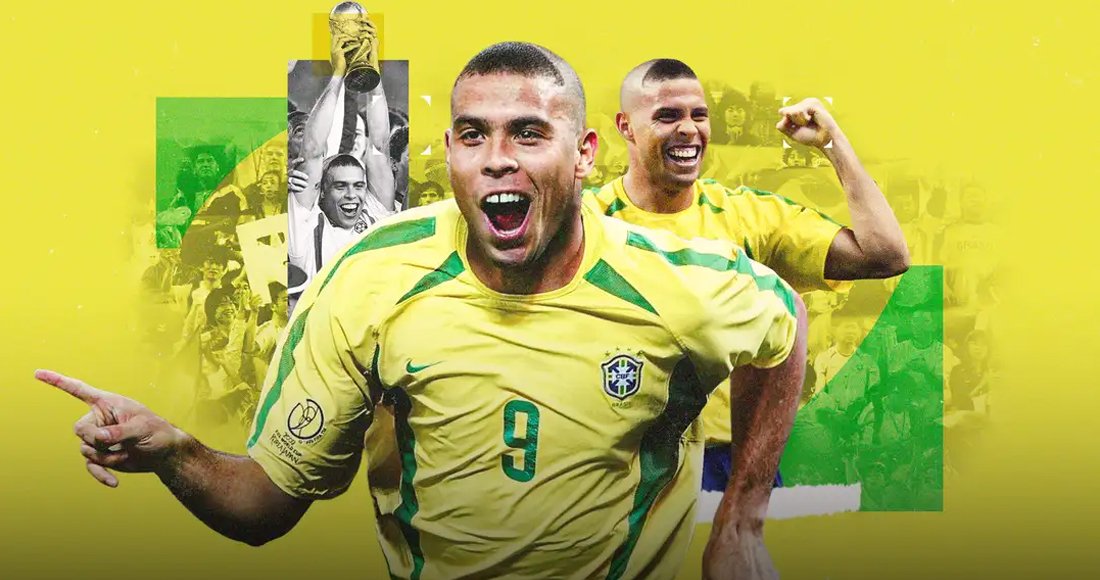
In the 2002 World Cup, Ronaldo arrived seeking to reclaim his lost glory. The Brazilian striker, sporting one of the most bizarre hairstyles in football history, found exactly what he was looking for.
Do you know what a 'skin' is? Literally, it means 'skin', but in the modern language of gaming and social media, it refers to an outfit, costume, or material that defines the appearance of an important character.
Great heroes have many 'skins' - each representing a different chapter of their story. For Ronaldo, or 'Il Fenomeno', his most famous skin is the one that gave him a bad and almost laughable haircut - but that look also brought joy to millions of Brazilians around the world.
Among the immortal players of football, Ronaldo lived through some of the most iconic moments of the game. Wherever he went, he became the top scorer. Early in his career at Cruzeiro and PSV, he wore a simple haircut that matched his innocent smile.
At Barcelona, he made the shaved head look more popular than anyone else. At the same time, he stunned the world with his explosive runs, excellent dribbling, and clinical finishing, making him a player far ahead of his time.
His look during his time at Inter Milan represented the peak of his physical power, which was shattered by a terrifying knee injury. Many thought it would end his career.
On the other hand, Ronaldo with the 'Cascão haircut' became the image of his comeback; a hero's victory celebration in a yellow and green jersey; a symbol of the journey of one of football's greatest heroes; a look that not only defined his image forever but defined an entire World Cup.
It all started as a joke in a moment of tension.
_Mi3dvNHzcg.webp)
- Injury, drama, and determination
Brazilians have a strange way of finding laughter even in hardship. Despite endless social challenges, they are known as people who laugh. However, the smile after the comeback by defeating England 2-1 in the 2002 World Cup quarter-finals did not last long.
Ronaldinho, the magician behind that seemingly impossible winning goal, was certain to miss the semi-final due to a red card. But the real bad news was related to the other Ronaldo - the only unique Ronaldo of that era.
Brazil's number 9 had started feeling pain in his thigh in the first half against England and was substituted with 20 minutes left in the game. Even amidst the post-match celebrations, he knew the situation was serious.
'I want to see you prepare me for the next game. I want to see how good you are,' he had told team doctor Jose Luiz Runco. This scene was later shown in Ronaldo's documentary on Globoplay. This was not a fun challenge, but a plea from a man who had already suffered hellish pain.
From that infamous incident of suddenly falling ill before the 1998 World Cup final to that demand in 2002, life had put Ronaldo through a test few have experienced. The toughest test came during the Coppa Italia clash between Inter Milan and Lazio in April 2000, when he suffered a horrific injury to his right knee.
In his first game back on the pitch after five months of rest, his tendon tore. That image of Ronaldo crying on the pitch became one of the most heartbreaking scenes in football.
His injury timeline was terrifying. In late 1998, Ronaldo was out for months due to swelling in both knees. He returned in January 1999, but the pain did not subside, and in April he was out again for another eight weeks.
That May, he suffered a minor thigh injury, and in November of the same year, his right knee tendon partially tore. When he finally returned in April 2000, that tendon tore completely within moments.
When Luiz Felipe Scolari announced Brazil's final squad for the 2002 World Cup, Ronaldo had played only 19 games since that night in Rome, of which he had played the full 90 minutes in only three.
After being away from football for nearly two years, he was being pushed straight into the most intense competition on Earth. Only during that World Cup, against Costa Rica and Belgium, was he finally able to play full games consecutively.
- 'Even if you only have half a leg, you play!'
Although he tried to appear calm after the England game, Ronaldo was not a very good actor. Reports at the time noted his unusual silence and serious face, while both Scolari and Runco shared the same anxiety.
Good news came when initial scans showed no muscle tear, and a little hope emerged when no negative headlines about his knee appeared. Yet, the tournament's top scorer, who was tied with Rivaldo and Miroslav Klose with five goals, was in pain.
'Medical science is not an exact science. Every case is different,' Runco told O Globo amidst the wave of concern, 'I think he will play, but I cannot guarantee it.'
_PZk4UtECSY.webp)
While his teammates were training on the pitch, Ronaldo spent his days in physiotherapy, electrotherapy, and cryotherapy. He was doing whatever it took to play.
His injury history was daunting. His selection itself was a gamble, especially when leaving Romario out of the team caused nationwide outrage.
In the months leading up to the World Cup, Ronaldo had suffered five muscle injuries - all in his right thigh, and none had healed quickly enough to recover in the five-day interval between the win over England and the semi-final against Turkey.
'His injury has us worried,' Scolari admitted, 'but I trust our medical team - and more importantly, the player's willpower. I don't think he will miss the semi-final. We need everyone right now. Even if he only has half a leg, he plays! Ronaldo knows that Brazil needs him. He has been the technical and emotional leader for this team.'
- The birth of Cascão
Seeing Ronaldo smile again was the first good sign. In an interview with Japan's Nippon TV the day before the semi-final, he announced he was ready to face Turkey, 'I was more tired than others, but in two or three days I will be fine. After all, I have played many games in a short period. After spending two years without football, it has been very difficult.'
Runco's tone was also a bit lighter, but no one was completely sure. Imagine Ronaldo's situation, years of meticulous preparation, but every time an injury blocked the way. Perhaps, like a big impact from a small change, he decided to change his regular ritual.
_W037HtixVQ.webp)
'I would always shave my head before a game,' Ronaldo recalled in his documentary, 'This time, I left a little hair in the front. I walked down the hotel corridor... everyone laughed, made jokes, teasing me that I didn't have the courage to go to practice like that.'
On the other hand, Scolari was angry. 'What kind of haircut is this?! I was nervous and upset. Why do this now? What if it backfires? Did you get my permission? I was very angry!' he explained years later in the same film.
But the manager had other things to worry about. Ronaldo barely moved during the final training session and everyone who saw this reported it. Could he really play?
On one side doubt, on the other firm belief: Ronaldo decided to keep that haircut.
'I can't disappoint those little kids who copy it,' he said with a smile at a press conference.
That haircut became an overnight hit. It dominated news around the world, with fans and kids copying it everywhere. Even Turkish midfielder Umit Davala's 'Mohawk' haircut made headlines for the hair battle.
Ronaldo has talked about that haircut many times since, always denying any special or magical plan. But he admitted it served a purpose, as it took everyone's attention away from his injury.
'I was only 60 percent fit, so I shaved my head. Everyone was just talking about my injury. When I came to practice with this haircut, everyone stopped talking about the injury,' he told The Sun in 2017. Planned or not, that laughable hair brought the relief everyone needed.
- The toe-poke strike
If Ronaldo had decided not to shave his head completely, the Turkish players' plan was the exact opposite: if they beat Brazil, everyone would shave their heads.
However, the first half of that semi-final was terrible. Brazil's performance had dipped, and Ronaldo was the worst of them all. On the Globo broadcast, commentator Walter Casagrande demanded he be substituted, saying, 'He is like a player less on the pitch today.'
_7VJxQkkJgB.webp)
Great Brazilian coach Mario Zagallo later admitted, 'At half-time, I also felt Ronaldo should come off. Everyone saw it, he wasn't right.'
And indeed he wasn't. But that is the hallmark of magicians, they find magic even in pain. Ronaldo came out for the second half and created a magical moment on the first chance he truly believed in.
'I couldn't strike with the inside of my foot, it would have made the injury worse. So I saw the chance and struck with my toe (toe-poke). Absolutely perfect,' he recalled in the documentary.
Brazil took the lead. Art emerged from pain, as one of Ronaldo's most iconic goals. He was substituted in the 68th minute, and Brazil won the game.
'I knew he would play when I saw that haircut two days ago,' Scolari said laughing after the game.
- Comeback and glory
Named after Brazil's most famous cartoon character, the Cascão haircut earned its eternal place in football history that night. But one final hurdle remained: the final.
_ZwtQXOaeDS.webp)
World Cup finals are always tense, but for Ronaldo, the weight was immense after 1998. This time, carrying a tuft of hair on his forehead instead of mental trauma, he scored both goals in the 2-0 win over Germany, securing Brazil's fifth World Cup title.
Ronaldo became the tournament's top scorer with 8 goals and finally succeeded in reclaiming his lost glory. Along with that canary-yellow jersey with green stripes, that haircut became a symbol of that victory. Not wanting to lose that magic, he kept that hair for months after the final.
Even today, when Brazilians think about Ronaldo and the fifth title, they remember that 'infamous' haircut - which was strange, unforgettable, and became iconic forever.
This specific news has been automatically translated by AI. As a result, there may be some inaccuracies or language errors.