Political Parties Agree to Initiate Speaker Election Process in Parliament


Kathmandu. In a meeting held on Wednesday at the Federal Parliament Secretariat in Singha Durbar, representatives from political parties, government officials, and secretariat staff reached a consensus to begin the process of electing a new Speaker starting Thursday.
Following the meeting, Rastriya Swatantra Party (RSP) General Secretary Kabindra Burlakoti announced that the election process will commence on Thursday, the day the session begins. According to the agreement, nominations for the Speaker will be filed on the 20th, with the election scheduled for the 22nd.
- Speaker Election Process
The Constitution mandates that the Speaker and Deputy Speaker must be elected within 15 days of the first meeting of the House of Representatives. Until then, the senior-most member among the elected lawmakers is designated to preside over the assembly. Currently, 78-year-old Nepali Congress lawmaker Arjun Narsingh KC holds this position and will chair the sessions until a Speaker is elected.
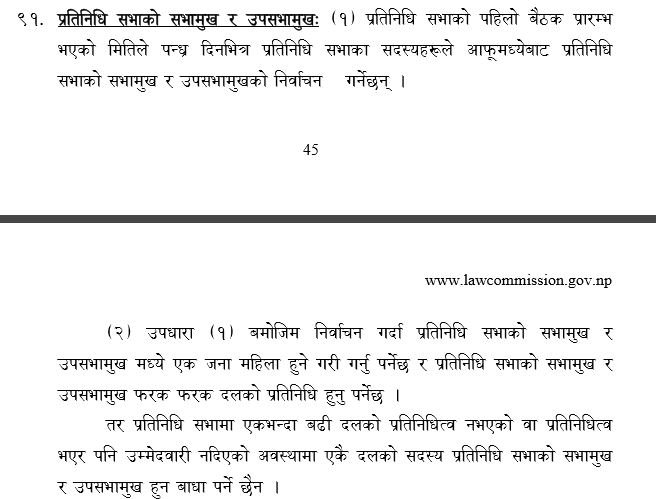
Article 91, Clause (1) of the Constitution states: 'Within 15 days from the date of the first meeting of the House of Representatives, the members of the House of Representatives shall elect a Speaker and a Deputy Speaker from among themselves.'
Rule 7 of the House of Representatives Regulations 2075 stipulates that the election of the Speaker shall take place on a day designated by the person presiding over the meeting, with notice published by the General Secretary or, in their absence, the Secretary. Per today's agreement, senior member KC will set the date.
Once the secretariat publishes the schedule, a member of any party represented in Parliament must register a proposal nominating another member for the position of Speaker. Once registered, the proposal will be presented at the House of Representatives meeting on the 22nd of Chaitra. If the proposed candidate is unopposed, the senior member will declare them elected. If there is competition, an election will be held. Given that the ruling coalition holds 182 seats in the 275-member House of Representatives, their candidate is certain to be elected Speaker.
It remains to be seen whether other parties will field candidates for a position they are unlikely to win. If more than one proposal is registered, they will be taken up for discussion in the order of registration. The proposer and seconder will present their arguments, followed by a brief discussion, after which the senior member will put the proposals to a vote as per the law.
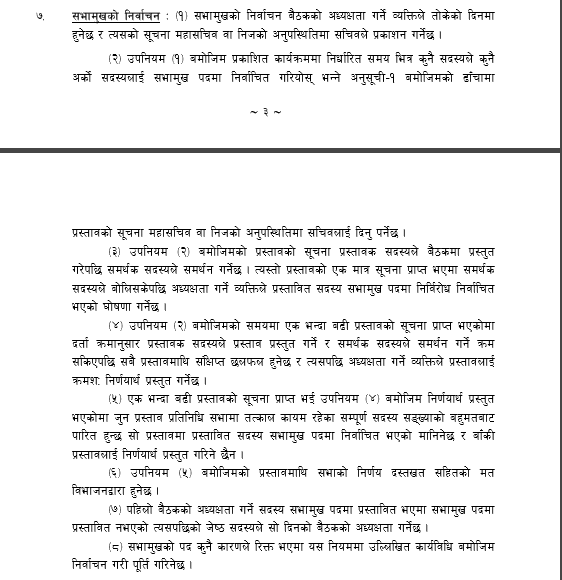
Voting is conducted through a signed ballot. The presiding senior member directs members to sign in the 'Yes', 'No', or 'Abstain' lobbies.
After the members sign, the parliamentary secretariat staff reports the results to the senior member. The senior member then declares the candidate who secures a majority of the total existing members of the House of Representatives as the elected Speaker.
Following the election of the Speaker, the established practice is for the Speaker to announce the date for the election of the Deputy Speaker. The Parliament Secretariat has indicated that it will consult with political parties to determine the date for the Deputy Speaker's election immediately following the conclusion of the Speaker's election.
This specific news has been automatically translated by AI. As a result, there may be some inaccuracies or language errors.