Ram Bahadur Thapa 'Badal' Elected as CPN-UML Parliamentary Party Leader


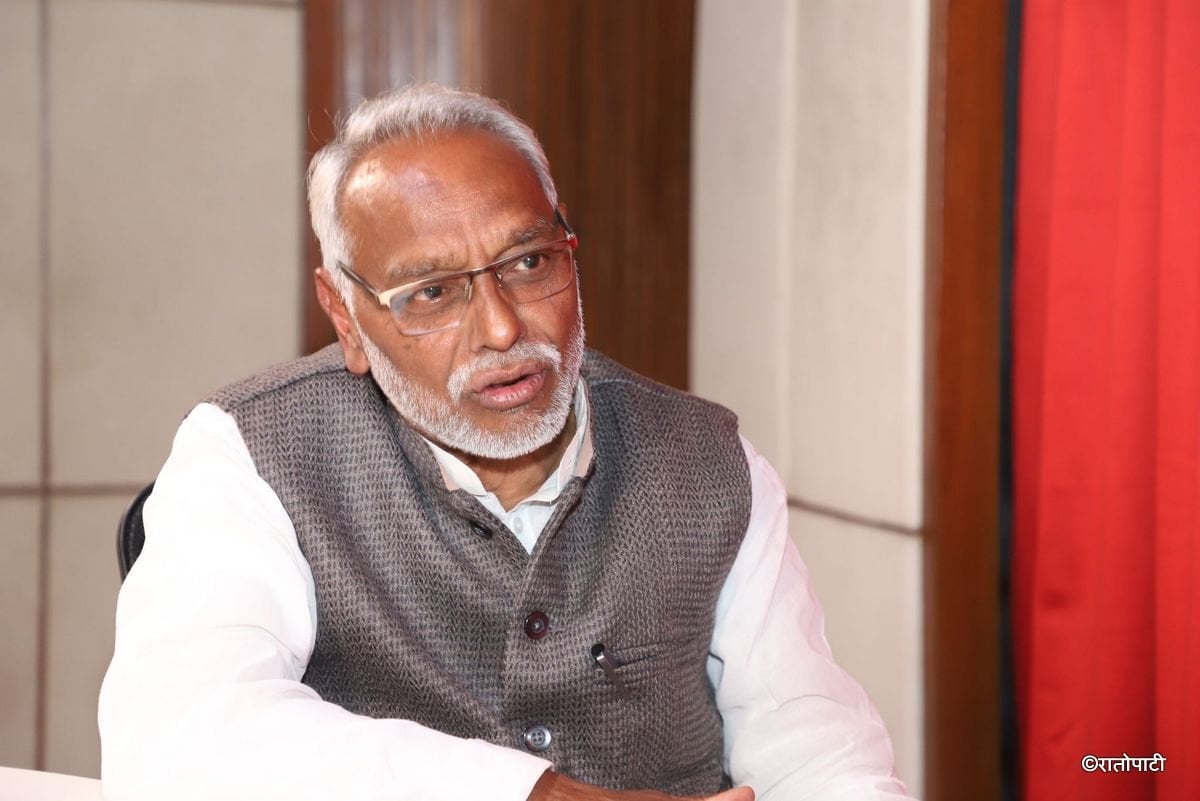
Kathmandu. Ram Bahadur Thapa 'Badal' has been elected as the parliamentary party leader of the CPN-UML. He was selected for the position during an election held at the central office in Chyasal on Wednesday.
Young lawmaker Suhang Nembang, elected from Ilam-2, had also staked a claim for the leadership. Election committee coordinator Neeraj Acharya confirmed that Badal was selected as the leader after Suhang Nembang withdrew his candidacy. The CPN-UML won a total of 25 seats in the recently concluded election.
Badal, a former Maoist leader who was elected as vice-chairman during the CPN-UML's 11th General Convention in Mangsir, is a former Maoist leader. He secured the opportunity to become the parliamentary leader after all candidates who contested directly, including Chairman KP Oli, were defeated in the House of Representatives election held on Falgun 21. This time, Badal was on the proportional representation list.
- Who is Badal?
Born on Baisakh 19, 2012 B.S. in Gulmi, he has been actively involved in the communist movement since 2031 B.S. While studying B.Sc-Ag at Rampur Agriculture Campus in Chitwan, he met Pushpa Kamal Dahal 'Prachanda', the current coordinator of the Nepal Communist Party, and became active in advancing the Maoist movement. He was a military strategist when the CPN-Maoist launched an armed movement in 2052 B.S. Badal received his communist party membership from veteran communist leader Amik Sherchan.
Badal remained underground from 2037 B.S. to 2063 B.S. He became a central member of the CPN (Masal) in 2042 B.S. In 2044 B.S., he became the in-charge of the Bagmati zone. He was one of the key leaders when the CPN-Maoist launched an armed rebellion in 2052 B.S. From the time of the People's War to his participation in the peace process, he was known as an honest figure who played the role of a classmate and collaborator to Prachanda.
He entered peaceful politics after the 12-point agreement between the then government and the rebel Maoists in 2062 B.S. In the 2064 B.S. election, Badal was elected from Chitwan-2. In 2065 B.S., he became the Defense Minister in the government led by Prachanda.
When the party split in 2069 B.S., he became the General Secretary of the party led by Mohan Baidya 'Kiran'. Having boycotted the 2070 B.S. election, he returned to the Maoists before the 2074 B.S. election. He was elected as a member of the National Assembly in 2074 B.S.
He became the Home Minister while leading the Maoist contingent in the government led by KP Oli. In 2075 B.S., he became a secretariat member of the Nepal Communist Party formed by the merger of the UML and Maoists. When the NCP split in 2077 B.S., Badal remained with the UML. At that time, the Supreme Court had revoked his National Assembly membership.
He became vice-chairman at the 10th General Convention held in Sauraha, Chitwan in 2078 B.S. With the new party, Rastriya Swatantra Party (RSP), forming a two-thirds majority government, Badal faces the challenge of playing an effective role in parliament on behalf of his party.
This specific news has been automatically translated by AI. As a result, there may be some inaccuracies or language errors.

_tg2iDz0Uv6.jpg)