Dubai and Abu Dhabi Stock Markets Lose Nearly $120 Billion Amid Regional Tensions
Abu Dhabi. The stock markets of the United Arab Emirates (UAE), specifically Dubai and Abu Dhabi, have lost nearly $120 billion.
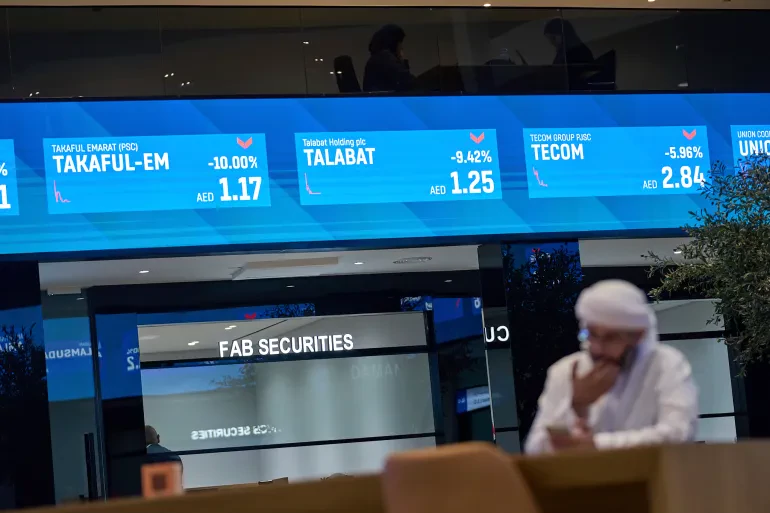
The Dubai and Abu Dhabi stock markets have become the most affected financial markets amid the developments following the alleged US-Israel attack on Iran on February 28. Since February 28, Dubai's benchmark index has fallen by nearly 16 percent. Meanwhile, Abu Dhabi's benchmark stock index has dropped by 9 percent.
Since the conflict began, the Dubai Financial Market (DFM) General Index has lost approximately $45 billion. During this period, the Abu Dhabi Securities Exchange (ADX) General Index lost $75 billion. Markets in Qatar and Bahrain fell by 4 and 7 percent, respectively, during this period.
Conversely, exchanges in Saudi Arabia and Oman have shown growth. The impact of the Iran conflict has also been seen in the US stock market. As US President Donald Trump continues to give mixed signals about the duration and targets of the conflict, the US benchmark S&P 500 index has also fallen by about 7 percent during this period.
Although the near-stoppage of the Strait of Hormuz has a lesser impact on the UAE compared to other Gulf countries, the conflict has weakened the country's status as a regional transportation hub. Thousands of flights, especially from Dubai International Airport, have been canceled. Tourism and travel contributed nearly $70 billion to the UAE economy last year, which is 13 percent of its total GDP.
Haytham Aoun, an assistant professor of finance at the American University in Dubai, views this as a temporary shock rather than evidence of structural economic damage, despite this being an unwelcome development for plans to advance the UAE as a financial center. Aoun believes that while investor sentiment and market confidence may waver in the short term, this does not pose a major challenge to the UAE's long-term economic plans.
In 2024, the total capitalization of UAE stock markets exceeded $1 trillion for the first time, making it the second largest in the Gulf region after Saudi Arabia, whose market capitalization stands at $2.5 trillion. An index published last week showed that Dubai ranked seventh in competitiveness in the latest edition of the Global Financial Centers Index.
This specific news has been automatically translated by AI. As a result, there may be some inaccuracies or language errors.


_HSVUbGHJpC.jpg)