Bollywood Cinematographer Pramod Pradhan Returns to Nepali Cinema with 'Juwa', Praises Local Industry's Progress
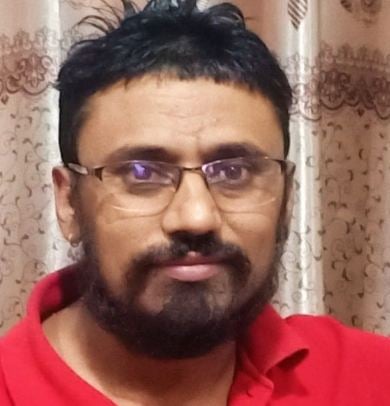

Kathmandu. Established Bollywood cinematographer Pramod Pradhan is currently in Kathmandu. He arrived in Nepal 15 days ago to handle the cinematography for the film 'Juwa'. Director Prakash Karna had proposed the role to him in Mumbai. Immediately upon arriving in Nepal, he has been busy with the film's workshop.
Having gathered extensive experience in Bollywood, the main reason Pradhan associated with 'Juwa' is Director Prakash Karna's 'vision' for the film. He states that he agreed to work on the film after being impressed by the new director Karna's preparation and the 'presentation' shown using AI technology. He believes working with the new generation helps him stay updated.
'Director Karna offered me the film when he came to Mumbai,' Pradhan said. 'Initially, I didn't intend to work, but during discussions, seeing his enthusiasm and preparation made me want to join.' He mentioned finding the vision and preparation for the film novel.
Pradhan, who has been active in Bollywood for a long time, shot the upcoming film 'Pahad' by veteran director Tulsi Ghimire last year. He made a comeback to Nepali cinema after 30 years through 'Pahad', which is set to release on the first day of the New Year 2083 (Baisakh 1).
He has a long-standing relationship with Tulsi Ghimire. Having grown up together since childhood, he entered Nepali film cinematography with Ghimire's film 'Anyay', produced by Bishwa Basnet. After 'Anyay', he captured famous films directed by Ghimire such as 'Dakshina', 'Trishuli', 'Chino', and 'Koseli' on camera.
When asked about the long 'gap' in Nepali films, his answer is: 'It's because I didn't receive offers. If I had received offers, I would have done films. The remuneration might not be as expected, but I have an emotional connection with Nepali cinema.'
Returning to Nepali cinema after a long time, he appears very satisfied with the current state here. He observes that the work being done by new cinematographers in Nepal and the equipment being used are of international standard.
Born in 1959 at 10 Mile in Kalimpong, Darjeeling, Pramod's relationship with the camera dates back to his childhood. His father had opened a 'Home Studio'. His childhood was spent in the environment of photography and the studio. Few people at that time would have thought that the boy growing up playing with camera lenses and reels would one day become a strong pillar in this field.
'I recently watched some recent Nepali films like 'Kausid' and their teasers,' he said. 'The work is very good. The brothers here are very updated.' For Pradhan, cinematography is not just a technical job, but an art.
Pradhan has witnessed the era of Nepali film shooting where work had to be done amidst limited resources. Recalling 'Anyay', he says, 'Back then, there were only 3-4 reflectors. Films had to be shot on 16mm reels. There was only one lens, and one had to wait for the lab report to see the result.'
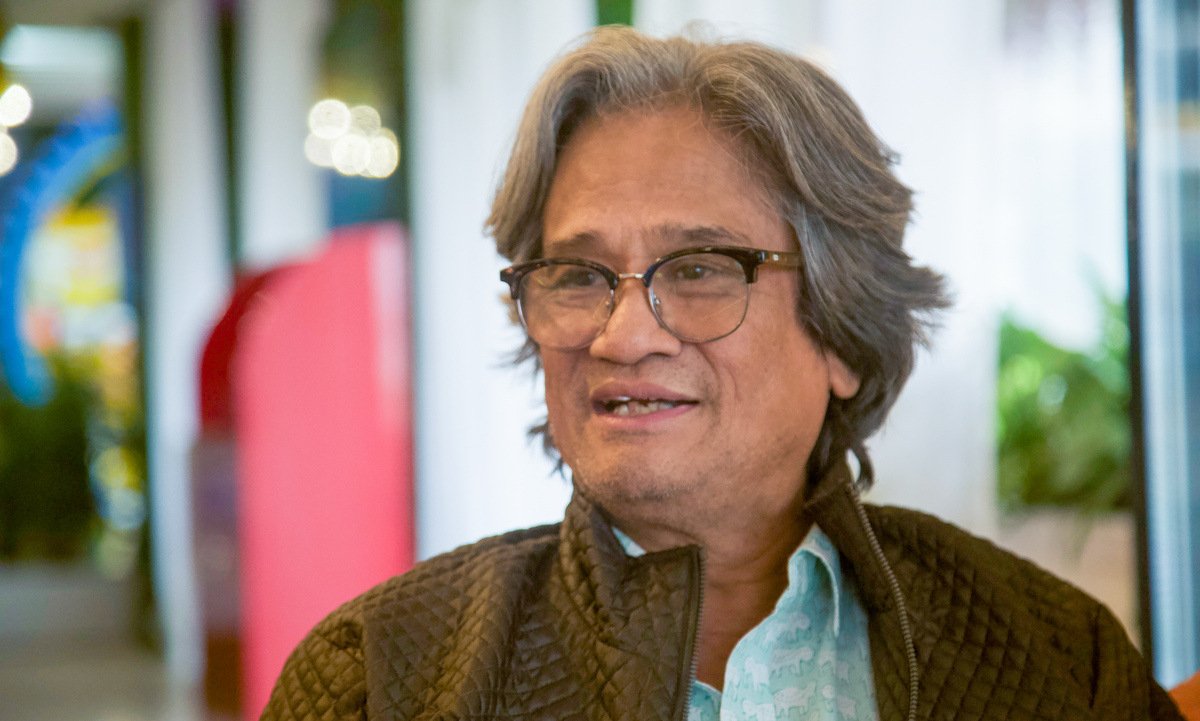
Technology has made great strides now. For 'Juwa', he is using the state-of-the-art 'Alexa LF Mini' camera, which is currently used in big-budget Bollywood films. 'Now you can see immediately on the monitor what went wrong and what went right, everyone sees it,' he says, explaining the ease of technology. 'But as easy as it is to work digitally, there are challenges too. Earlier, light and color had to be adjusted on set; now many things can be adjusted in post-production.'
Affection for Camera Since Childhood
Born in 1959 at 10 Mile in Kalimpong, Darjeeling, Pramod's relationship with the camera dates back to his childhood. His father had opened a 'Home Studio'. His childhood was spent in the environment of photography and the studio. Few people at that time would have thought that the boy growing up playing with camera lenses and reels would one day become a strong pillar in this field.
Pramod's Bollywood journey is very enviable. He worked alongside his elder brother in Shah Rukh Khan's historic film 'Devdas' and has already showcased his skills in big films like Salman Khan's 'Heroes' and Hrithik Roshan's 'Mission Kashmir'.
His elder brother, Vinod Pradhan, is a legendary cinematographer in Bollywood. The success and work of his brother naturally influenced him. Since his brother lived in Mumbai, he visited Mumbai around BS 2041/042 (AD 1984/85). The company of his brother, his working style, and the film atmosphere there attracted him so much that he decided to stay there and learn cinematography.
Initially, he thought of going to a film institute for formal education. But renowned Indian film editor Renu Saluja gave him a suggestion that changed the course of his career. Quoting Renu, he said, 'Your brother himself is a big institute in Bollywood, where else would you go to learn? Learn from your own brother.' Following this, he learned the 'basics' of cinematography under the guidance of his brother Vinod. After working as an assistant in many films, he debuted as an independent cinematographer in Bollywood with 'Chor Aur Chaand', starring Aditya Pancholi and Pooja Bhatt in the lead roles.
Enviable Bollywood Journey
Pramod's Bollywood journey is very enviable. He worked alongside his elder brother in Shah Rukh Khan's historic film 'Devdas' and has already showcased his skills in big films like Salman Khan's 'Heroes' and Hrithik Roshan's 'Mission Kashmir.'
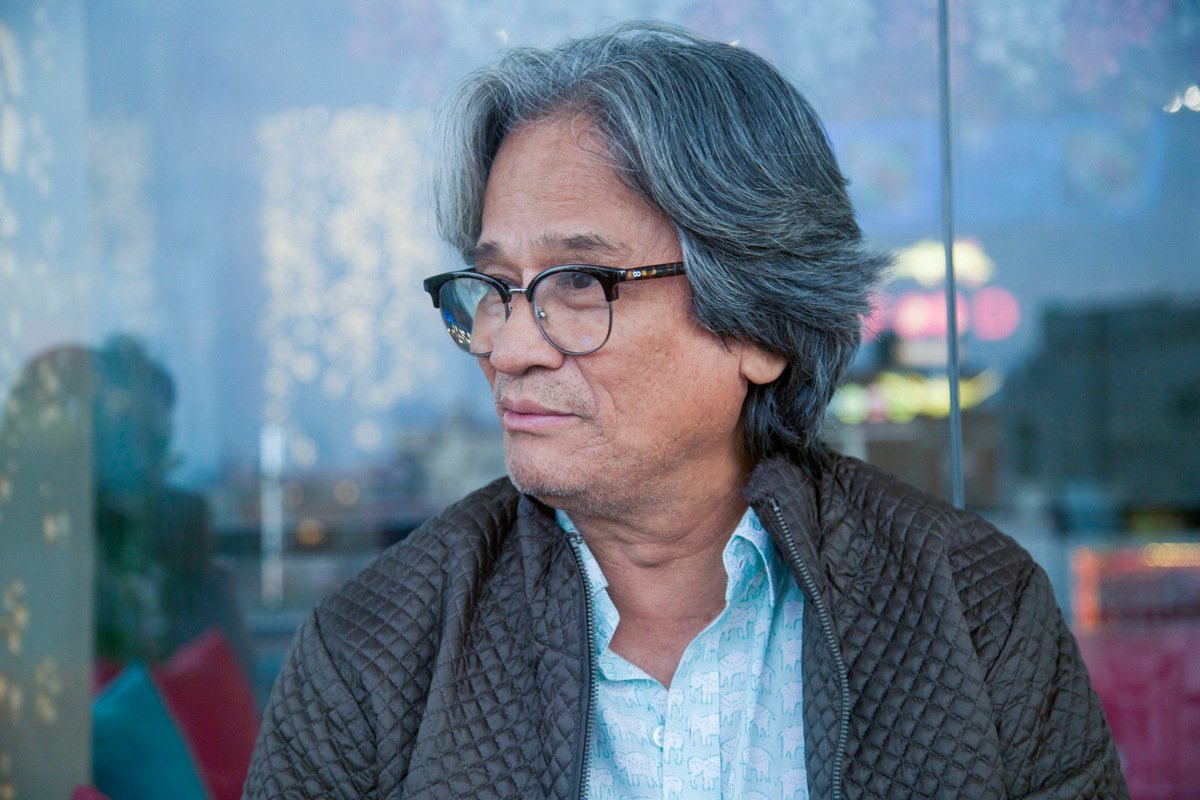
Having worked with Bollywood superstars through films and serials, he finds some differences in the working style of Bollywood and Nepali artists. 'Artists are artists, whether they are from Mumbai or Nepal. But the working style is different,' he says. 'In Bollywood, because the scale is bigger, there is a bit more swagger.' He mentions finding a different kind of intimacy, simplicity, and grace in Nepali artists. While professionalism and punctuality are strict in Mumbai, he experiences a unique peace and family atmosphere when working in Nepal.
Idea of Nepali Film Production
Pramod, who has spent about four decades with the camera, now dreams of becoming a Nepali producer. For that, he plans to produce a quality Nepali film. Why a Nepali film? 'The intimacy of Nepal attracts me more than the busyness of Mumbai,' he says. 'In Nepal, I get to work while conversing in my own language, which is not possible in Mumbai.'
This specific news has been automatically translated by AI. As a result, there may be some inaccuracies or language errors.
_I0a7yjtDaq.jpg)