Bagmati Province Government Studies Administrative Restructuring to Cut Expenses

Hetauda. The Bagmati Province Government has studied the strengthening of its administrative structure to adopt a frugal governance system by reducing administrative expenses. The government is preparing to change the administrative structure to cut costs and streamline service delivery.
In preparation for reducing the province's 14 ministries and making employee staffing effective, the provincial government formed a committee in Kartik (October/November) last year to study the matter.
An expert team led by former Secretary Bimal Wagle has submitted its report to the provincial government, including an evaluation of the province's administrative sector.
The report also divides responsibilities among 7 ministries. The expert team, which began its work in the first week of Mangsir (November/December) with a mandate to submit the study report within three months, handed over the report to the provincial government on Wednesday, Falgun 27 (March 12).
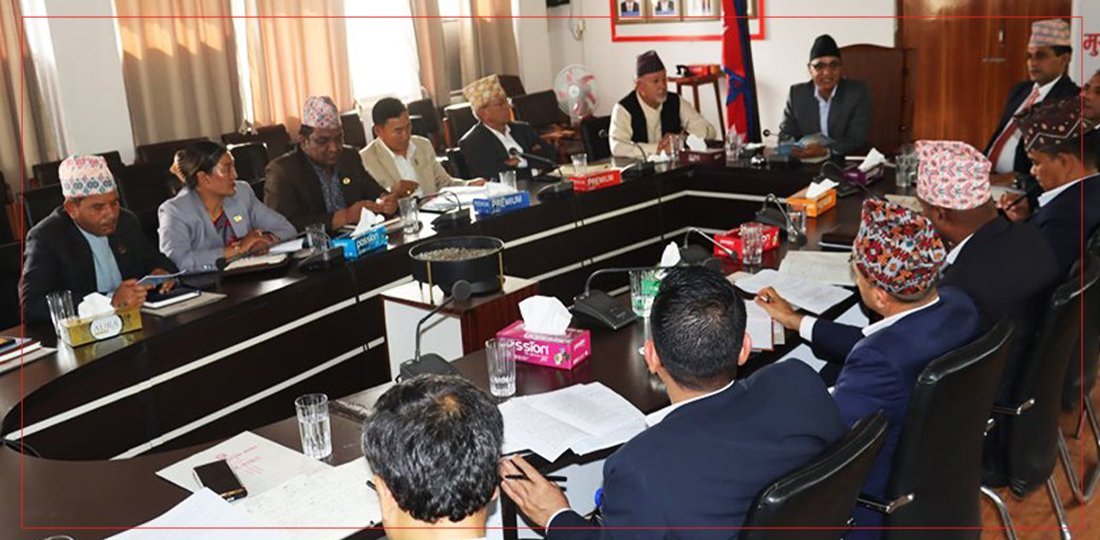
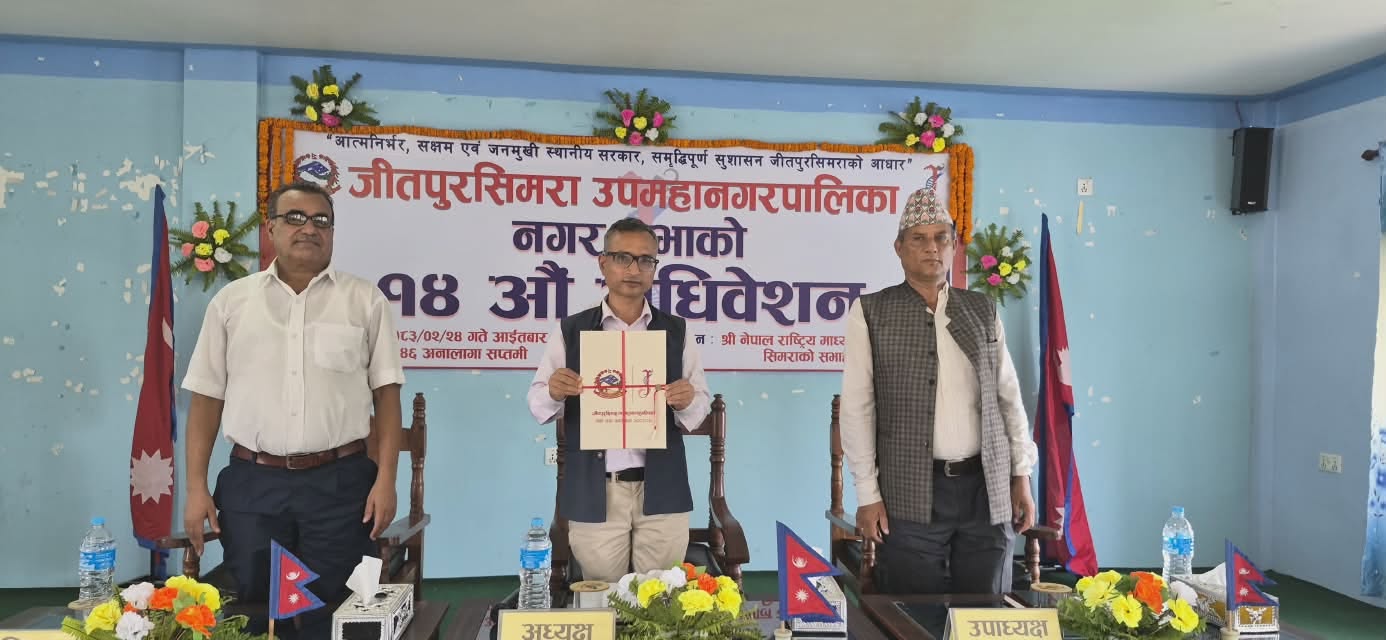
Committee Coordinator Wagle handed over the report to Chief Minister Indra Bahadur Baniya and the Coordinator of the High-Level Provincial Administrative Restructuring Steering Committee, Minister for Agriculture and Livestock Development Madhusudan Paudel. The committee suggested the required number of ministries for administrative restructuring, determined the necessity of offices under the ministries, and provided suggestions on a new Organization and Management Survey (ONM) for employees in its report.
The 'Administrative Restructuring Report' submitted by the committee led by former Secretary Wagle is currently under review by the High-Level Steering Committee for administrative restructuring. The committee, chaired by former Secretary Wagle, included Reshmi Raj Pandey, Gopikrishna Khanal, and Jivanprabha Lama as members, with Province Secretary Purnabahadur Thapa serving as the Member Secretary.
The committee indicated that abolishing unnecessary provincial structures could save the state over NPR 16.99 billion in financial liabilities over 35 years. The government, which is moving towards structural reform by ending the past tendency of splitting ministries to maintain power, plans to implement the report starting from the next fiscal year following political consensus.
The committee's report suggests reducing the number of ministries to 8 and abolishing various boards, directorates, and commissions. The committee recommended abolishing the Policy and Planning Commission.
It is estimated that NPR 485.6 million annually will be saved just by cutting 701 positions as proposed. The committee's report is currently under discussion in the High-Level Steering Committee for administrative restructuring, led by Minister for Agriculture and Livestock Development Madhusudan Paudel.
- These are the proposed 8 Ministries
The committee suggested forming the Chief Minister and Council of Ministers Office, Ministry of Economic Affairs and Planning, Ministry of Industry, Culture, Tourism and Transport, Ministry of Agriculture, Livestock, Land Management and Cooperatives, and Ministry of Physical Infrastructure Development, as stated by a member of the committee.
Similarly, suggestions were made to retain the Ministry of Forest and Environment, Ministry of Urban and Local Development, and Ministry of Health and Social Development.
The committee suggested that any structure existing between the ministries and implementation units should be removed if appropriate. Currently, the Bagmati government has the Chief Minister's Office, Ministry of Internal Affairs and Law, Ministry of Economic Affairs and Planning, Ministry of Agriculture and Livestock, Ministry of Water Supply, Energy and Irrigation, Ministry of Physical Infrastructure, Ministry of Forest and Environment, Ministry of Labor, Employment and Transport, Ministry of Industry, Commerce, Land Management and Administration, Ministry of Culture, Tourism, Cooperatives and Poverty Alleviation, Ministry of Social Development, Ministry of Health, and Ministry of Youth and Sports.
The study committee also proposed cutting 701 employee positions in the province. The committee concluded that the provincial government incurs a long-term liability every time a position is created. According to a committee member, assuming an average service period of 35 years for an employee entering service at age 25 and serving until age 60, the creation of each position according to rank imposes a significant liability on the provincial government over that period. The committee stated that the financial liability generated over a 35-year service period for each position created, by rank, would exceed 16 billion rupees.
The suggestions and recommendations provided by the committee led by former Secretary Wagle are being studied by the steering committee headed by Minister Paudel regarding their practical and scientific implementation. The steering committee is preparing the final revision of the report, intending to implement it from the next fiscal year after reaching a political consensus, ensuring that service-oriented sectors are not subject to position cuts and only duplicative offices are removed.
Immediately after the formation of the government led by Chief Minister Indra Bahadur Baniya, preparations were made to abolish the increased number of ministries, which had been repeatedly split by previous governments in the name of retaining power, as well as unnecessary offices. Steering Committee Coordinator Minister Paudel stated that preparations are underway to remove small ministries, unnecessary offices opened in districts, and duplicative offices in Hetauda.
- Administrative Restructuring Report Under Study: Minister Paudel
According to Minister Paudel, Coordinator of the Steering Committee, the restructuring report submitted by the expert team is not final. He stated that the suggestions given by the expert team are being studied by the steering committee and will only be finalized after political consensus.
According to Minister Paudel, the expert team proposed merging or removing various provincial structures and cutting around 701 positions. However, he stated that cuts should not be made in service-oriented sectors. He mentioned that the report will likely be finalized this month after completing the study, further discussions with experts, and then being presented to the Council of Ministers (Cabinet).
He said, "We have understood the suggestions of the expert team. The steering committee still needs to finalize this. Some of the experts' suggestions will need practical enhancement." He added, "The experts' report proposes cutting 701 employees. But positions in service-oriented bodies like agriculture and health should not be cut. The government should provide maximum facilities in such sectors. Cuts may be justified in duplicative structures. This is also a political matter, not just concerning internal administration and employees of the province. It cannot be forcibly advanced without political consensus."
- Up to 800 Provincial Employees to be Cut: Minister Tamang
Minister for Economic Affairs and Planning Prabhat Tamang, a member of the Steering Committee and spokesperson for the provincial government, stated that final preparations are being made to reduce administrative burden and increase efficiency by cutting the number of ministries and offices.
Minister Tamang stated that the proposal is to limit the number of existing ministries to 7 or 8.
Minister Tamang announced that a proposal has been made to cut up to 800 positions in the province, including employee management.
He stated that the Provincial Policy and Planning Commission will be abolished, and its functions will be handled by a branch under the Chief Minister's Office or the Ministry of Finance, which will also stop political appointments to the commission, Minister Tamang said.
He claimed that if the report is implemented, the province's administrative expenses will decrease by nearly 30 percent. He stated that the goal is to reduce the current budget allocated for administrative expenses, approximately NPR 250 million, to the range of NPR 180 to 200 million.
"When ministries merge, there is a plan to keep Urban Development, Water Supply, and Irrigation together. Most administrative offices, except for Forest and Transport, will be removed, and integrated offices will be established in districts," he said. "The proposal is to reduce the many infrastructure offices currently in place to only 5 division offices." He added, "It is not that we lack manpower. The demand for manpower appears high because the number of small projects is too large. We will now reduce the number of projects and move forward with the goal of achieving more results with less manpower."
This specific news has been automatically translated by AI. As a result, there may be some inaccuracies or language errors.