Student Organizations Warn of Protests Against Government's Move to Ban Political Structures in Educational Institutions
Kathmandu. Student organizations have warned of resistance, terming the government's announcement to completely remove student union structures from schools and universities to keep the education sector free from partisan interference as a 'ban on ideology'.
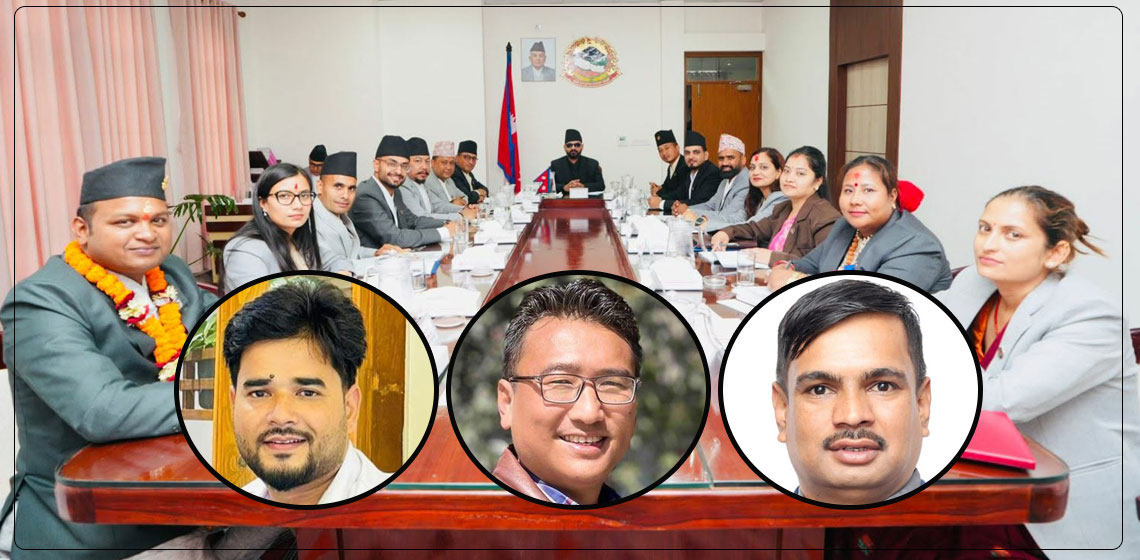
The government, through the '100-Point Agenda for Governance Reform' decided in the first cabinet meeting chaired by Prime Minister Balendra (Balen) Shah, who was appointed on Falgun 13, announced the removal of student organization structures from educational premises to free academic institutions from political interference.
According to the government's declaration, structures of organizations based on political parties will be removed from educational institutions within the next 60 days. For a long time, student organizations in government educational institutions and employee unions in the civil service sector have held sway.
By removing student organization structures, the government has stated it will develop mechanisms such as 'Student Council' or 'Voice of Student' within 90 days to correctly represent the rights and sentiments of students. However, student organizations have interpreted the government's move as a 'ban on ideology'.
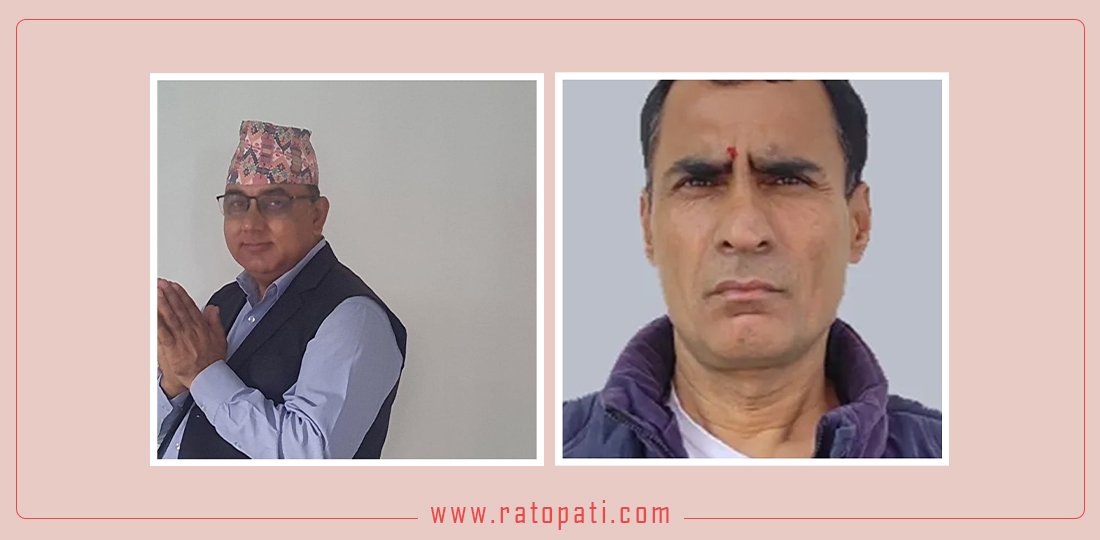
Deepak Singh Dhami, Chairman of ANASUWA, the student wing close to CPN-UML, described the government's recent decision as having an authoritarian character.
He stated that student organizations have their own background, history, and role in Nepal's political history, emphasizing their significant role in removing the Rana regime and the non-party Panchayat system to bring about the current system.
'If the system brought about in that manner is now being reversed towards the old dictatorial system or adopting Panchayat style, it will not be a democratic system,' Chairman Dhami said. 'Therefore, this government decision is authoritarian in style.'
Dhami argued that the constitution guarantees the right for student unions and organizations to express their views, organize, and speak up for their rights, claiming that the move to remove structures from university premises is being done with a deliberate wrong intention. 'Such a decision will not lead the current system and the country's situation in the right direction,' Dhami told Ratopati. 'If actions are taken to curtail anyone's rights, there will be strong resistance.'
He also mentioned that a meeting of the joint student organizations is scheduled for Monday to decide further on this matter. 'We are currently in internal discussions. If elected bodies like the student union are abolished or removed and only youth councils from some embassy are promoted, we will not hesitate to take to the streets in protest,' Dhami stated.
Similarly, Dujang Sherpa, Chairman of the Nepal Student Union (NSU) affiliated with the Nepali Congress, expressed objection to interference in ideological affiliation. 'We object to interference in ideological affiliation,' Sherpa said. 'The relevance of student organizations is not proven by the current system, but if they try to ban ideology, the Balen government will have to pay a heavy price.'
Chairman Sherpa stated that NSU has already decided through the Senate that student wings should move towards an autonomous model and is discussing this model with other student organizations. 'But if the government, which has gained a majority through democratic practice, attempts to ban the very student organizations that lay the foundation for democratic values and norms, it will be a huge mistake by the government,' Sherpa said.
Vijay Prakash Sapkota, Chairman of ANASUWA (Revolutionary), stated that the government's decision to remove student organizations is unconstitutional. 'The freedom to carry ideology and work for the welfare of students falls under the fundamental rights of the constitution. The front for student movements is different. Even King Mahendra could not do it in the past,' Sapkota said. 'When he was the Mayor of Kathmandu Metropolitan City, the current Prime Minister Balen Shah himself facilitated the entry of the American Youth Council into private colleges.'
Sapkota warned that if student organizations are abolished and councils are established, as during the Panchayat era, it would be counterproductive for Prime Minister Balen Shah himself.
Manish Yadav, Chairman of the student organization close to JSP Nepal, claimed that the government does not have the authority to dissolve or remove legally formed student organizations. He said, 'If student organizations are to be dissolved or removed, then RSP should also be dissolved. Just as RSP was formed under the constitution, student organizations are also formed under the constitution.'
It is not permissible to do whatever one pleases just because there is a two-thirds majority government, he stated. He mentioned that discussions would be held among student organizations regarding this matter.
He alleged that the government is conspiring to remove student organizations that raise their voice when injustice is done to students, calling the decision to dissolve organizations formed for student rights and welfare undemocratic.
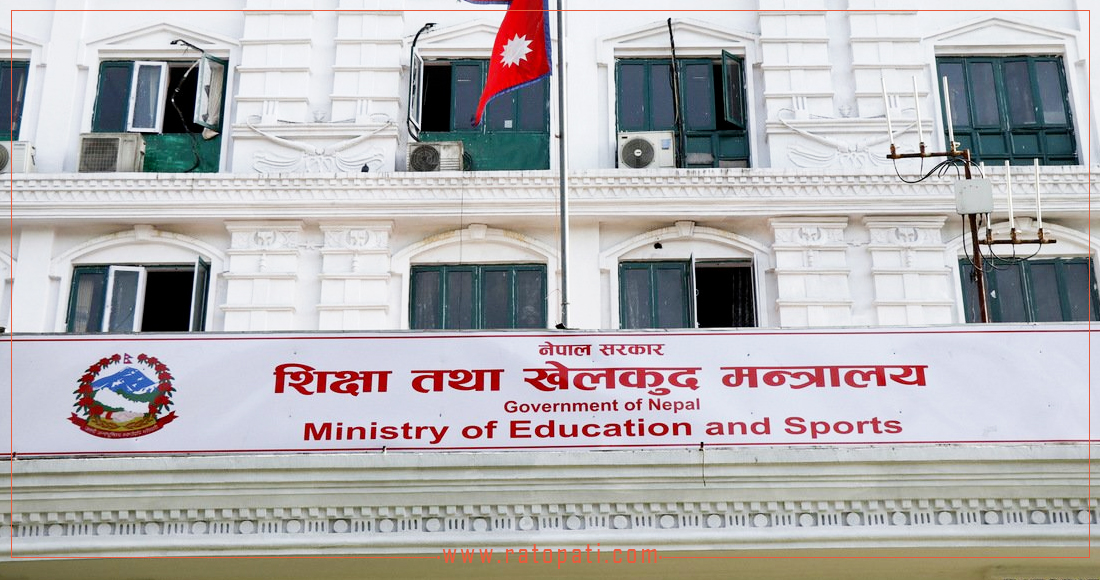
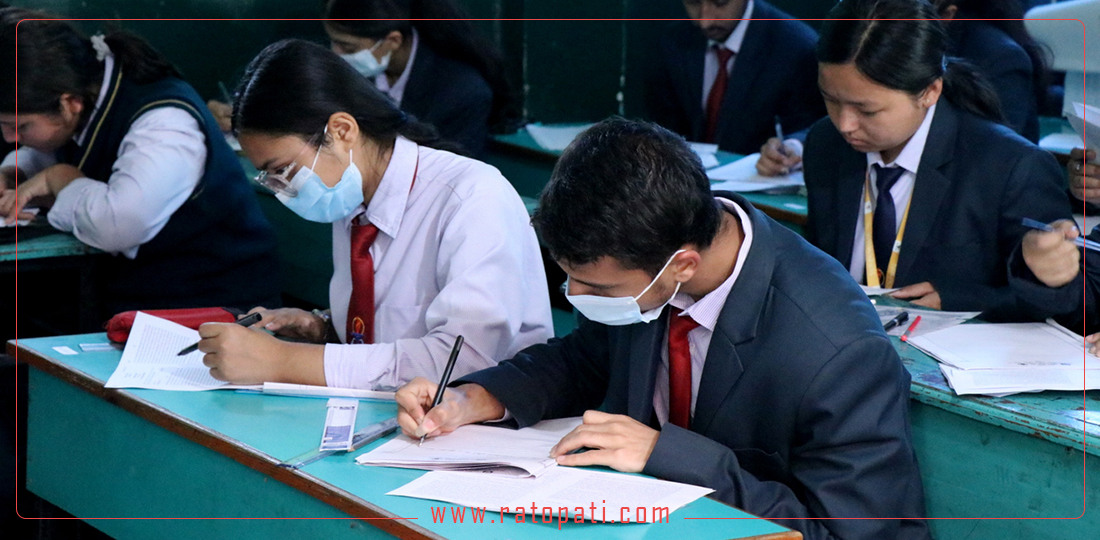
Furthermore, in its 100-point agenda, the government has simultaneously put forward strategic plans for overall reform in the education sector, such as removing the mandatory requirement of citizenship for undergraduate studies, ensuring university examination results are published on time according to the calendar set by the ministry, and implementing an alternative evaluation system by discontinuing internal examinations up to Grade 5 starting from the next academic session.
In recent years, there has been strong criticism that 'politics has dominated the education sector.' The voice for reducing partisan interference has been raised, citing that partisan activities by teachers, professors, and students in schools and universities have affected the teaching and learning environment. The Rastriya Swatantra Party (RSP), which has championed this issue from the beginning, included it in its election manifesto in the last election. It prioritized freeing the education sector from partisan politics in its commitment paper.
This specific news has been automatically translated by AI. As a result, there may be some inaccuracies or language errors.