Supreme Court Rules Minority Status for Local Elections Based on National Census Data Only

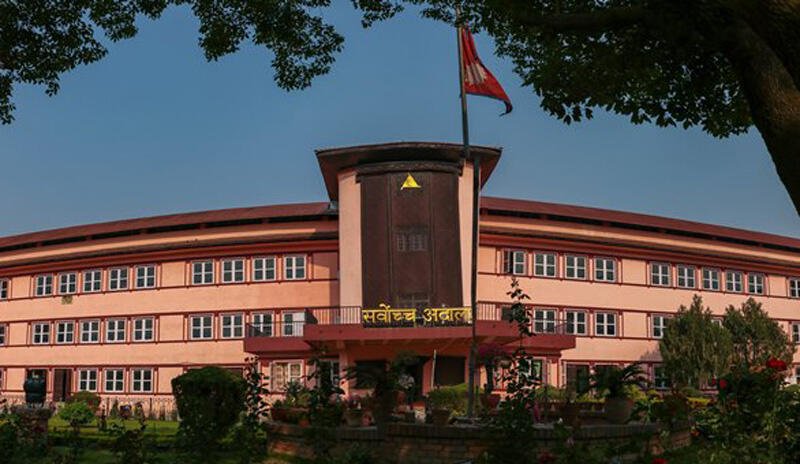
Kathmandu. The Supreme Court has ruled that the identification of minority communities for the purpose of local level elections shall be based solely on the overall statistics of the national census. The Supreme Court rejected the claim that any caste should receive minority benefits merely because its population is small in a specific local level or ward.
A joint bench of Justices Sapana Pradhan Malla and Saranga Subedi issued this order while dismissing the writ filed by Ramkumar Mahato Koiri of Koshi Rural Municipality in Sunsari. Interpreting Article 306 of the Constitution and the Local Level Election Act, 2073, the Supreme Court clarified that the definition of a minority will be according to federal law. The verdict stated, 'The identification of minorities must be based on national demographic balance and the criteria of federal law, not on the basis of local population.'
The court noted that if the definition of a minority were to change for every local level or ward, the same caste could be in the majority in one place and the minority in another, leading to legal instability and confusion. The court stated that the term 'minority' should not be viewed merely as a mathematical deficit. The Government of Nepal has listed 98 castes with a population of less than 0.5 percent based on the data from the National Census 2068 and 2078. This list is uniform across the country.
'If, as per the petitioner's demand, a community is considered a minority simply because its population is small in a rural municipality, then even Nepal's major castes (such as Bahun, Chhetri, or others) might be numerically smaller in some wards or municipalities,' the verdict stated, 'In such a situation, they could also claim minority quotas, which could usurp the rights of genuinely marginalized communities.'
'Affirmative action or reservation is intended for the protection of groups that have been marginalized from the mainstream state and possess a distinct identity. This is not merely a mathematical game. Provinces or local levels must formulate their policies within the limits set by federal law,' the Supreme Court's verdict stated, 'If the list of minorities varies by local level, it will create confusion in the election process.' The court pointed out that which community is a minority in which municipality could become a subject of dispute in every election. Therefore, the court concluded that the list published by the federal government in the gazette is final and binding.
What was the dispute?
The writ petitioner, Ramkumar Mahato, claimed that the population of the Koiri community in Koshi Rural Municipality, Sunsari, was less than 0.5 percent and demanded to be recognized as a minority to contest for the post of ward executive member.
The Government of Nepal includes castes with a population of less than 0.5 percent nationally in the minority list, but the Koiri caste is not on this list nationally. The petitioner's argument was that regardless of the national status, they should be considered a minority for that specific local level if their population there was low.
This specific news has been automatically translated by AI. As a result, there may be some inaccuracies or language errors.