Political Tensions Rise in Bagmati Province as CPN-UML Pushes for Chief Minister Change Amidst Power-Sharing Dispute

Makwanpur. The CPN-UML, a ruling coalition partner, has initiated efforts to change the government in Bagmati Province. A tug-of-war has begun among the ruling parties regarding the leadership of the government.
UML has increased pressure, arguing that the performance of the government formed in Shrawan under the leadership of Chief Minister Indra Bahadur Baniya has been weak, and that the leadership should be handed over to them as per the political agreement.
UML is pressing for the implementation of the rotational leadership agreement made in Shrawan 2081 between the then Chief Minister Bahadur Singh Lama and UML Parliamentary Party Leader Jagannath Thapaliya. As an agreement was made at that time to hold the term for 2÷2 years, UML demands that the government leadership be changed after Chaitra Masaanata and handed over to them.
As the time for implementing the 'power sharing' agreement allegedly made between the two largest ruling coalition partners, CPN-UML and Congress, approaches, differing strategies and disagreements are emerging within both parties. Specifically, within UML, 'two factions' are clearly visible regarding the issue of leadership change, while Congress, on the other hand, has put forward the 'Speaker card' to mitigate the pressure for handing over the government leadership.
Congress appears to be starting new bargaining in power sharing by arguing that a balance of power must be maintained between the vacant Speaker position and the Chief Minister position.
Two Factions in UML
Different opinions have emerged among UML lawmakers regarding the change in government leadership. Parliamentary Party Leader Jagannath Thapaliya and Chief Whip Ek Lal Shrestha insist that UML should take the government leadership by Chaitra based on the past 'written agreement', while UML lawmaker Keshav Prasad Pokharel states that there is no situation for changing the government or the coalition given the changed political circumstances. Pokharel stated that there is no possibility of a government change before the budget.
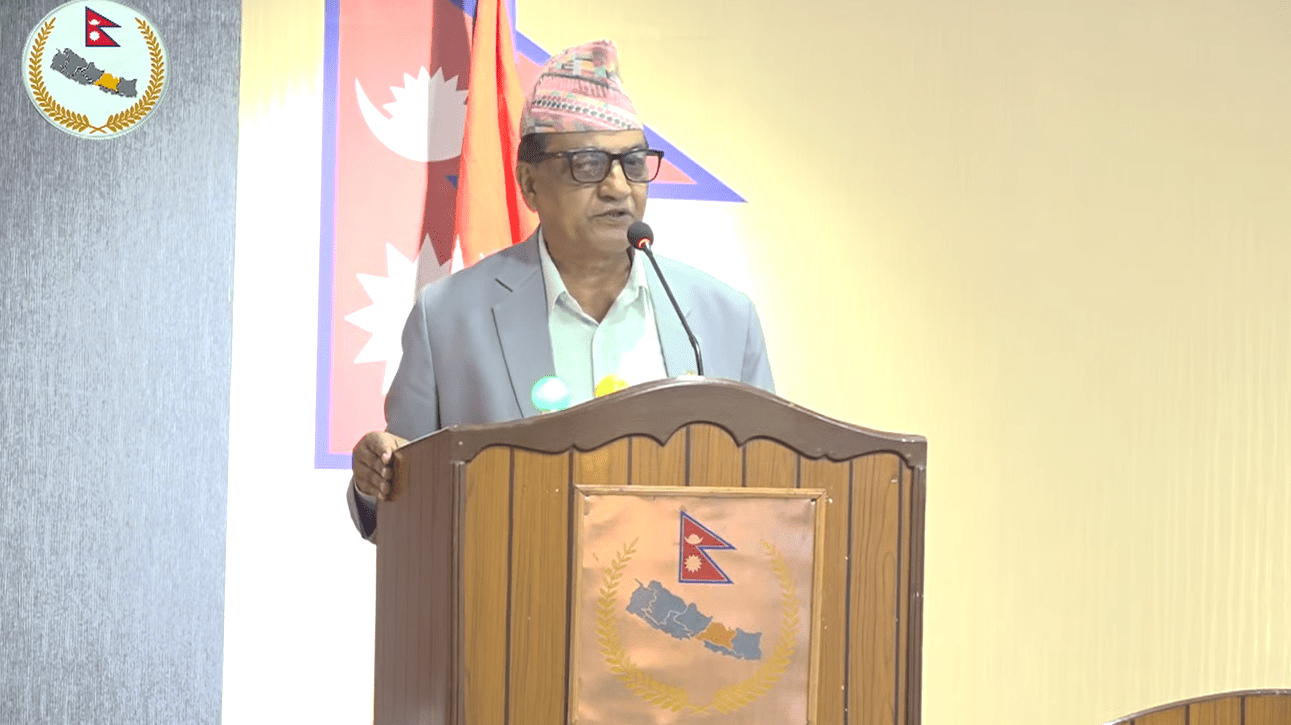
Parliamentary Party Leader Thapaliya stated that since there was a written agreement within the ruling coalition to share the government leadership for half the term each, UML will take the government leadership after the coming Chaitra month. He claims that since Congress's term to lead is only until Chaitra, the leadership will come to UML's share afterward, based on the old written agreement.
CPN-UML Bagmati Province Parliamentary Party Chief Whip Ek Lal Shrestha stated that intensive discussions are underway among the ruling parties regarding the change of leadership in the Bagmati Province government. He mentioned that internal preparations and dialogue have advanced with the aim of changing the government leadership by the coming Chaitra-Baishakh.
Shrestha stated that discussions are being held at various stages within the ruling coalition regarding the change and reorganization of the government leadership. He mentioned that the task force formed to enhance the effectiveness of the government has submitted its report, and based on that report, structural reforms of the government will be made. According to him, the coalition has put forward a new plan to make the government people-oriented and accelerate development works.
'We are in discussions regarding changing the government leadership. We will move forward by reaching an agreement between the coalition on the issue of the Chief Minister and making the government more efficient and robust. Discussions about changing the government leadership are ongoing,' Shrestha said.
He informed that both formal and informal dialogues are currently taking place. He stated that a decision on this matter will be reached soon.
'Although the date for a formal meeting has not been set yet, the government will be under UML leadership by Chaitra-Baishakh,' Shrestha said. 'What citizens seek is development and good governance. We must address the problems of the citizens through people-oriented programs, effective service delivery, and good governance. Accelerating development works is the main necessity of the present time.'
Meanwhile, CPN-UML Bagmati Province lawmaker Keshav Prasad Pokharel stated that there is no immediate possibility of changing the provincial government leadership. He argued that the leadership transfer agreement allegedly made between Congress and UML in the past is not in a position to be implemented immediately due to the current political situation and technical reasons.
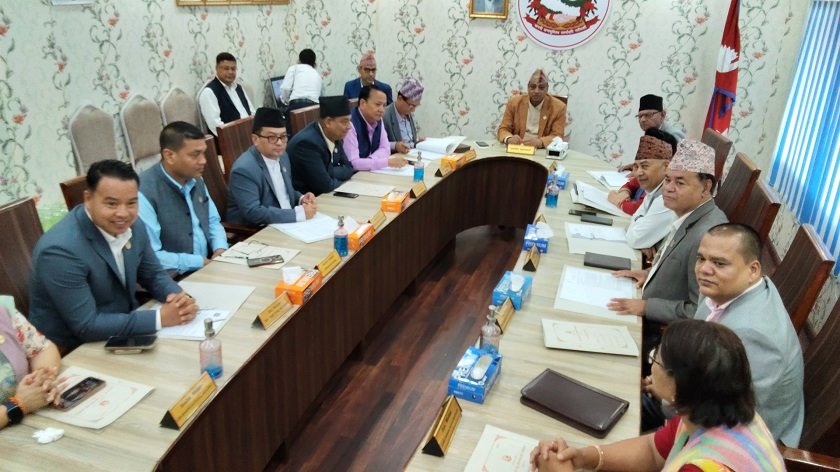
Lawmaker Pokharel stated that there was a 'gentleman's agreement' for Congress to lead for 8 months initially and UML to lead for the remaining term, but the situation has changed now. According to him, the balance of power among the parties has shifted, and both major parties are undergoing internal reviews, so changing the provincial government leadership is not a priority.
'Currently, there has been no institutional discussion about leadership change. Due to internal party engagements and political developments, this issue has not formally entered the agenda,' he said. 'The current government may continue until the next budget. Once a government is formed, it should be allowed to prepare at least one budget. The next budget will be presented by this same government. There is no immediate possibility of a leadership change.'
Pokharel stated that it is not easy to change the tenure and leadership of the government as provincial and local elections are likely to be held simultaneously in Baishakh 2084, and the Election Commission is preparing accordingly. However, he mentioned that there is a possibility of reaching an understanding on the distribution of the Speaker and Chief Minister positions while balancing political power.
Congress's Strategy
On the other hand, Congress, which is leading the government, appears to be employing a strategy of using the Speaker card in power sharing. Congress argues that a balance must be maintained between the leadership of the government and the parliament among the ruling coalition partners.
Prabhat Tamang, Spokesperson for the Bagmati Province Government and Minister for Economic Affairs and Planning, stated that a proper balance will be struck between the government and parliamentary leadership in the 'power sharing' among the ruling coalition partners.
He mentioned that discussions are primarily taking place between the major ruling coalition partners regarding the selection of the Speaker. However, he stated that no discussion has taken place regarding the change in government leadership.
Minister Tamang stated that consensus is necessary to move the session forward effectively. 'Currently, with the Speaker position vacant, discussions are ongoing at the leadership level between Congress and UML on who will lead it and how the government leadership will proceed,' he said. 'Power sharing issues will be concluded in a balanced manner to further strengthen the coalition.'
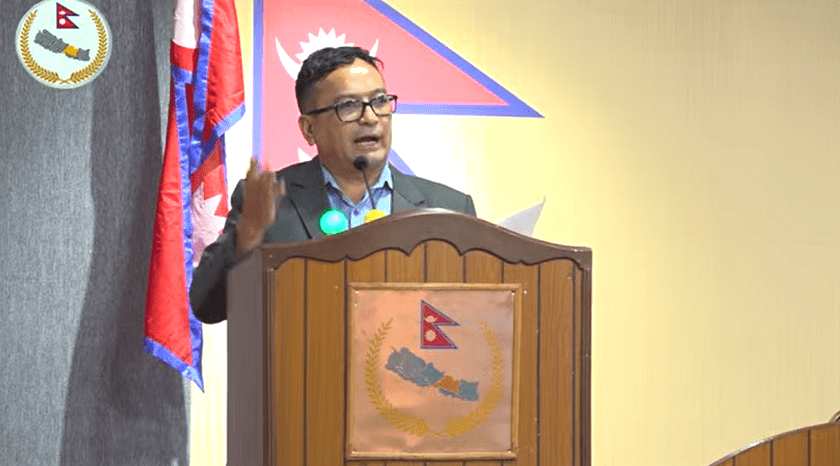
Minister Tamang stated that he has no information about any written agreement for a half-and-half term in the government leadership. 'There has been no formal discussion about changing the government leadership, nor has there been such an agreement. There is no situation for an immediate change in government leadership. The current government will continue,' he said.
Minister Tamang emphasized that due to the recent attacks on old political parties and the rise of new forces, there is a need for the current coalition to remain even more united. He stressed the need to focus on good governance and development work rather than making the slight delay in budget implementation and government performance a political issue.
Nepali Congress Provincial Assembly member and former minister Ramkrishna Chitrakar stated that the game of frequent government changes has generated public disillusionment towards federalism and the system itself. He clarified that the main expectation of the general public is effective delivery and problem-solving from the government.
He stated that there has been no official or institutional discussion so far regarding the change in government leadership. 'What the people seek is development, prosperity, and good governance. But with frequent government changes, a negative message is being sent to the citizens about the system and the arrangement,' he said. 'This is something we all realize.'
Stating that a stable government is necessary to make federalism effective, Chitrakar clarified that while there were some general understandings during the formation of the government, he has no information about an agreement on term division. 'If there is a written agreement, they can show it. Nothing official has happened regarding the government leadership, but we can easily guess that some informal discussions are taking place,' he said.
This specific news has been automatically translated by AI. As a result, there may be some inaccuracies or language errors.