Nepali Congress Attributes Election Defeat to Accumulated Public Dissatisfaction


Kathmandu. The Nepali Congress has stated that its defeat in the House of Representatives election held on Falgun 21 was the culmination of long-standing dissatisfaction and frustration among the general public.
Furthermore, the Congress indicated that the election results reflected dissatisfaction expressed by citizens in three installments.
In the review report on the elections presented by Vice President Bishwa Prakash Sharma at the ongoing Central Committee meeting, it was stated, 'Although the defeat in the Falgun 21 election is generally understood and perceived as unexpected, in reality, it was the culmination of long-standing dissatisfaction and frustration accumulated among the general public.'
Coalition Further Increased Resentment and Anger
Vice President Sharma's report mentioned that the Nepali Congress taking the initiative to save the House of Representatives, which was dissolved due to the internal conflict within the then CPN, was both a political necessity and compulsion at that time.
'However, when the alliance formed to save the parliament and the constitution was also used to win the election, it sowed serious dissatisfaction within the party ranks, and the word 'alliance' gradually became unpopular among the citizens,' the report stated, 'This fueled the size of the public's resentment and anger.'
Dissatisfaction Manifested in Three Installments
The Congress stated that although the defeat in the Falgun 21 election is generally understood as unexpected, in reality, it was the culmination of long-standing dissatisfaction and frustration accumulated among the general public.
'To understand today's truth, it is necessary to examine the fact that the public's dissatisfaction was expressed in three previous installments,' the Congress said, 'First - the local elections of 079, Second - the federal elections of 079 (local elections third - the Genji rebellion of Bhadra 23/24). '
The Congress analyzed that the victory of independent candidates in Dharan, Dhangadhi, and Kathmandu in the local elections of 079 provided a strong signal that public dissatisfaction could be converted into votes, and based on that signal, a new party was born immediately after the local elections.
Despite this, Sharma's report noted that the party failed to initiate transformation by internalizing the public message that the party, government, and leadership should all transform.
'But we did not initiate the transformation by internalizing the public message that the party, government, and leadership should all transform,' the report stated, 'Even after the federal elections of 079, we did not start changing; proposals for transformation and revision came within the party, but they were either rejected or ignored. Even after the dissatisfaction erupted into a flame during the Genji rebellion, we deemed it an 'emergency situation' and did not open the door for change within the party.'
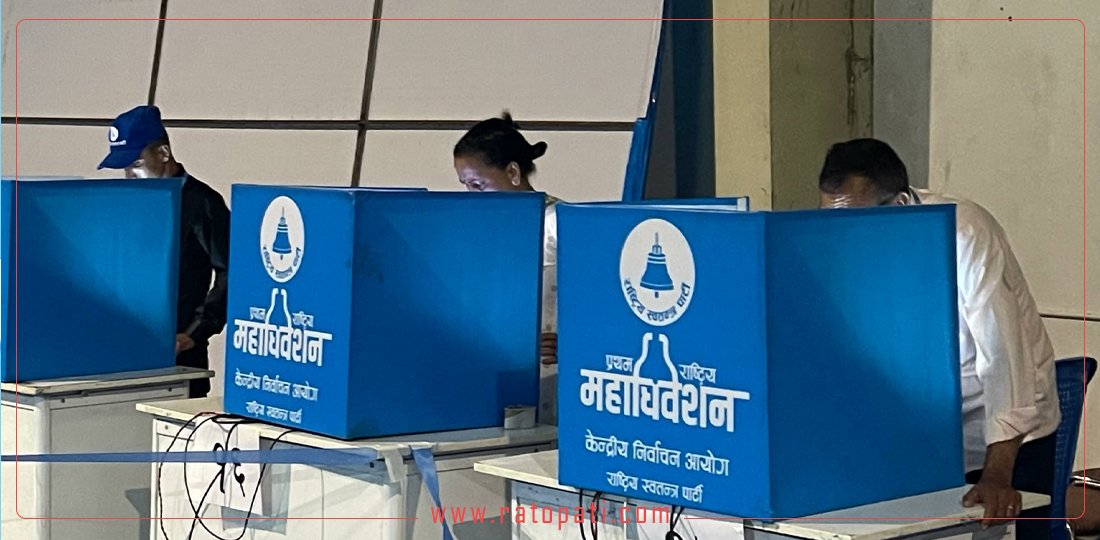
The Congress stated that the question of why the results did not come in our favor in the remaining only 50 days after the special general convention, having wasted three to three and a half years initially and then a hundred and twenty-five days at the end, is dismissible. 'This question is directly dismissible,' the Congress review stated.
This specific news has been automatically translated by AI. As a result, there may be some inaccuracies or language errors.