Security Officials Express Concern Over Potential Action Following Commissions' Recommendations on Protest Crackdowns

Twenty-six people lost their lives during the Second People's Movement, which began on Chaitra 24, 2062 BS, under the leadership of the then seven political parties and concluded on Baisakh 11.
An inquiry commission was formed under the chairmanship of former Supreme Court Justice Krishna Jung Raimajhi to investigate the matter. Commission officials summoned and questioned the then SSP of the Armed Police Force, Madhav Thapa, who was deployed for crowd control in the Gongabu area of Kathmandu, asking, 'Why did you open fire? Why are you always deployed only in Kathmandu?'
Thapa, who was personally deployed in the Gongabu area carrying a rifle to control the mob, replied, 'If I hadn't fired, public and private property would have been destroyed. Ask those who deployed me about other matters.' Thapa, who fulfilled his duty during the People's Movement, was suspended. Reflecting on that movement now, Thapa says, 'My suspension was revoked after a few months, and I retired after being promoted to DIG.'
The commission held 31 individuals accountable for suppressing the Second People's Movement, which resulted in 26 deaths and over 4,000 injuries. The commission advised the government to take action against those who suppressed the movement.
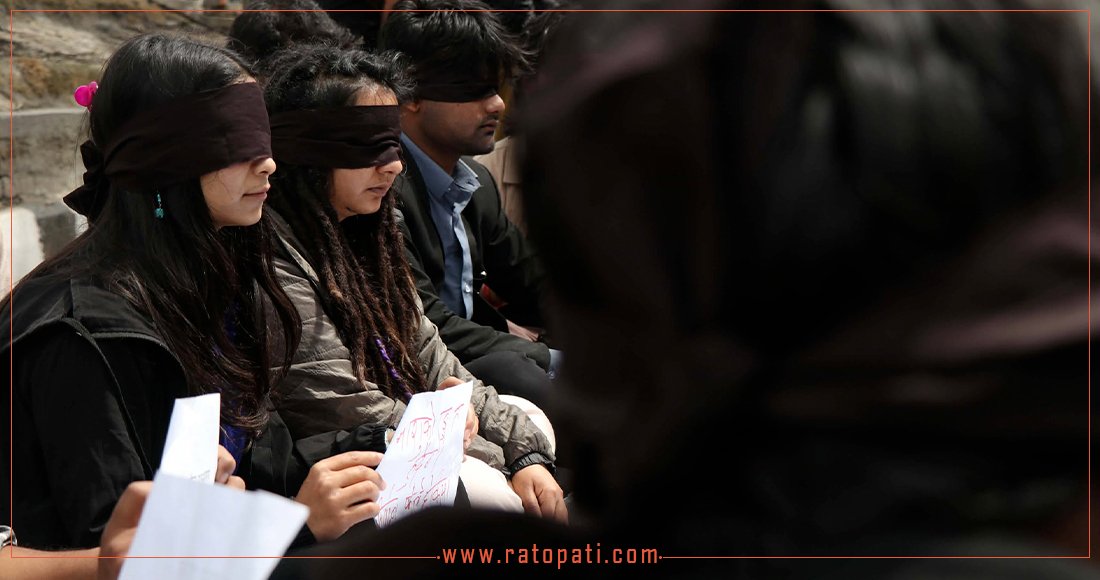
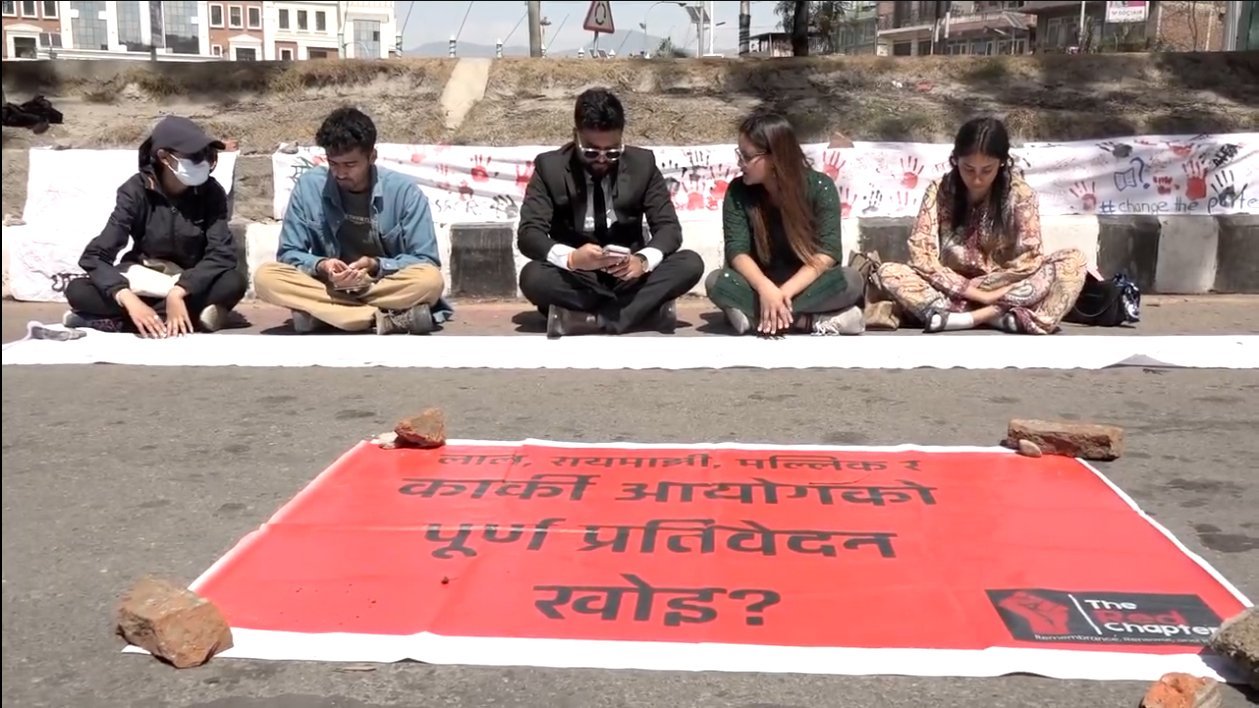
The report from the commission led by former Justice Gauribahadur Karki, formed to investigate the Gen-Z protests and unruly activities that occurred on Bhadra 23 and 24, was submitted to the then Prime Minister Sushila Karki on Falgun 24.
_becyonpfya_QzduKSAiKE.jpg)
The Karki-led commission also recommended action against officials of the Central Security Committee and the District Security Committee Kathmandu for opening fire during the Gen-Z protests. The investigation commission recommended prosecuting former Prime Minister KP Sharma Oli, Home Minister Ramesh Lekhak, Secretary Gokulmani Duwadi, IGP Chandra Kuber Khapung, Armed Police Force IGP Raju Aryal, and the then Chief District Officer (CDO) of Kathmandu, Chabilal Rijal, under criminal law.
It recommended departmental action against officials of the District Security Committee Kathmandu, the then DIG of the Metropolitan Police Office, Rani Pokhari, Om Rana, and the Operation Commander (SSP) of Rani Pokhari, Deep Shamsher Jabara, among others.
Like retired DIG Madhav Thapa, Deep Shamsher Jabara was also deployed to lead the police force for crowd control on Bhadra 23 and 24 at the Parliament building in New Baneshwor. The Karki Commission recommended departmental action against about 10 security personnel from Nepal Police, Armed Police Force, and National Investigation Department, and 5 from the Army. It recommended arresting and investigating all members of the Central Security Committee in criminal cases.
This recommendation from the commission has created ripples among high-ranking security officials. High-ranking Nepal Police officials, informally discussing the commission's recommendations, concluded that if the recommendations are implemented, 'it could pose further challenges in maintaining peace and security' in the future.
Officials expressed concern that if action is taken against those who used force during the movement, security personnel might be unable to perform their duties in the field in the future.
Former DIG Hemanta Malla Thakuri stated that the law itself protects security personnel deployed in the field with the authority to use force during protests. Speaking to RatoPati, he said, 'Security personnel are deployed in the field with the legal authority to use force.'
Malla stated that in cases of excessive use of force, a court can be formed within the force, and departmental action can be taken after investigation. He added, 'A court can be formed according to the organization's act, and in cases of excessive use of force, departmental action can be taken.'
However, Malla stated that criminal liability cases cannot be pursued for actions taken while exercising legal authority during a protest. He said, 'Investigation under criminal liability cases is not permissible when exercising legal authority.' Malla mentioned that the Supreme Court set a precedent in the criminal case filed against the then SSP Diwesh Lohani.
High-ranking security officials say that if security personnel deployed in the field according to the security plan face action for using force, they may not be able to mobilize police in potential riots. A high-ranking police official said, 'Commanders become afraid to give orders to use force if they risk facing action.'
Security officials state that if security personnel deployed in the field do not work with high morale, peace and security cannot be maintained. Former Armed Police Force DIG Madhav Thapa says, 'No one will work; if Singh Durbar is attacked again tomorrow, the police will let it happen.'
Former DIG Thapa stated that taking action against security personnel and commanders deployed to maintain peace and security according to the law will lower morale and create further problems.
According to Senior Advocate Satish Krishna Kharel, penalizing only the security personnel deployed in the field after damage occurs while controlling crowds and riots can create worse situations in the future. Senior Advocate Kharel, emphasizing the need to enhance the skills and awareness of security personnel, said, 'The practice of only penalizing after an incident occurs can create a bad situation for peace and security.'
Since the commission formed to investigate the Gen-Z protests has investigated and made recommendations, the government must make a separate decision to implement them. Kharel mentioned that the bench of former Supreme Court Justice Anup Raj Sharma interpreted the recommendation of the Raimajhi Commission regarding the Second People's Movement as 'mere information.' He said, 'Punishment cannot be given based on a commission's recommendation; the Supreme Court has interpreted the commission's recommendation as only information.'
If action is to be taken based on the commission's investigation, the legal provision is that the government's mechanisms must re-investigate and gather evidence. In the case of former DSP Bishnu Hari Gautam, who served a penalty of two grades reduction for the offense of firing during the Second People's Movement of 2062/063, the Supreme Court's verdict stated, 'Punishment cannot be imposed.'
Kharel stated that if criminal investigation proceeds based on the Karki Commission's recommendation against former security leadership and members of the Central Security Committee, there could be 'fear.' He said, 'If cases are filed, security personnel will be fearful tomorrow, which can increase security sensitivity.'
This specific news has been automatically translated by AI. As a result, there may be some inaccuracies or language errors.