
Kaligandaki Corridor Transforms Remote Baglung, Opening Doors to Commerce and Connectivity


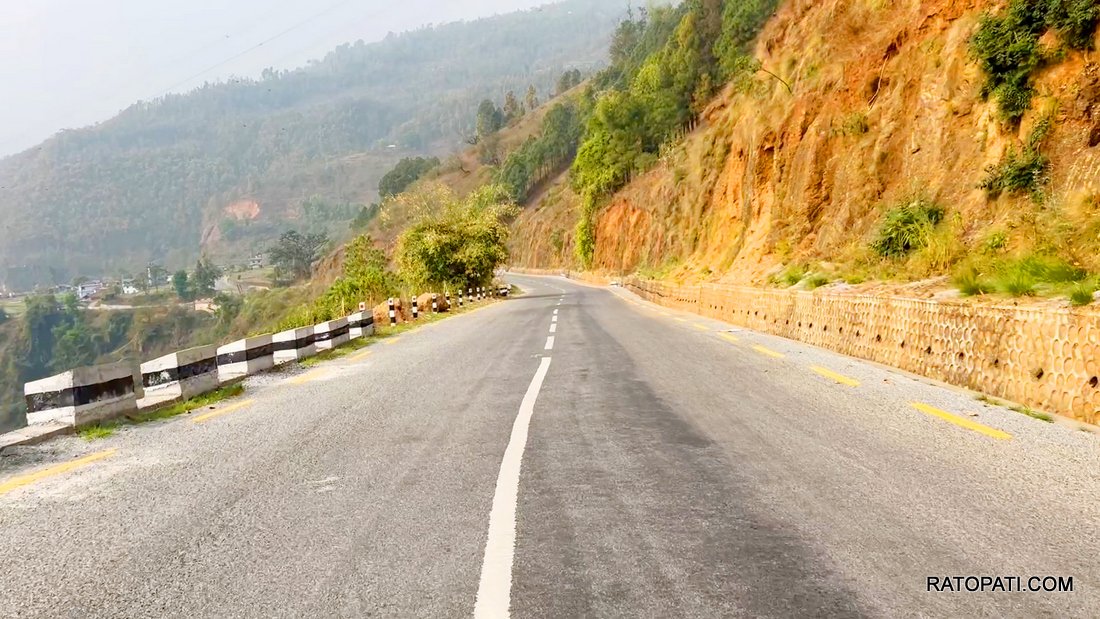
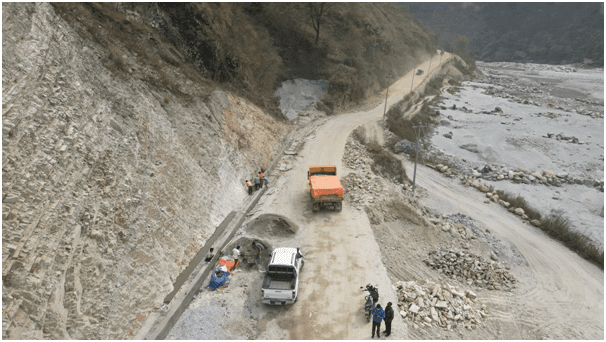
Baglung. The Kaligandaki River flows ceaselessly below, and alongside it runs the Kaligandaki Corridor, connecting China and India. This corridor, which links the Himalayas, hills, and plains, has opened doors of possibility for remote areas. This corridor has become a means to open countless doors of opportunity, bringing markets for farmers and customers for traders.
The corridor, stretching from Gaindakot in East Nawalparasi to the Korala border in Mustang, connects the districts of Baglung, Mustang, Myagdi, Parbat, Palpa, and East Nawalparasi. The corridor has not only connected remote South Baglung to major cities in the country, as well as India and China, but has also opened numerous avenues of possibility.
The corridor, a project of national pride, connects not only Baglung and Jaimini Municipality but also links in many dimensions.
Construction of the corridor, which serves as a tri-national road, began nearly 14 years ago. Following the expansion of the corridor, settlements have recently begun to emerge along the roadside. The number of people setting up businesses along the corridor, moving down from rural areas, is also increasing. The approximately 435-kilometer long corridor has 34 kilometers falling within the Baglung section.
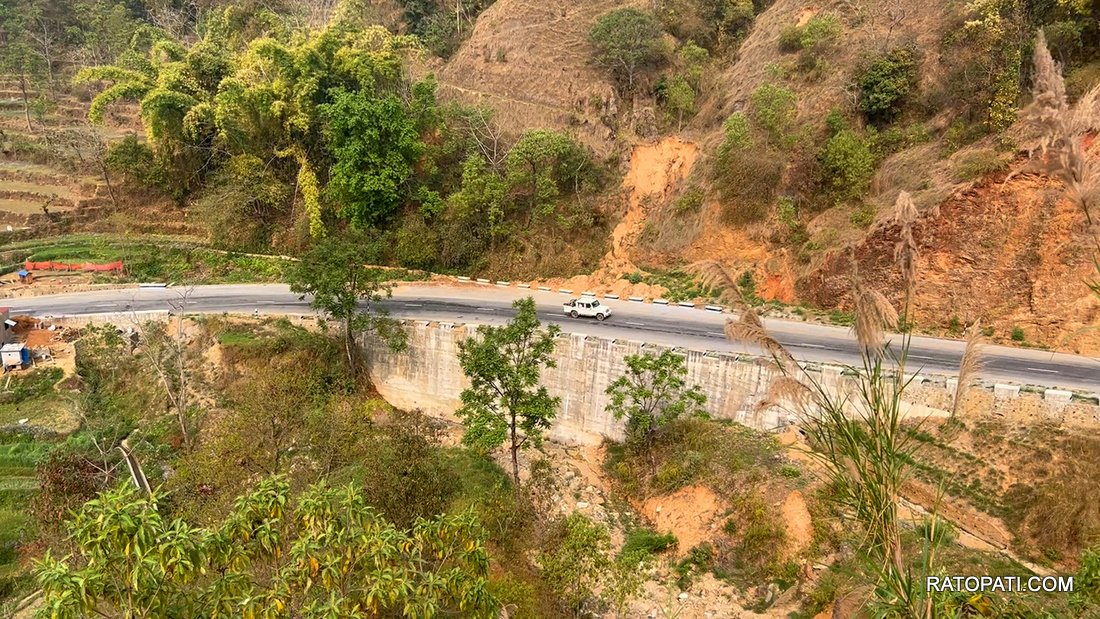
- Settlements Expanding Along the Route
The corridor has brought significant change to the Jaimini Municipality area of Baglung. Settlements have begun to form in Belbager, Jaimini Dham, Chharilauwa, Nwaradhik, Dhus, Sussa Phant, and other areas. With the upgrading of the corridor, most sections have been paved, leading to an increase in vehicular traffic.
Chandrakala Chalise of Jaimini Municipality-7, Jaidi, stated that the corridor is proving to be a boon for this region. She mentioned that while a few houses were sparsely built along the corridor previously, the number of people moving down from the villages to the roadside is now increasing.
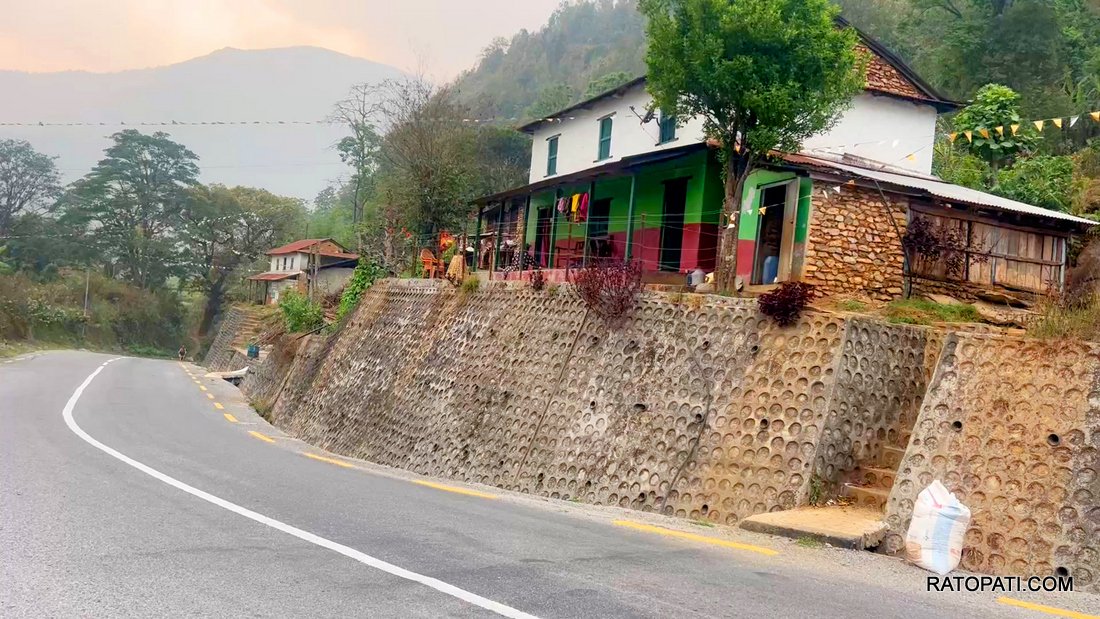
“The road has brought great change to our area. We never imagined such a transformation would occur. In a few years, the roadside will be filled with houses and buildings,” she said. “The villages have started to empty out. The construction of houses around the road has increased.”
Chalise explained that the corridor is transforming remote areas into accessible ones. She recounted that previously it took a full day to reach Baglung Bazaar, but now one can reach it in a short time.
She added, “Eight to ten years ago, this area was very backward. To go to the district headquarters, Baglung Bazaar, we had to go to Phalebas in Parbat to catch a vehicle. Now, after getting up, you can find a vehicle right in front of your house. After boarding, you reach the market in 40 to 45 minutes.”
- Lifestyles of Citizens Changing
After the corridor was paved, it became easier for citizens in rural areas to reach major cities like Butwal and Bhairahawa, as well as other parts of the country. Kasiram Poudel of Jaimini Municipality-1 said that daily life has started to change since transportation began operating on the corridor.
He shared his experience of how it used to take 15 days to travel to Butwal and return after purchasing necessities like salt and clothes, clarifying that now one can go in the morning and return by evening.
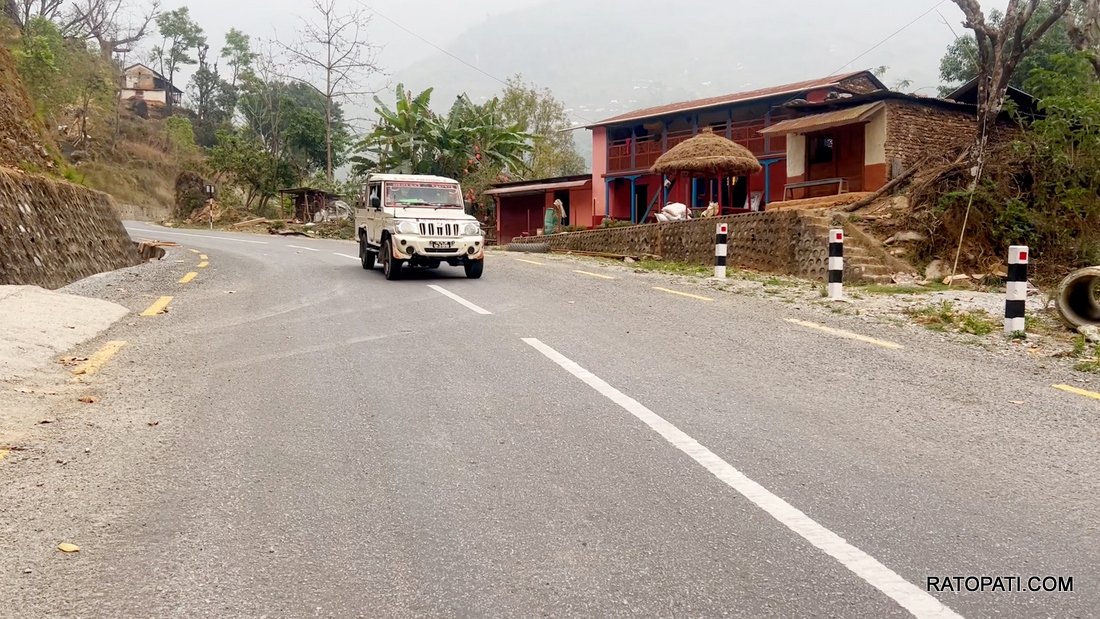
Poudel said, “In our time, we had to walk to Butauli (Butwal) to carry salt. The roads were not smooth like they are now. Motor vehicles did not run. We used to walk to Butauli. It would take 15 days to bring salt home from Butauli. Now, if you go in the morning, you finish all your work and return by evening. The road has been made much better.”
Poudel mentioned that he and his generation are only now experiencing development in their later years. However, he believes this development will be easier for the next generation. He notes that since vehicles now come right to the doorstep, all kinds of goods from within the country and abroad are arriving. He emphasized that the corridor has brought significant change to this area in the last decade.
- Hope for Halting Migration
Jaimini Municipality is the municipality in Baglung that experiences the most out-migration. Villages in the upper regions are emptying out recently. However, locals near the corridor are now thinking of staying in their own place due to the corridor. Bikash Chalise of Jaimini Municipality-7 stated that until five years ago, many locals migrated from the villages to places like Pokhara, Chitwan, Bhairahawa, and Gaindakot.
He shared that recently, after the Kaligandaki Corridor was paved, many people living near the road have stopped migrating. He mentioned that his own family had plans to migrate, but they stopped as the corridor became organized. He believes many locals are now planning to stay in the villages.
Chalise said, “We were in a lot of trouble before. To go to Butwal, we had to reach Pokhara. It used to take about a day to reach Pokhara from here. Now, dozens of vehicles come from Butwal daily via the corridor. Because of this, we are thinking of doing some business in the village and staying in the village.”
- Ease for Commercialization
The corridor has directly connected farmers engaged in commercial vegetable farming and milk production to the market. Farmers who used to carry their produce in baskets to the market until two years ago are now sending them by vehicle.
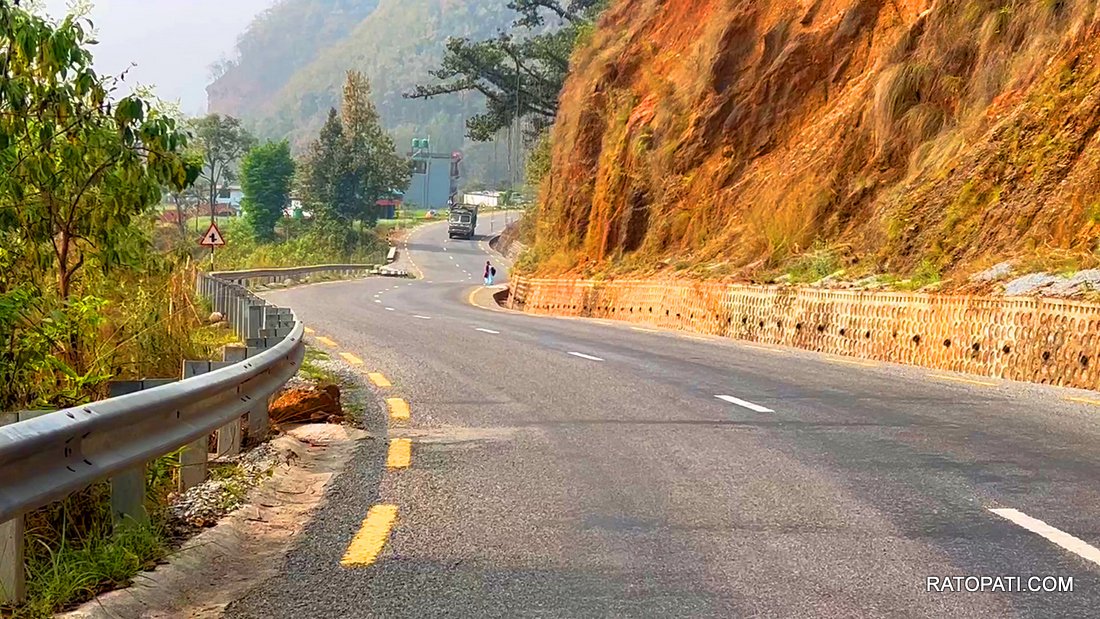
Local Prem Thapa stated that the corridor has made it easier to send village produce to Butwal, Bhairahawa, and Pokhara. He noted that many farmers are excited as the corridor has been improved and stressed that the state should now arrange for them to receive fair prices.
“The Kaligandaki Corridor has made our village and area accessible. Vehicles pass through day by day. Passengers buy the goods produced here and take them away. While it used to take a day to reach Butwal and Bhairahawa, now it can be reached in four to five hours,” he said. “The elderly are delighted to see this development now.”
- Religious Route Connecting Lumbini-Muktinath
Every year, thousands of Indian tourists visit Muktinath in Mustang. Similarly, Chinese tourists visit Lumbini. The Kaligandaki Corridor is the main route that directly and shortly connects Lumbini and Muktinath. Furthermore, the corridor is also a suitable route for tourists heading to Mansarovar.
Harihar Sharma, Deputy Mayor of Jaimini Municipality, stated that the Kaligandaki Corridor is beginning to develop as a religious route. He believes that since the corridor directly connects India and China, it will be an important route for both Hindu and Buddhist followers.
Deputy Mayor Sharma said, “Since the corridor is linked to religious tourism, many possibilities have awakened here; Jaimini Dham is in our area. Its importance is also significant. Tourists going to Muktinath and Lumbini will now travel via Baglung. This route will have a distinct importance.”
He mentioned that millions of Hindus believe that bathing in the Kaligandaki brings merit, and pilgrims traveling on the corridor can stop their vehicles anywhere to bathe. He added that the local government will now promote tourist and religious sites to attract external tourists.
He stated that the Kaligandaki Corridor will play a significant role in connecting South Baglung with prosperity. He believes that every citizen of Baglung can now benefit greatly from the corridor by engaging in trade and business.
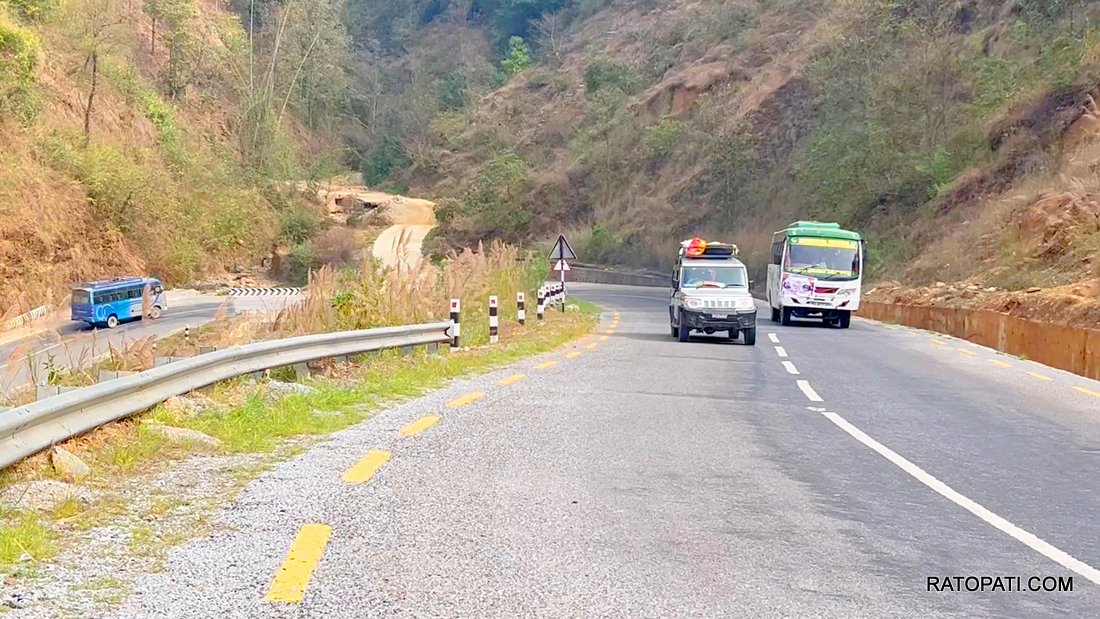
The corridor connects 19.5 kilometers in Jaimini Municipality and 14.5 kilometers in Baglung Municipality. It has also shortened the journey from districts like Mustang, Myagdi, Baglung, and Parbat to Butwal, Bhairahawa, and India.
This specific news has been automatically translated by AI. As a result, there may be some inaccuracies or language errors.

_sCLDfWVnnm.jpg)
_TBtYXgDzLq.jpg)