China Affirms Iran's New Supreme Leader Selection as Internal Affair Amid International Reactions

Beijing. Amid international reactions following the selection of a new Supreme Leader in Iran, China has clarified that this decision is entirely Iran's internal matter. Beijing stated on Monday that it respects Iran's sovereignty and territorial integrity, indicating opposition to any form of interference or targeted action against the new leader.
Mojtaba Khamenei, son of the former Supreme Leader Ali Khamenei, who was killed in the first phase of a US-Israeli attack, was selected as the new Supreme Leader. Following this, the Israeli military warned that it could target 'any successor' to Khamenei.
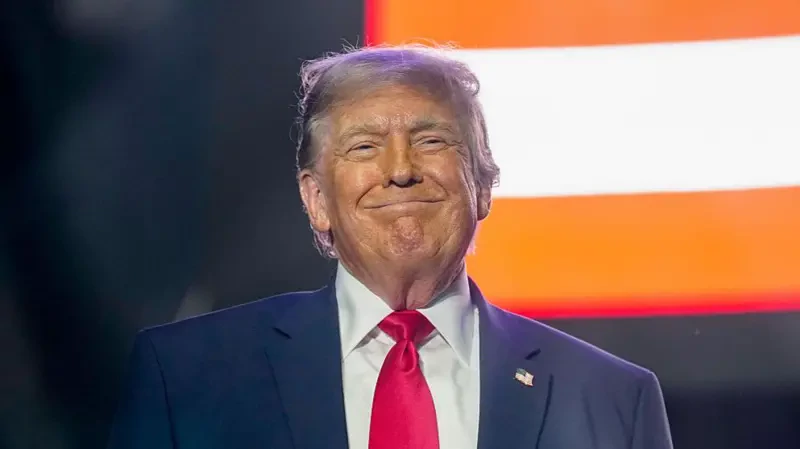
US President Donald Trump had previously criticized Mojtaba Khamenei as a 'lightweight' leader. Furthermore, comments suggesting that the US should have a role in the process of selecting the new Iranian leader were made public.
At a regular press conference held on Monday regarding this matter, Chinese Foreign Ministry spokesperson Guo Jiaqun stated that Iran's decision to select a new leader was an 'internal process conducted according to its constitution.' When asked about potential actions against the new leader, he clarified that China maintains its policy of opposing interference in the internal affairs of other countries under any pretext.
According to Guo, China maintains the view that Iran's sovereignty, security, and territorial integrity must be respected. He also pointed out the necessity for all parties to exercise restraint.
It is reported that Israel and the United States have continued attacks on Iran in recent days. In response, Tehran has initiated a series of missile and drone attacks towards Israel and some Gulf countries. US military presence is reported in those countries.
Beijing is considered a close partner of Tehran. China has already condemned the assassination of former Supreme Leader Ali Khamenei. However, China has also expressed dissatisfaction with the attacks launched by Iran towards neighboring Gulf countries.
China has also initiated diplomatic efforts as part of its attempt to de-escalate regional tensions. China's special envoy for the Middle East, Zhai Jun, met with Saudi Arabian Foreign Minister Faisal bin Farhan on Sunday. It is reported that during the meeting, he urged all parties to exercise restraint to reduce regional tensions.
During the talks, Zhai Jun emphasized the need to immediately halt military action and take necessary steps to prevent the situation from becoming more complex. He also stated that priority should be given to ensuring that civilians in regional countries do not suffer further harm.
Earlier on Sunday, Chinese Foreign Minister Wang Yi also expressed concern over the ongoing conflict, noting that such a confrontation 'should never happen.' He stressed that all parties must strive to end the war.
According to analysts, the rising tensions in the Middle East increase the risk of impacting global energy supply and international trade. This also appears to pose challenges to China's energy security.
According to data from the analysis firm Kpler, more than 80 percent of the crude oil exported from Iran last year went to China. However, this is a relatively small proportion compared to the total oil China imports by sea, with statistics showing it was only about 13 percent.
Nevertheless, since a large portion of the crude oil China imports still comes from the Middle East region, instability there could have a direct impact. According to Kpler, more than half of China's total seaborne crude oil imports last year came from the broader Middle East region. These supplies largely depend on the maritime route through the Strait of Hormuz.
This specific news has been automatically translated by AI. As a result, there may be some inaccuracies or language errors.