Nepal Communist Party Finishes Fourth in Federal Elections Amidst Unfavorable Climate

_KladlPYIX6.jpg)
Kathmandu. The Nepal Communist Party (NCP) has faced the most adverse situation in its history. In the House of Representatives election held on Falgun 21, the NCP secured only 7 seats, dropping to fourth place. While suffering a dismal defeat in the first-past-the-post category, it also failed to garner encouraging votes in the proportional representation category.
As of 5 PM on Sunday, with 4,530,913 votes counted, the NCP has received a total of 304,062 votes. The existence of the NCP, established from the Maoist armed insurgency of 2052-062 BS and the People's Movement of 2062/63 BS, appears to be in jeopardy. Following the fall of the then CPN-led Congress-UML coalition government due to the agitation on Bhadra 23 and 24, the interim government led by former Chief Justice Sushila Karki dissolved the parliament and announced elections for a fresh mandate.
In this election, while the Rastriya Swatantra Party (RSP), formed just three years ago, is moving towards securing a two-thirds majority government, the older parties—Congress, UML, and NCP—have been pushed into a serious crisis. In the 2048 election following the political change of 2046 BS, the United People's Front, the open front of the then CPN-Unity Centre, became the third largest party by winning 9 seats.
In 2051 BS, the faction that would later become the core component of the current NCP, the Maoists, boycotted the mid-term elections and plunged into war. Following the 12-point agreement between the then seven parliamentary parties and the Maoists in 2062 BS, the second People's Movement in 2062/63 BS toppled the traditional monarchy. In the Constituent Assembly election of 2064 BS, the Maoists emerged as the largest party by winning 229 seats. In the second Constituent Assembly election of 2070 BS, they shrunk to the third position, winning 83 seats. Despite a continuous decline in public support in every election since then, they maintained the third position.
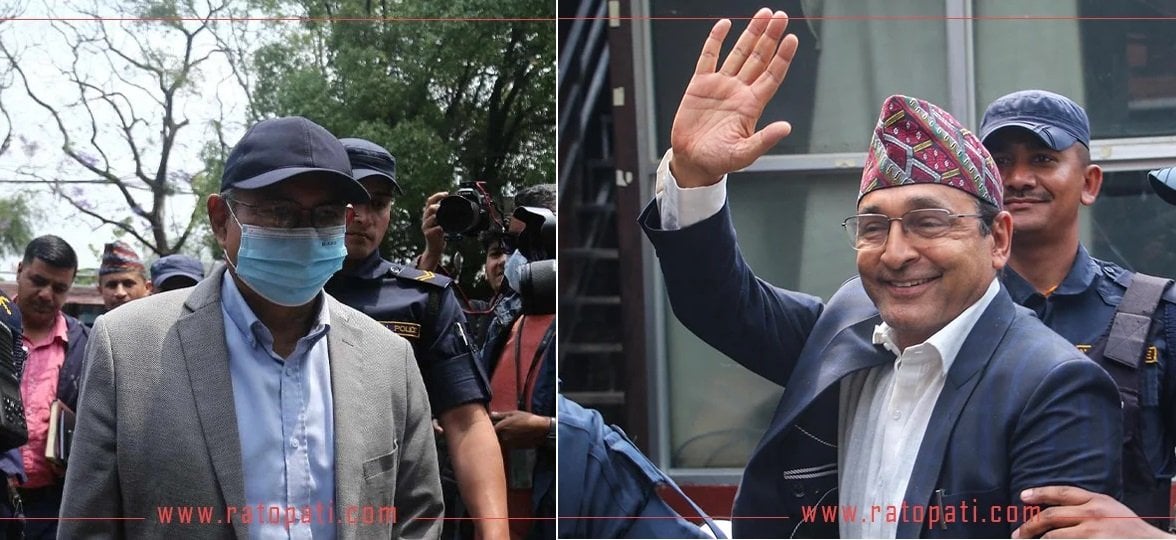
In 2074 BS, the two major leftist parties, CPN-UML and CPN (Maoist Centre), merged to form the Nepal Communist Party (NCP). At that time, the NCP won 174 seats, securing nearly a two-thirds majority. In 2079 BS, they won 32 seats, placing them in third position. With the plan to become a decisive political force in this election, CPN (Maoist Centre) Chairman Pushpa Kamal Dahal 'Prachanda' and CPN (Unified Socialist) Chairman Madhav Kumar Nepal united 25 constituent factions to form the NCP. However, due to the unexpected wave of public support favoring the RSP, the NCP has been relegated to fourth place with a poor result.
This specific news has been automatically translated by AI. As a result, there may be some inaccuracies or language errors.