Rachin Ravindra: The Unconventional Spin Wizard Shaking Up the T20 World Cup


Ahmedabad. In the 2023 ODI World Cup in India, Rachin Ravindra unexpectedly opened the batting. He was primarily selected as a reserve player, but he equaled Kane Williamson's record for the most runs scored by a New Zealander in a single ODI World Cup. Now, in the T20 World Cup taking place in India and Sri Lanka, he is causing a stir with his bowling, again in an unexpected manner.
Ravindra has already taken 11 wickets in this tournament, equaling Daniel Vettori's record for the most wickets taken by a New Zealand spinner in a T20 World Cup. He is now just three wickets away from breaking Trent Boult's all-time New Zealand record.
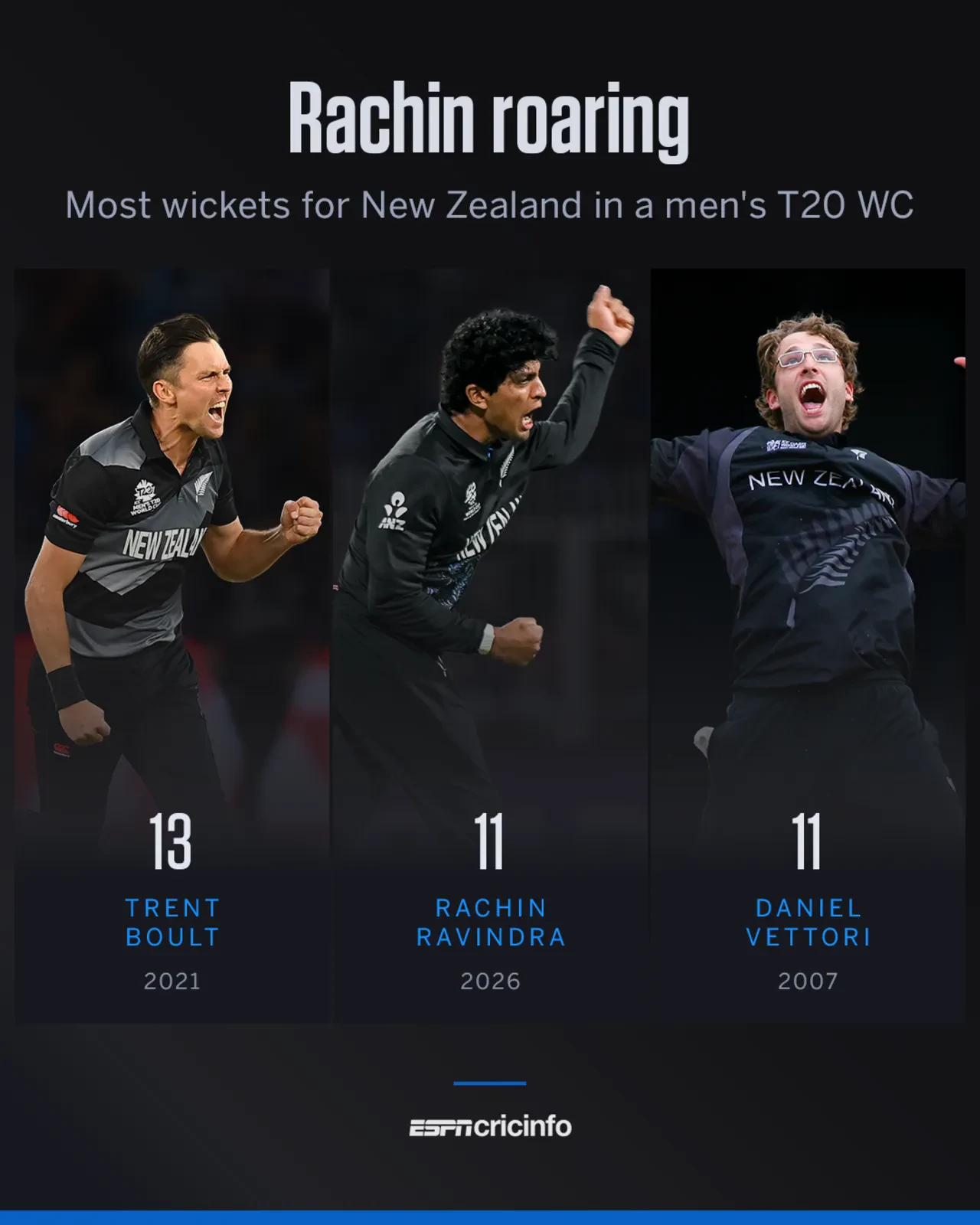
In the final against India on Sunday, Ravindra's left-arm spin might challenge India's batting lineup, which is dominated by left-handed batters. In this tournament, he has performed excellently against right-handed batters, taking 8 wickets in 6 innings at an economy rate of 6.32.
However, his performance against left-handed batters is not that poor either; he has taken 3 wickets in 4 innings at an economy rate of 8.44.
There is no 'mystery' in Ravindra's bowling. Like his captain Mitchell Santner, he is a classical left-arm finger-spinner. But unlike Santner, his bowling action lacks pause, and he primarily relies on variations in pace and length.
On the Colombo pitch, which aided spin, Ravindra lofted the ball in the air, keeping it away from the batter's swinging arc, preventing them from exploiting the short boundary. On India's flatter pitches, he has focused on maintaining control over the length and delivering the ball slightly quicker.

In the semi-final against South Africa at Eden Gardens, Ravindra bowled the ball straight onto the stumps at a speed of 83 kilometers per hour, getting the in-form batter Aiden Markram caught at long-on. Markram attempted to hit aggressively, but he could not reach the pitch of the ball.
Against left-hander David Miller, he pitched the ball into the surface, pushing it outside his hitting range, resulting in Miller being caught at long-off.
Subtle variation, but a big impact.
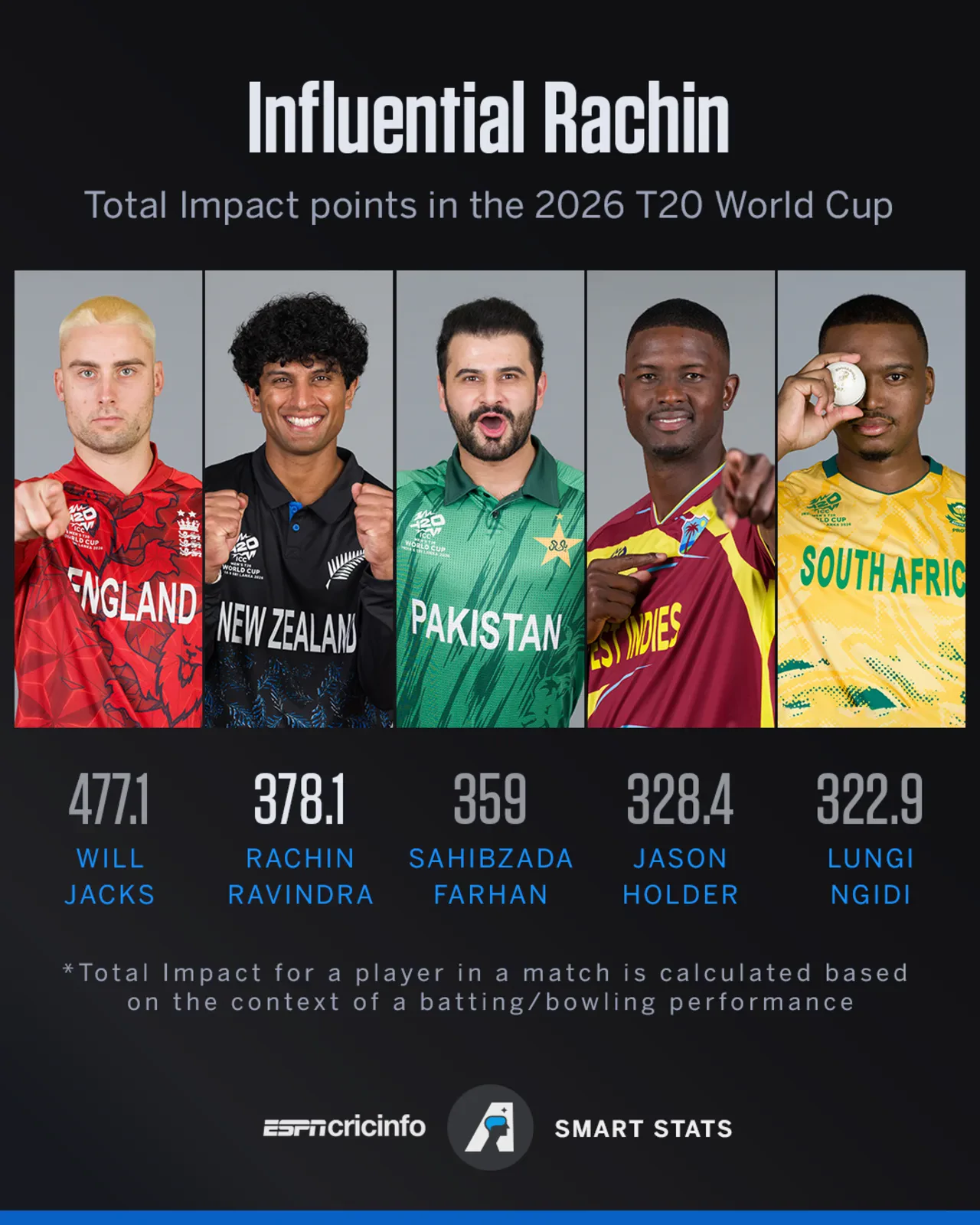
“For me, it's just about trying to make the batter's life as difficult as possible,” Ravindra told the broadcaster after taking New Zealand to the final. “To do that, I keep making small adjustments like changing my pace, changing the angle of my seam, changing my own angle.”
Lance Dry, a former Wellington spinner who coached Ravindra at the Firebirds club, further clarified his spell against South Africa at Eden Gardens.
“Like Michael Bracewell, Rachin has as much intelligence in his bowling as he has understanding in his batting,” Dry told ESPN Cricinfo. “When bowling to right-handers, he was bowling traditional finger-spin - the seam was upright and angled towards third man. He never bowled that kind of ball to left-handers; instead, he used a scrambled seam because he didn't want to turn the ball into the batter's arc and was looking for some variation in bounce, which was successful. ”
Ravindra had more options to work with drift in Colombo. Against Dasun Shanaka, he drifted one ball in, then turned it sharply away, causing a mistimed shot to go to short third man. It was as if that ball stopped midway and reached Shanaka very late.
Ravindra said, “I have always thought about this drift. The wicket has also helped with this. It's always interesting because you think it's a left-hander's ball, and you drift it into the right-hander, but sometimes it goes slightly away as well. We know how good the wickets are in T20 cricket, so it's just about using a bit of cunning to keep the ball away from their hitting arc and stopping them somehow.”
Having Santner work his magic from the other end has certainly helped Ravindra. “Honestly, it feels good to bowl from the other end. Santner - he bowls those tough overs and is very skillful. Batters try to hit him, and in the process, they might take some risks against my ball, which I am happy with.”
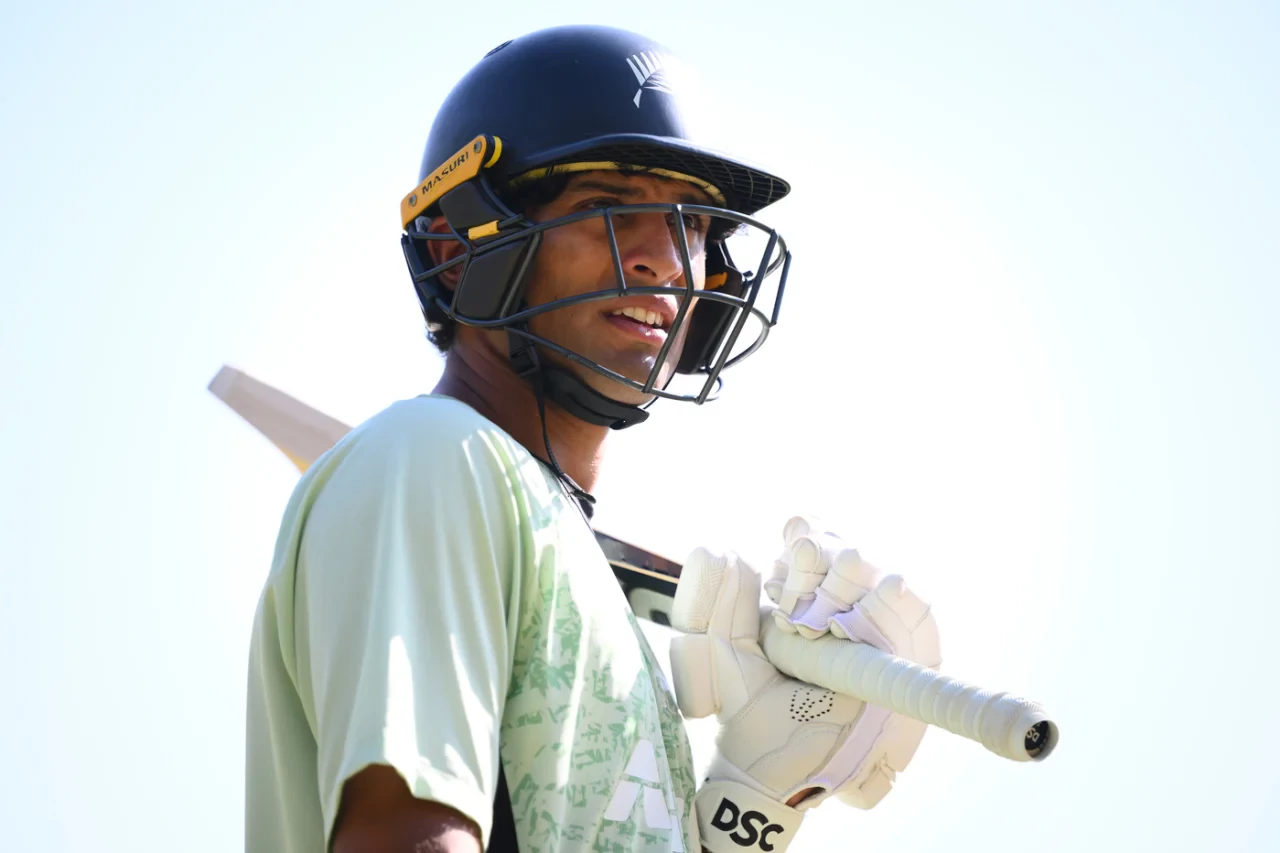
Ravindra currently considers himself first and foremost a batter, but when he joined the New Zealand Under-19 team at the age of 15, his bowling was more talked about. He is still the third-highest wicket-taker for New Zealand Under-19, where he took 26 wickets in 15 innings at an economy rate of 5.20.
“When Rachin was in the Under-19s, yes, he was selected more as a spinning all-rounder than a batting all-rounder,” Dry recalled. “But at that time, he was very lean and didn't have that much power to hit the ball, so he batted lower down the order. His main skill was bowling, and he was always accurate.”
When he moved up to the Wellington and New Zealand white-ball teams, his bowling took a backseat, but during this time, Ravindra learned to impart more 'revolutions' on the ball. Even though the pitches in New Zealand didn't offer much turn, Ravindra managed to contain batters by extracting some extra bounce with overspin and varying his pace.
“Rachin's natural seam position is more topspin and more overspin than square-seam side-spinning deliveries,” Dry explained. “This is due to the conditions of our pitches. In Wellington, Rachin also has to contend with the wind. When you go to other places where you have to control the pace, it helps for a long time.”
“Bowling with the wind and bowling against the wind are completely different things. The overs he has bowled over time in the nets at Wellington, where all kinds of weather effects are present, have helped him develop that ability, and now he is getting the opportunity to showcase it.”
Ravindra also has good experience playing outside New Zealand. When he went to the Chennai Super Kings Academy in 2024 before the Test series in India, he practiced bowling accurately at a good length.
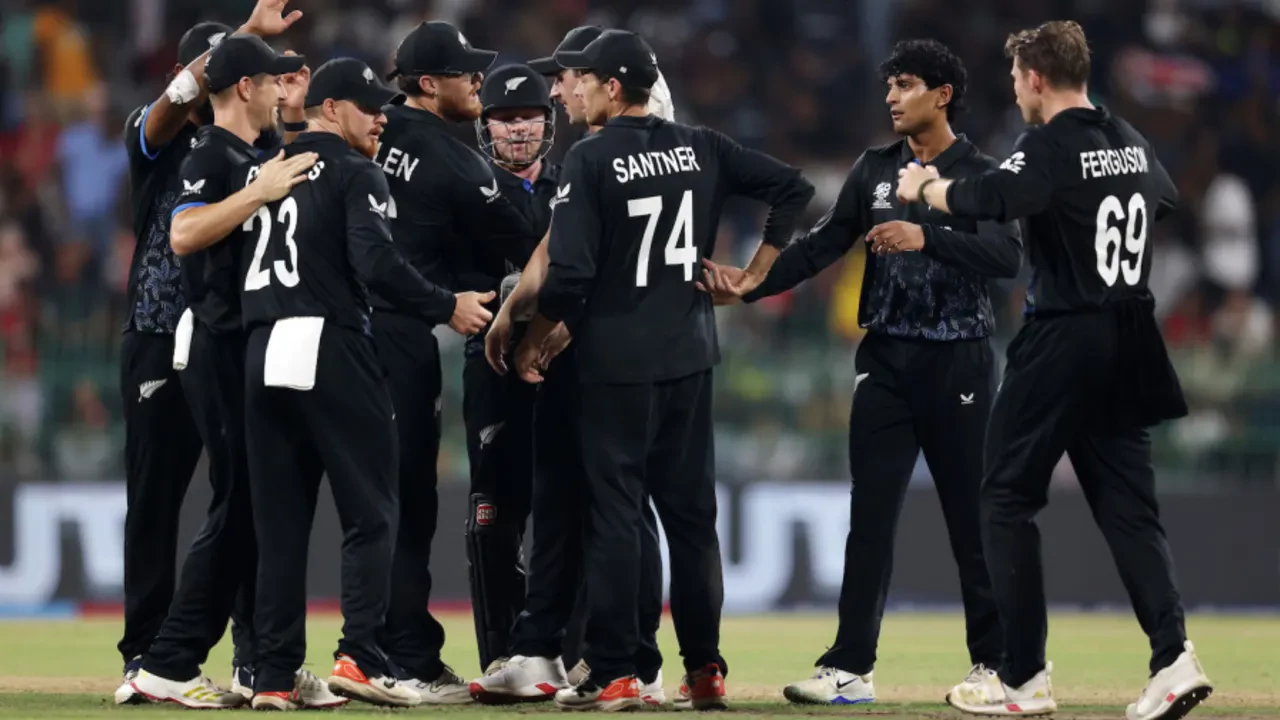
One of his drills involved dropping the ball into a cone placed between a good length and a half-volley length. All this preparation has paved the way for Ravindra's success in this T20 World Cup.
However, when the World Cup began, Ravindra was 'deep in the bush' (confused/struggling), as his Wellington teammates Tim Robinson and Peter Younghusband said last month on The Cricketers Network. This terminology was coined by Ravindra himself, which could mean many things—lost, confused, or struggling for form.
Ravindra reached this state after being dismissed for a golden duck off an excellent ball from Mujeeb Ur Rahman in Chattogram. India's left-handed batters might put Ravindra 'deep in the bush' once again, but underestimating him could be fatal for anyone.
He is considered one of the best problem-solvers in this team, which is why the Black Caps view him as the next great all-format player after Williamson. On Sunday, he has a chance to achieve something Williamson has not yet managed: winning a World Cup.
“I think as a kid, you dream of moments like these,” Ravindra said. “I think there will be over a hundred thousand spectators in Ahmedabad, and it's a moment where you pinch yourself, and you always want to play there. You grow up watching the World Cup... and getting to play the World Cup final in India is truly an incredible, pinch-me moment.”
This specific news has been automatically translated by AI. As a result, there may be some inaccuracies or language errors.