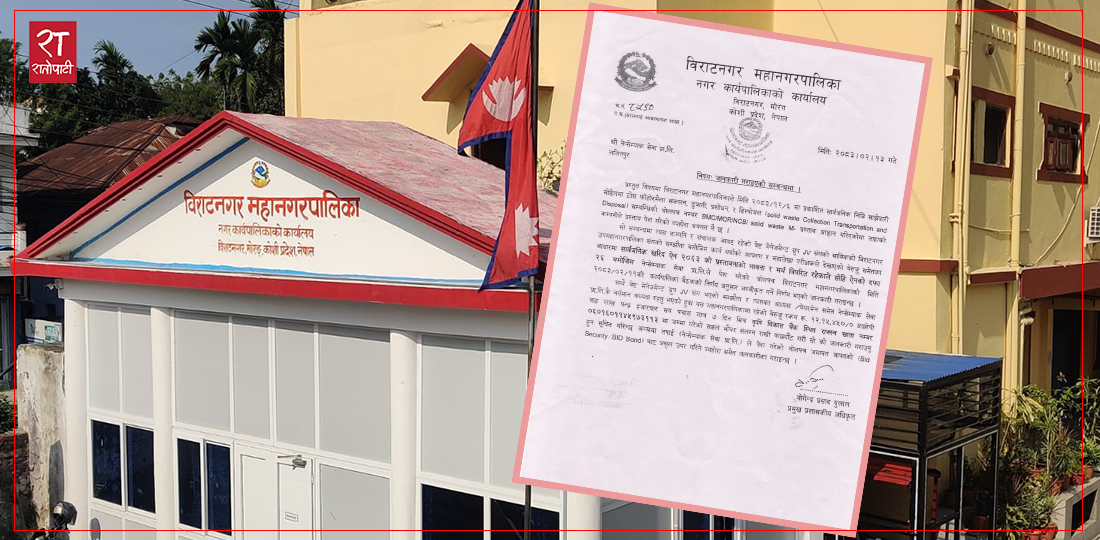
Rastriya Swatantra Party Candidate Ramesh Kumar Sapkota Stuns Establishment Parties in Surkhet Election
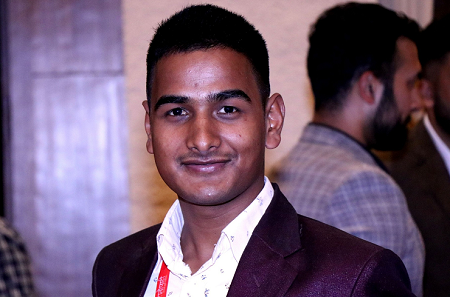
Surkhet. Surkhet is considered a stronghold for both the CPN-UML and the Nepali Congress. Leaders from the Congress party have historically dominated not only the top positions of the party but also parliamentary politics from this region.
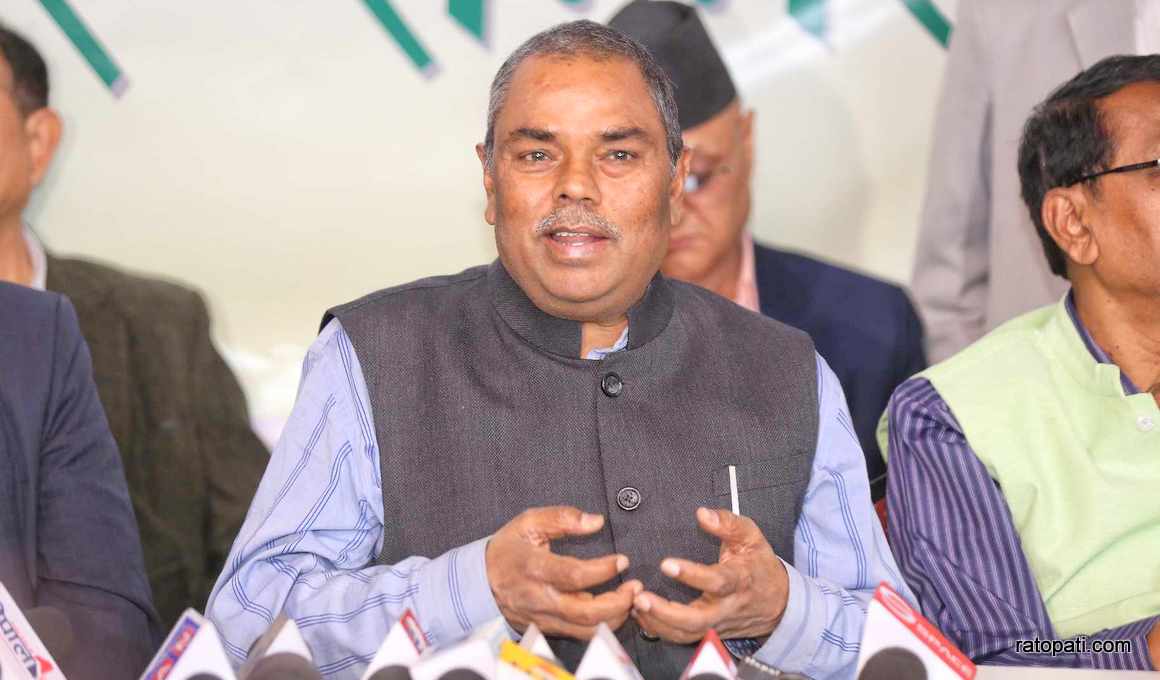
Purnabahadur Khadka has led numerous small and large ministries while serving as the acting president of the Congress. Influential leaders like Hridayaram Thani and Shivraj Joshi have also served as ministers at the federal level. On the UML side, Yamalal Kandel is currently the Central Secretary and Chief Minister of Karnali Province, while Nabraj Rawat had previously served as the Minister of State for Health.
A tough competition has been ongoing between these two parties in both constituencies of Surkhet since 2048 BS. Sometimes UML won the election, and sometimes the Congress did. The CPN (Maoist Centre), which emerged from the armed conflict, is comparatively weaker here. Although they won one seat in the 2064 Constituent Assembly elections when there were three constituencies, the Maoists have not achieved success here since then.
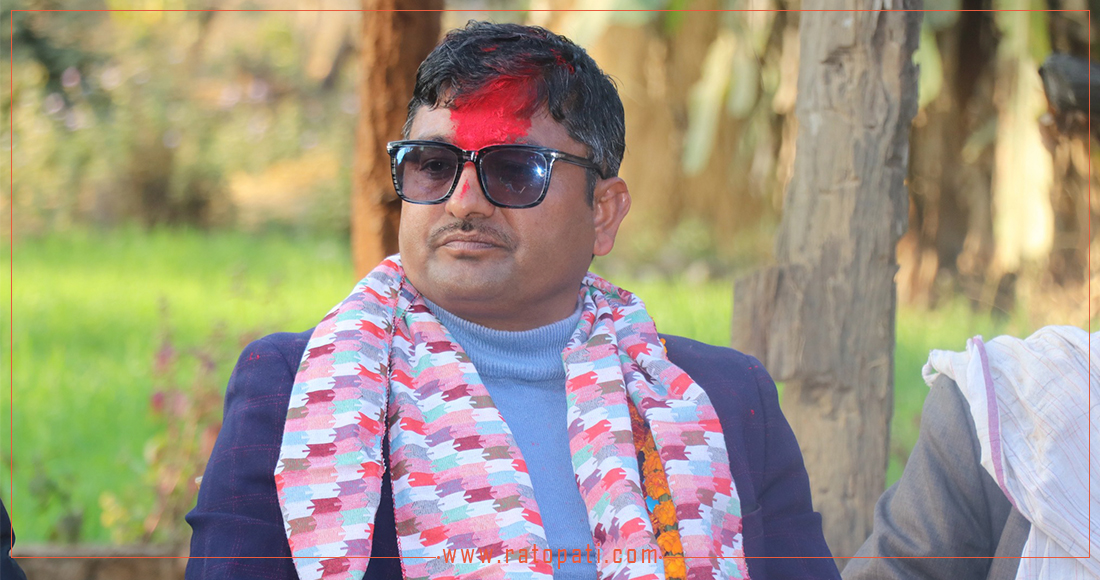
However, in this year's House of Representatives election, the Rastriya Swatantra Party (RSP) has emerged, surprising these old and established parties. RSP candidate Ramesh Kumar Sapkota has won the election from Surkhet Constituency No. 2 by a huge margin.
Surkhet-2, which has two constituencies, is the focal point of politics. It includes the provincial capital Birendranagar, along with the western Panchapuri Municipality, Barahatal, and Chaukuune Rural Municipalities. While Birendranagar, the capital, is at the forefront of development, the western region still awaits development and remains remote.
The Congress and UML never imagined that the citizens of this constituency, which has two different lifestyles and conditions, would endorse a new party. This is because these two parties have a majority of representatives from the ward level up to the federal level, and they have their own strong core areas. But, RSP's Sapkota surprisingly won the election by a margin of 14,434 votes. He secured 30,826 votes, while his closest rival, Narayan Koirala of the Congress, received only 16,392 votes.
The UML secured the Chief Minister from this very constituency, and the Mayor and Deputy Mayor of Birendranagar are also from the UML. However, UML candidate Kulmani Devkota received only 13,155 votes. Jhak Bahadur Malla of the Communist Party, who finished fourth, received 4,587 votes.
- Even Ramesh himself did not expect to win the election
Ramesh, the winner, himself had not imagined winning. Congress and UML did not even consider him a competitor. Many predicted that the main competition would be between Congress and UML.
However, during Ratopati's on-the-ground reporting, it was observed that the general voters were secretly attracted to the new party. There were some voters who did not even know who the candidate was from this constituency, but they would say, 'The vote will go to the bell [RSP symbol].'
Nevertheless, the old parties failed to notice this silent wave. RSP received double the votes from the wards they considered their core areas.
In the 2079 election, Congress's Hridayaram Thani won the election from this constituency. His own ward is Birendranagar-1. Similarly, the ward of UML leader Yamalal Kandel, elected from the Provincial Assembly (A), is Birendranagar-4. They considered these wards their stronghold. But, RSP received double the votes from these very wards compared to theirs.
The victorious Sapkota was previously affiliated with the Congress. Having reached the position of Secretary of the Birendranagar Municipal Committee of the party, he later became disgruntled and joined the RSP. He is currently also the District Chairman of the RSP. When he became a candidate, the UML faction assessed that Congress votes would be split significantly, securing their own position.
However, when the final results came, the main competition was between his former colleagues—Narayan from Congress and Ramesh from RSP. At one time, Narayan was the chairman and Ramesh was a member in the Surkhet City Development Committee, where they worked together.
Ultimately, Ramesh not only won the election by a large margin but also dismantled the decades-old stronghold of the established parties. The RSP's decision to launch its election manifesto from Karnali also appears to have played a significant role in creating momentum in his favor.
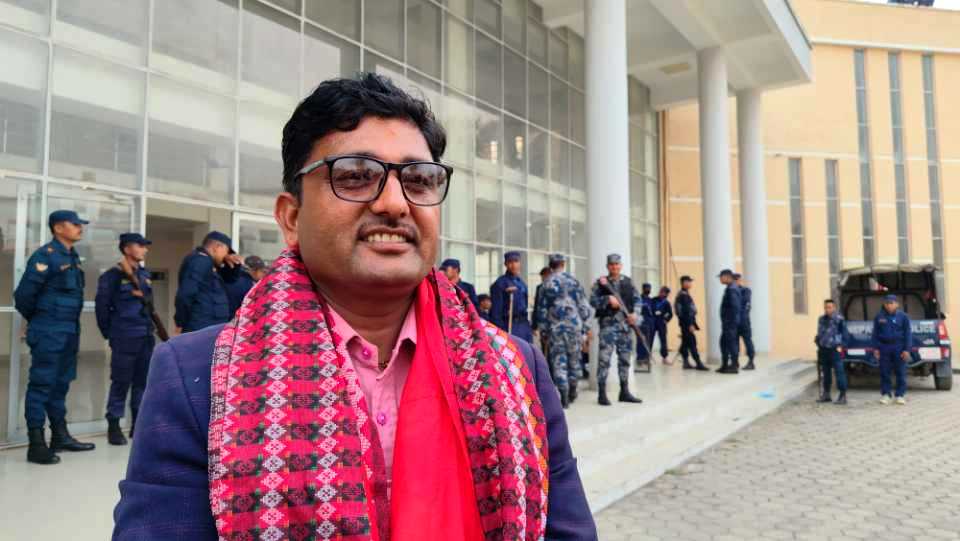
Speaking to journalists outside the City Hall on Saturday after his victory, he said, 'I am very happy. I received more votes than I imagined. I will respect this endorsement from the people and work accordingly.'
- The Journey from Bus Conductor to Parliament
Newly elected MP Ramesh Kumar Sapkota was born in Satajhani, Birendranagar. Having studied up to Grade 11, he has been active in the transportation sector for a long time. He says his struggle in the transportation sector began when he started working as a conductor on his uncle's bus during the gap period after completing his Grade 10 exams.
He enrolled in Birendranagar Multipurpose Campus for higher education, but his heart was drawn to the work with vehicles due to the nature of the job. More time was spent on the bus than in studies. After working as a conductor for some time, he later became a bus driver himself. However, around 2060 BS, he left for Saudi Arabia in search of employment.
After working for about 40 months at a water company in Saudi Arabia, he returned home. He then went to Qatar for a year and a half, where he also worked as a vehicle driver. Ramesh returned to Nepal in 2066 BS and began planning to drive vehicles in Surkhet.
'Initially, I couldn't find work; I wandered around searching for a job for a few months,' he recalls his days of struggle, 'Later, I found work on a bus operating on the Pokhara route, and a few years passed there.'
After that, he started driving buses on the Surkhet-Kathmandu route. By around 2063 BS, Kankre Vihar Transport had already started operating in Surkhet. In 2068 BS, he bought a bus himself and became a member of the committee as a businessman. Rising through the ranks from Joint Secretary, he is now the Chairman of that committee. Currently, dozens of vehicles operate under that committee.
Ramesh, who once started his career as a bus conductor and established himself as a transport entrepreneur, will now be seen in the Parliament, the supreme law-making body of the country.
Sapkota is the only person from the RSP to win an election among the 12 constituencies of the House of Representatives in Karnali Province. He asserted, 'In Parliament, I will be the strong voice not just for Surkhet, but for all of Karnali.'
This specific news has been automatically translated by AI. As a result, there may be some inaccuracies or language errors.
_sCLDfWVnnm.jpg)
_TBtYXgDzLq.jpg)