Madhesh-Centric Parties Face Near-Total Collapse in Election Results Amidst 'Balen Wave' and Governance Failures


Kathmandu. The counting of votes from the House of Representatives election held on Falgun 21 is ongoing. According to the results so far, the Rastriya Swatantra Party (RSP) appears to be in the lead.
In this election, Madhesh-centric parties are nowhere to be seen. They are neither in the lead nor in contention anywhere. Their chances of winning have now diminished. Such a poor state for a national party has rarely, if ever, been seen in Nepal's political history.
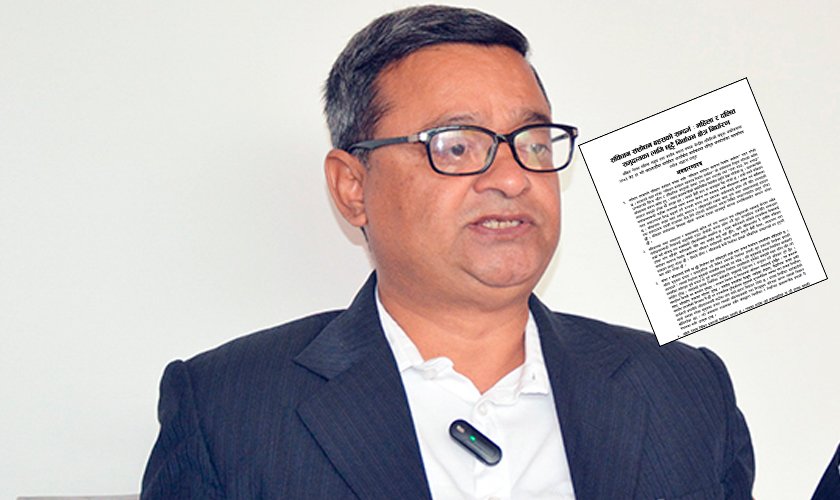
Political analyst Bijaykant Karna says, 'To end like this in such a short time is probably the first incident in Nepal's history.'
In the past, even when the country faced any crisis, the condition of Madhesi parties was not like this. Gajendra Narayan Singh kept the Nepal Sadbhavana Party alive in some form. But this time, that situation did not prevail.
None of the Madhesh-centric parties, including Upendra Yadav-led Janata Samajbadi Party (JSP), Dr. CK Raut-led Janamat Party, Rajendra Mahato-led Rastriya Mukti Party Nepal, Resham Chaudhary-led Nagarik Unmukti Party, Rizwan Ansari-led Nepal Sanghiya Samajbadi Party, and recently formed Jan Adhikar Party and Janata Loktantrik Party, managed to win a single seat.
Among these, JSP Nepal and Janamat Party had claimed to be the leading party in the Madhesh region. However, it is almost certain that Raut, chairman of Janamat, will lose from Saptari-2, and Yadav, chairman of JSP, will lose from Saptari-3.
According to the Election Commission, Janamat Party Chairman CK Raut has been relegated to third place with 4,103 votes, while RSP candidate Ramji Yadav is in the lead with 10,520 votes. Meanwhile, in Saptari-3, JSP Nepal Chairman Upendra Yadav is limited to second place with 9,440 votes, while RSP's Amarkant Chaudhary is in the lead with 16,113 votes.
In Sarlahi-2, Rastriya Mukti Party Chairman Rajendra Mahato remained stuck in fourth place with 5,992 votes. RSP's Rabin Mahato won there with 42,512 votes. In several places, the deposits of Madhesi party candidates have been forfeited. In Saptari-1, Jayakant Raut, the elder brother of Janamat Party Chairman Raut, is in fifth place.
JSP Nepal leader Sarat Singh Bhandari, who has been in politics for 44 years and has served as a minister 19 times, is in second place in Mahottari-2. The RSP candidate Deepak Kumar Sah, who is in first place there, is ahead by 20,000 votes.
Mahottari-3 is considered the stronghold of Lospa Chairman Mahantha Thakur. He himself won elections from there twice. This time, after becoming a National Assembly member, he fielded his daughter Dr. Meenakshi Jha as a candidate. However, she has been relegated to sixth place with only 391 votes. RSP's Ujjwal Kumar Jha, who is in first place there, is ahead by 4,887 votes, and independent candidate Ramadhar Kaper is competing with him.
In Mahottari-4, JSP Nepal's Dr. Surendra Yadav is in third place and Janamat Party is in sixth place. This dismal situation for Madhesh-centric parties is visible in almost all constituencies.
This is the fifth election for these Madhesi parties. They have reached a state of zero in such a short time. These parties, which participated in the elections of 2064, 2070, 2074, 2079, and 2082, emerged from the foundation of the Madhesh Movement.
They achieved good results in the 2064 election, but they got so involved in the game of power that the parties fragmented in a short time. The negative result of this was seen in the 2070 election. Although they won the election in 2070, they stayed away from power.
Madhesi parties benefited from this in the 2074 election. But after that, they again got entangled in the power game. They started enjoying power from the provincial to the federal level. The effect of this was seen in the 2079 election. Even with the seats they got then, they got involved in the power game again. As a result, they have fallen to zero in the 2082 election.
Political analyst Karna says, 'They should have focused on implementing the agreement reached with the state after the Madhesh Movement. But instead of focusing there, they only engaged in the pursuit of power. They made power a means of earning money rather than serving the public. Because of this, they became so infamous that the people there have now chosen Balen and RSP as alternatives.'
They should have remained in agitation for some time to implement the agreement made with the government. They should have pressured and got their demands met through agitation. But by not doing so, they played with the sentiments of the people. Today, these parties are facing the consequences. Analyst Karna considers the self-weakness of the Madhesi parties as the main reason for this.
'The mandate of the Madhesh Movement was not to gain power, but to get the agreement implemented,' Karna said, 'But because the parties made it a means of bargaining with power, dissatisfaction among the people increased.'
According to him, although Madhesi parties continuously participated in the government after 2074, they failed to perform as expected by the public. He stated that the public sought alternatives because becoming a minister seemed like a means of earning money.
On the other hand, according to veteran politician Bharat Bimal Yadav, the 'Balen wave' has greatly affected not only the Madhesi parties but also other parties. He analyzes that Madhesi parties have suffered comparatively more damage because Balen himself comes from the Madhesi community.
According to Yadav, although many voters were not clearly aware of which party Balen belonged to or where he was from, the narrative that 'he is Madhesi and has the potential to become Prime Minister' had spread. Yadav claims that for this reason, Madhesi voters enthusiastically voted for him.
Social activist Saroj Ray also stated that the influence of Balen Shah was significant in the weak performance of the Madhesi parties. According to him, the message that 'a son of Madhesh will become Prime Minister' had a huge impact on voters in the Madhesh region.
According to Ray, although the leadership of Madhesh Province remained in the hands of Madhesi parties for a long time, the people did not experience the expected development and good governance. He stated that corruption allegations and growing dissatisfaction increased the tendency among the public to look for alternatives.
Meanwhile, Janata Samajbadi Party Nepal leader Manish Suman interpreted this result as the effect of the 'Balen wave.' According to him, that wave has affected all parties.
'We may have some shortcomings, but the main thing is the storm of Balen,' he admitted, 'After the propaganda that a son of Madhesh would become Prime Minister, many voters were attracted in that direction.'
According to analysts, this result has given Madhesh-centric parties an opportunity for serious self-assessment. According to them, the public now wants to see the implementation of issues, not just their raising.
Analysts say that if the parties do not improve their policy priorities, good governance, and public service in such a situation, they will have to face even greater political challenges in the future.
This specific news has been automatically translated by AI. As a result, there may be some inaccuracies or language errors.