US and Israel Launch Major Strikes Against Iran; Tehran Retaliates Targeting US Bases

Tehran. Under what US President Donald Trump described as a major military operation, the United States and Israel have attacked various locations in Iran, including the capital, Tehran.
This attack comes eight months after the 12-day war between the US-Israel and Iran, following weeks of continuous warnings from Trump. The strike occurred while negotiations were ongoing between the US and Iran regarding Iran's nuclear and ballistic missile programs.
In response, Iran launched missile strikes targeting US military bases in northern Israel and the Middle East. Detailed reports on the human and material losses in Iran and Israel have not yet emerged.

What happened in Iran?
Around 9:27 AM on Saturday, Iran's Fars News Agency reported a series of explosions in the capital, Tehran. A correspondent for Al Jazeera in western Tehran reported hearing two explosions, and videos shared on social media showed smoke rising from various parts of the city.
Initially, Israel announced it had launched missile strikes on targets inside Iran. According to a US official speaking to Al Jazeera, these attacks were part of a joint military operation with Israel. In recent weeks, Washington had amassed a large fleet of fighter jets and warships in the region, marking the largest military deployment since the Iraq War.
Trump stated that this operation is extensive and ongoing. The US Department of Defense later announced the mission was named Operation Epic Fury. This was the first public statement from the US military since the joint attack began.

Where did the US and Israel attack in Iran?
Fars reported that several missiles were fired near University Street, Johmhouri area, and near the headquarters of Iran's Islamic Revolutionary Guard Corps in Tehran. According to the Associated Press (AP), the attack occurred near the office of the Supreme Leader Ayatollah Ali Khamenei in Iran's capital.
According to Iran's Tasnim News Agency, explosions were also reported in Seyed Khandan in the northern part of Tehran. Local media reported explosions in the cities of Kermanshah, Qom, Tabriz, Isfahan, Ilam, and Karaj, as well as in Lorestan province.
What did Trump say?
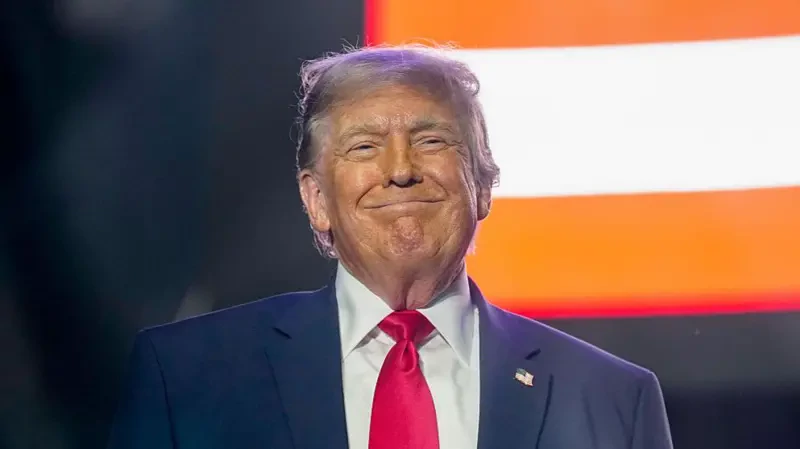
Announcing the major military action, Trump stated that the objective of the American campaign was to destroy their missiles and devastate their missile industry. "We will annihilate their navy," Trump added.
The main points of his message are as follows:
- The US has initiated a major and continuous military operation in Iran.
- Washington stated its objective is to eliminate the imminent threat from the Iranian government.
According to Trump, the objectives of this military campaign are:
- To destroy Iran's missile capability.
- To target Iran's navy.
- To dismantle Iran-backed armed groups in the region.
- To ensure Iran does not acquire nuclear weapons.
He also extended a warning to Iranian military personnel. Trump stated that if they lay down their arms, they would be granted amnesty, but failure to do so would result in certain death. He acknowledged the possibility that the US military might also suffer casualties.
Reuters quoted a US official stating that the Trump administration is planning a multi-day operation.
The US President's remarks suggest that Trump is laying the groundwork for a revolution in Iran. Al Jazeera's Washington correspondent, Allan Fisher, reported that this is the first such event in 73 years since the CIA orchestrated a 'coup' against Iran's democratically elected Prime Minister Mohammad Mosaddegh.
"They have done this before. But this time, they are doing it not secretly through the CIA, but using weapons and bombs," Fisher said. "It is clear that this is a continuous military operation, in which Donald Trump has also accepted the fact that there might be damage."

How are the US and Israel justifying the attack on Iran?
The US and Israel launched this attack after years of confrontation over Iran's nuclear program and regional influence. These two allies have long claimed that Iran's increasing uranium enrichment activities and missile capabilities pose a threat to them.
They repeatedly warned that they might use force against Tehran. Iran, on the other hand, has repeatedly committed publicly that it has no intention of building a nuclear bomb. Israel is the only nation in the Middle East that possesses nuclear weapons.
Last June, Israel and the US attacked Iran's nuclear and military installations, killing several senior commanders. This latest tension began after Omani mediators announced progress in the Geneva talks.
It was reported during those talks that Iran had agreed to reduce its uranium stockpile to zero and allow full verification by the International Atomic Energy Agency (IAEA).
Both the US and Israel argued that this is an opportunity for Iranian citizens to take control of their government. "After we finish our work, take your government into your hands. This will be yours. This might be your only chance for generations," Trump said.

What is Iran's reaction?
According to the Israeli military, Iran initially retaliated by firing missiles towards Israel. Air-raid sirens sounded in various parts of the country, and reports of explosions came from northern Israel.
"Civilians are requested to follow the instructions of the Home Front Command," the Israeli military said in a statement. "At this time, the Israeli Air Force is working to intercept potential threats and strike where necessary."
However, immediately after that, the Iranian army launched missile strikes on various locations linked to US military operations across the region, including the following:
- Al Udeid Air Base in Qatar
- Al Salem Air Base in Kuwait
- Al Dhafra Air Base in the United Arab Emirates
- Headquarters of the US Fifth Fleet in Bahrain
- Explosion sounds were also heard in Riyadh, Saudi Arabia.
- Attacks were also reported on US bases in Jordan.
Earlier, Ebrahim Azizi, head of the Iranian Parliament's National Security Commission, had threatened a harsh response. "We warned you!" Azizi wrote on social media. "Now you have started a path whose end is no longer in your control."
What did Netanyahu say?
In a statement, Israeli Prime Minister Benjamin Netanyahu said the military action would continue as necessary. He announced that the Israeli operation was named 'Lion's Roar.'

Where are the Iranian leaders?
Iranian media confirmed the death of the 86-year-old Supreme Leader Khamenei. He had not appeared publicly for several days as tensions with the US escalated.
As explosions were heard in the capital, roads leading to Khamenei's residence in central Tehran were closed by authorities.
Meanwhile, Iran's state news agency IRNA, quoting a source from the President's office, reported that President Masoud Pezeshkian is safe.
What is the world's reaction?
- Oman: Foreign Minister Badr Albusaidi stated that the active and serious negotiations mediated by his country between Iran and the US have been weakened once again due to the latest tension, and urged the US not to get further involved.
- Qatar: Qatar condemned the Iranian attack, calling it a gross violation of national sovereignty. It also stated that it reserves the right to respond according to international law.
- United Arab Emirates (UAE): The UAE condemned the Iranian missile attack, in which one Pakistani citizen was reportedly killed. The UAE warned of serious consequences if such violations continue.
- European Union: EU Foreign Policy Chief Kaja Kallas called the situation dangerous and called for the protection of civilians and adherence to international law.
- France: French President Emmanuel Macron warned that this conflict involving the US, Israel, and Iran would have serious consequences for international peace and security. He added, "The current tension is dangerous for everyone. This must stop."
- Russia: Russian Security Council Deputy Chairman Dmitry Medvedev criticized Trump, accusing Washington of using negotiations with Iran as a 'cover' and questioning how this conflict will proceed in the long term.
- UK: Britain stated that Iran should never be allowed to develop nuclear weapons and that it is prepared to defend its interests.
- Canada: Canadian Prime Minister Mark Carney stated that his country supports the US efforts to prevent Iran from acquiring nuclear weapons and prevent further threats to international peace and security.
This specific news has been automatically translated by AI. As a result, there may be some inaccuracies or language errors.
_iL3K2wYemS.jpg)