
Communist Party Candidate Dr. Krishna Raj Pant Outlines Vision for Chitwan-1 Amidst Election Buzz
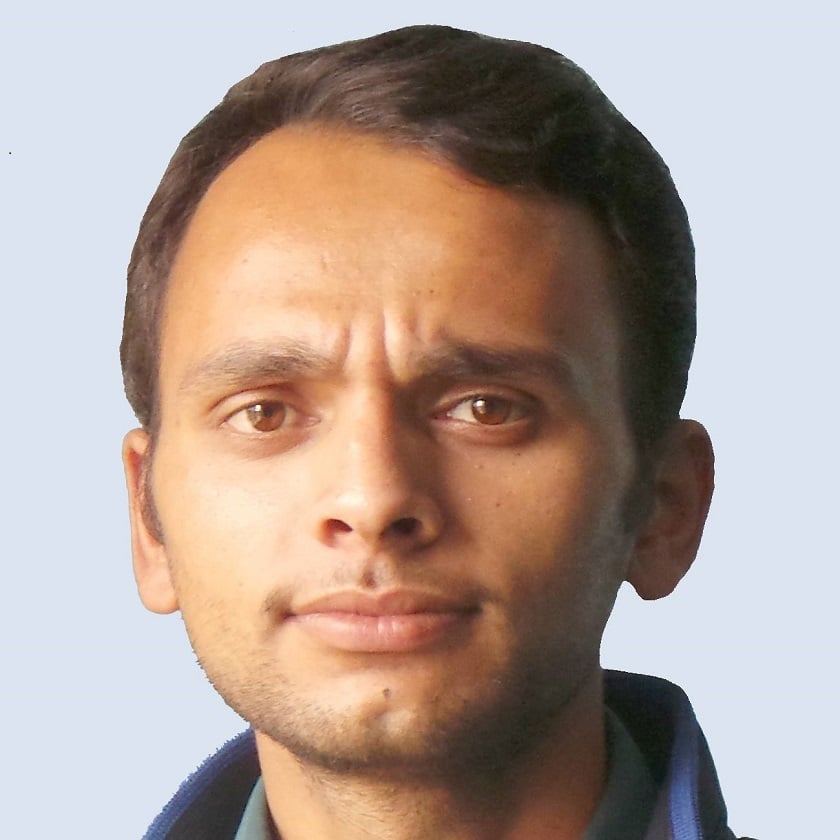

The fervor for the House of Representatives election scheduled for Falgun 21 is escalating in Chitwan Constituency No. 1. Dr. Krishna Raj Pant is the candidate representing the Communist Party in this constituency.
Pant, who possesses a clear blueprint for development and a deep understanding of complex national political issues, is presenting himself not just as a political activist but as an 'expert capable of providing solutions to problems'.
Presented below is the edited excerpt of the conversation Ratopati had with Dr. Pant, focusing on his election campaign, future agenda, and basis for victory.
- You are in the midst of your election campaign. How are the promotional activities and meetings with voters progressing?
Yes, as you mentioned, the election campaign is moving forward very intensely. Initially, we spent time on internal preparations within the party ranks and strategic planning. Now, we are fully focused on door-to-door campaigning among the people.
Since I am also a student of research and study, when I go to ask for votes, I don't just join my hands; I try to read the psychology of the voters. From their facial expressions, the welcome they give, and the questions they ask, I conclude that voters this time are searching for change and expertise.
When an experienced, educated candidate who understands the nation's needs comes forward, the voters show a kind of enthusiasm and happiness. I have found their feedback to be extremely positive and encouraging.
- There are many candidates in this constituency. Why should voters leave other candidates and send Dr. Krishna Raj Pant to parliament by voting for him? What is the main justification for your candidacy?
There are two main dimensions behind my candidacy—the first is the aspect of national policy formulation, and the second is local development.
The country's situation is not normal right now. We face a serious challenge to save both democracy and nationality. Misgovernance has taken deep roots, which must be broken to establish a system of good governance. Look at the state of the country's economy—how pathetic it is! Money is piled up in banks, but there is no investment environment. Youth are not getting employment; entrepreneurship is dead. Policy intervention is needed to bring this ruined economy and politics back on the right track. For that, the presence of subject matter experts in parliament is essential.
The second aspect is local development. Chitwan-1 is an area at high risk of floods and landslides. Rivers like Rapti and Lothar constantly keep the settlements here in fear. My main agendas are protecting settlements, diversifying agriculture suitable for the local geography, guaranteeing the price of produce, and developing tourism. Sauraha, a world-famous tourist destination, is in this constituency, but it has not yet been made more qualitative and systematic.
I have been directly involved in policy formulation at the federal, provincial, and local levels for the past 10 years. I possess the practical knowledge and experience of how to create long-term plans and how to implement them. The narrative 'Elect the one who knows' is prevalent now, and my 45 years of social and political experience, along with my expertise in policy formulation, positions me as that 'knowing' figure. Therefore, I am confident that voters will choose me.
- The main job of parliament is lawmaking, but the public expectation seems more focused on roads, bridges, and physical development. As a parliamentarian, how will you balance policy formulation and development construction?
In our context, the understanding that a parliamentarian is not just a lawmaker but also a facilitator of development has been established. As long as a system is not established in the country and the practice of distributing projects based on access continues, the parliamentarian must also be active in development construction.
Speaking for myself, I can advance both roles in a balanced manner. Firstly, I have long experience in policy formulation. My expertise will play a significant role when making, amending, or formulating new policies in parliament. I will not be just a rubber-stamp parliamentarian; I will work for policy reform through debate and argument.
Secondly, regarding development construction, I am not someone who only waits for government budgets. Even before becoming a parliamentarian, I have done major work in this area through non-governmental sectors, donor agencies, and various projects. I have been directly involved in the Lothar-Rapti dam protection and embankment construction. I have the capacity to mobilize resources, write projects, and get them implemented. Therefore, I want to assure that I can bring revolutionary changes in agriculture, education, health, and infrastructure development here by mobilizing non-governmental resources alongside government budgets and policy initiatives.
- You have been in politics for a long time, and there is visible public disillusionment with old parties and faces. In this situation, who do you think will be your main competition?
Who the competition is, is secondary. I have complete faith that I will win the election and come in first. Why should I worry about who comes second, third, or nineteenth? I do not want to make negative remarks about other candidates. Everyone has the right to compete in a democracy.
But one thing is true: today's voters are very conscious. They can clearly distinguish who is new, who is old, what someone has done in the past, how much capacity someone has, who is unblemished, and who is successful.
When I go door-to-door, I see voters seriously questioning those who won in the past. Their question is, 'Why didn't you return after winning?' That question is not for me, but for those who have been tested in the past. I am coming with a new vision and new zeal.
My 45-year political life is like an open book, without any stain. I am unblemished. Therefore, when the public looks for an alternative, they find me to be the most suitable person. My competition is not with any individual but with the problems here, which I am eager to solve.
- It is natural for candidates to present themselves as superior. But it is said that the game of money, muscle, and manpower also happens in the electoral field. Is it possible to win the election based only on your intellectual personality?
If we talk about the race, I am equally fit and energetic physically. I do not feel tired walking door-to-door, but the race you are hinting at is a bit different.
I am not in the race of lying, as you suggest. I am not involved in the unethical race of buying votes by distributing money. I will never engage in the race of spreading confusion and only distributing assurances, but in the race of ideas, the race of agenda, and the race of honesty, I am at the forefront.
In today's age, I do not think people can be influenced merely by money or power. People respect my expertise, my plans, and my honesty. I am receiving feedback from voters belonging to my party as well as those affiliated with other parties saying, 'A common and expert person like you should go to parliament.' Therefore, my personality itself is the biggest basis for my victory. I trust that the people of Chitwan-1 will exercise their wisdom this time.
- What concrete plans do you have regarding agriculture and tourism in Chitwan?
Chitwan is fertile land for agriculture, but the agricultural system here is traditional, and farmers are not getting fair prices. My plan is to implement a 'customized' agricultural system suitable for the geography. We must specialize agriculture. Pocket areas will be declared after studying what grows in which soil. I will take policy initiatives to arrange for the state or local government to guarantee the storage and market for production. Emphasis will be placed on upgrading the agriculture campus and research.
Speaking of tourism, Sauraha is our jewel, but it can be expanded further. We must promote eco-tourism. I have a plan to uplift the income level of the locals by connecting settlements adjacent to the national park with tourism. Furthermore, ensuring quality in health and education through the physical and managerial improvement of government schools and hospitals will be my priority. The problem of the landless and squatters is an old wound in Chitwan, and I am committed to resolving it through policy means.
- Finally, what would you like to say to the general voters?
I request all mothers, fathers, brothers, and sisters that we have accepted and chosen leaders time and again, but the results have not been as expected. The country now needs leadership that can truly provide direction, understands the economy, and can draw a blueprint for development.
I have come before you carrying 45 years of penance and 10 years of experience in policy formulation. Give me a chance to work once. I will not let your vote be insulted. I will raise your voice in parliament and work day and night to change the face of this constituency.
This specific news has been automatically translated by AI. As a result, there may be some inaccuracies or language errors.



_XRgO2ypobQ.jpg)


