Japan's Prime Minister Reaffirms Stance Against Changing Male-Only Imperial Succession Tradition

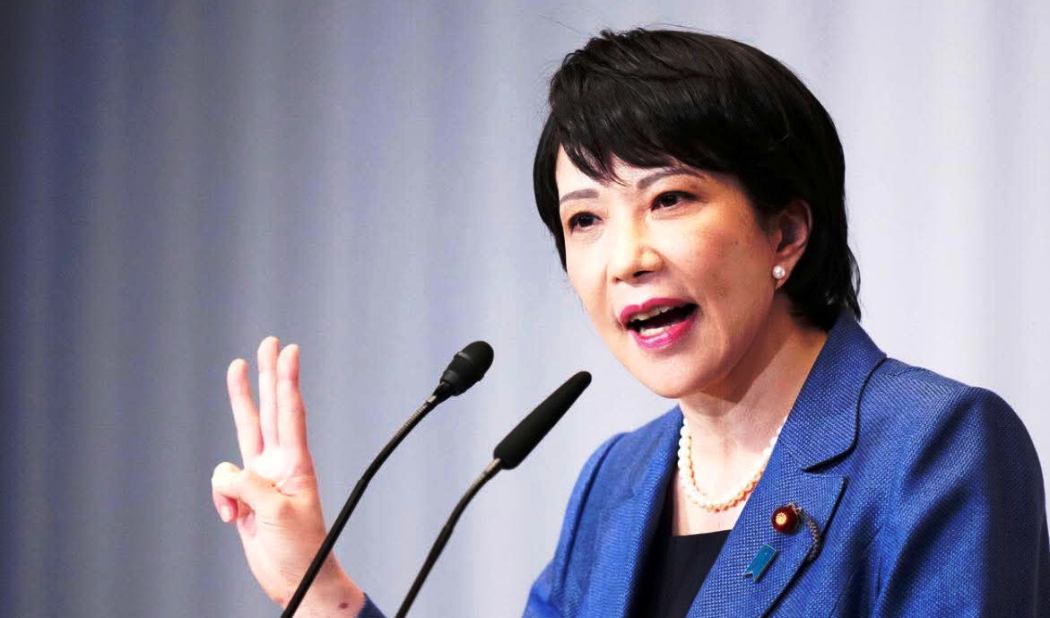
Tokyo. As debate intensifies over the future of the Japanese Imperial succession, Prime Minister Sanae Takaichi has firmly stated her position against changing the tradition that reserves the throne exclusively for male heirs. Speaking in parliament on Friday, she affirmed respect for the current system which deems only male descendants from the male line eligible.
Under current law, only male descendants from the male line of the Imperial Family can ascend to the ancient Chrysanthemum throne. The 66-year-old Emperor Naruhito has only one daughter, Princess Aiko. Therefore, hopes for the continuation of the Imperial line are focused on Prince Hisahito, the young son of Crown Prince Fumihito.
Prime Minister Takaichi recalled the report presented by an expert panel in 2021, stating that the government respects the conclusion that it would be appropriate to limit eligibility to male descendants from the male line of the Imperial Family. As the country's first female Prime Minister, she stated, "The government and I personally respect that report."
Previously, she had indicated that amending the rules on Imperial succession was an "urgent matter," but also mentioned that the option of re-adopting distant male relatives into the Imperial Family could be considered as a potential solution.
According to tradition, which is believed to be nearly 2,600 years old, Japan's Imperial lineage must continue only through male descendants. However, various public opinion polls show high support for granting women the right to the throne.
The debate over Imperial succession in Japan has been ongoing for decades. In 2005, a government panel recommended succession based on primogeniture regardless of gender, which seemed to open the way for Princess Aiko. However, that debate subsided after the birth of Prince Hisahito in 2006.
Another expert panel appointed in 2021 suggested considering the re-inclusion of distant male relatives into the Imperial Family. However, it is unclear whether such individuals would be willing to abandon their personal lives and careers to accept Imperial duties. The panel also suggested that Imperial daughters, who are forced to leave the family upon marriage, could be allowed to continue their public duties after marriage.
According to traditionalists, the Imperial lineage, maintained without interruption through male descendants, is the foundation of Japan's national identity and stability. They argue that major changes could cause division in society. Under the post-war constitution, the Imperial Family has no political power, but their symbolic role remains significant.
Historically, it has been noted that women who marry into the Imperial Family face intense social pressure to bear sons. Empress Masako, wife of Emperor Naruhito and a former diplomat, suffered from stress-related health issues for years after entering the court. The Emperor's mother, Empress Emerita Michiko, was also affected by similar health problems.
Princess Mako, sister of Prince Hisahito, also faced intense media scrutiny and extensive newspaper reporting when she married her university classmate Kei Komuro. Questions raised about Komuro's family finances fueled controversy. During that time, former Princess Mako suffered from complex post-traumatic stress disorder. After the marriage, the couple moved to the United States, where they have since had children.
This specific news has been automatically translated by AI. As a result, there may be some inaccuracies or language errors.