Gauri Bahadur Karki Commission Investigating 'Gen-Z' Protests to Submit Report After Elections, Raising Concerns Over Delays

Kathmandu. The investigation commission led by Gauri Bahadur Karki, formed to probe the crackdown and damages during the 'Gen-Z' protests held on Bhadra 23 and 24, is set to submit its report only after the scheduled elections on Falgun 21. Although the report was said to be completed a month ago, the last-minute extension of the commission's term has created uncertainty about how the next government will proceed with the report.
Legal experts argue that the delay by the commission investigating the 'Gen-Z' movement in submitting its report is an affront to the spirit of the movement. Senior Advocate Dinesh Tripathi claims that the extension of the term, even after the investigation commission completed writing its report, is a betrayal of the 'Gen-Z' agitation. "The investigation commission should have submitted its report before the elections, but that did not happen," he says. "Since the investigation commission also probed the destruction on Bhadra 24, the delay might be because those involved in that incident are contesting the elections."
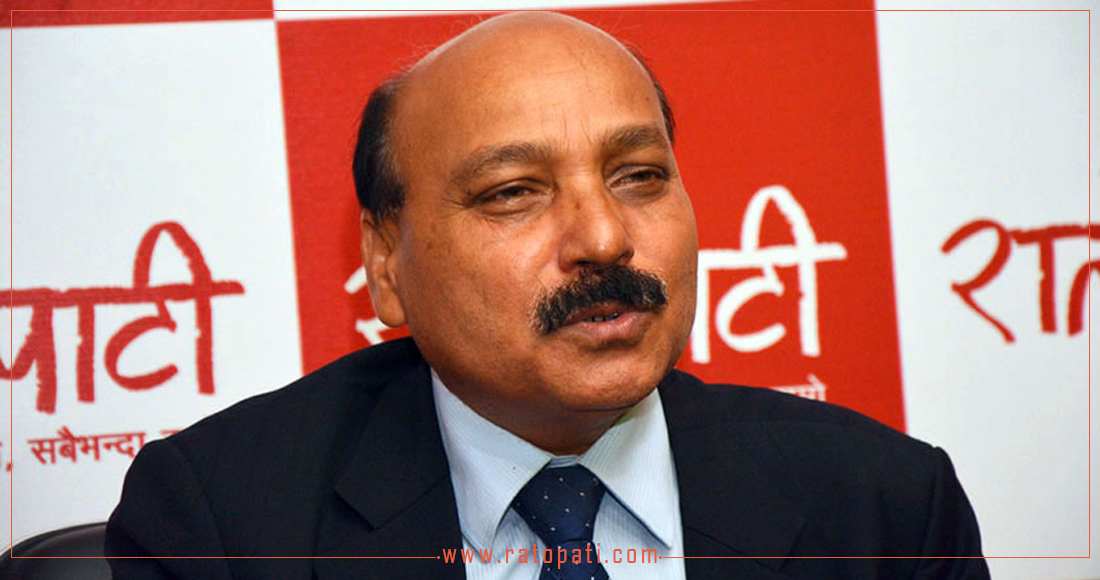
Senior Advocate Tripathi further states, "If the investigation commission's report names those involved in the destruction and recommends action, filing a case later could lead to the suspension of parliamentary membership. If convicted by the court, a by-election might have to be held. The state has already spent crores in the elections. Who will bear the cost if another by-election has to be held?"
Tripathi claims that the current government is delaying the submission of the investigation commission's report not according to the spirit of the 'Gen-Z' movement, but rather under the direction of one party, the Rastriya Swatantra Party. Tripathi asserts that the decision not to prosecute those who set Singha Durbar on fire before the investigation commission's report arrived, and granting them successive reprieves, is an attack on the core essence of the 'Gen-Z' movement.
Nepal Police statistics show that at least 76 people, including protesters, died in the incidents that occurred on Bhadra 23 and 24. The protests escalated on Bhadra 24 after young demonstrators were killed in security force action the previous day. During that period, numerous government offices, commercial establishments, private homes, and properties were attacked, looted, and set on fire. Hundreds of people were injured in the two-day events, and according to government estimates, physical damage amounted to approximately 84 billion rupees.
"It appears the government delayed the submission of the investigation commission's report because it saw that it would negatively impact individuals contesting the elections," said ArjunDhoj Aryal, an Associate Professor and political scientist at Tribhuvan University. "The government is under pressure and has shelved the report when it was almost ready." According to him, it is unlikely that the report of the 'Gen-Z' movement investigation commission can be hidden away as in the past. Public pressure will necessitate the report's public disclosure."
According to political scientist Aryal, the government seems to have extended the investigation commission's term to facilitate the elections scheduled for Falgun 21, as submitting the report 15 days earlier might have created a situation where the elections could not take place.
"If the investigation commission names individuals like CPN-UML Chairman KP Sharma Oli, Balen, and others as guilty, it could disrupt the election environment, which is likely why the report submission date was pushed back for the ease of elections," says political scientist Aryal. "Once the investigation commission submits its report and recommendations for action are made, the status of elected members of the House of Representatives could also become a question if cases are filed against them."

The investigation commission began its work on Ashoj 8, 2082 BS. Its initial three-month term expired on Poush 9. As the work was not completed within this period, the Council of Ministers decided to extend the term by one month. After this first extension expired on Magh 8, it was further extended for two weeks. At the time of the final extension, 20 percent of the work remained incomplete, but the term was extended for a third time, citing incomplete work at the last moment.
The commission completed its statement-taking work at the last minute after receiving a written statement from former Prime Minister KP Sharma Oli. The commission had previously collected details and other data related to the 'Gen-Z' movement. After taking statements from lower-level security officials, the commission also recorded statements from the then-Chief of Kathmandu Police, the Metropolitan Police Office, and high-ranking officials at the Police Headquarters.
In addition, the commission also took statements from the Armed Police Force and the National Investigation Department, as well as the then-Chief District Officer of Kathmandu, the then-Home Secretary, and the Chief Secretary. Chief of Army Staff Ashok Raj Sigdel also appeared before the commission to give a statement along with his officers.
It is uncertain when the investigation commission, formed to probe the crackdown and physical damage during the 'Gen-Z' movement that resulted in 76 deaths, will finally submit its report. The investigation commission is mandated to recommend action against those found primarily responsible for suppressing the movement. The term was extended for the third time after the commission could not complete its work within the stipulated three months as per its mandate. According to the mandate given to the commission, it was responsible for investigating the physical and human losses that occurred during the demonstrations in Kathmandu and various parts of the country on Bhadra 23 and 24. The government's published mandate stated that the commission should investigate the cause of the incidents and submit a report with its confirmed opinions and suggestions.
The commission's mandate also included analyzing information or complaints related to physical and human loss and providing recommendations for action. Furthermore, the commission was tasked with presenting measures and suggestions to be adopted to prevent such incidents from recurring in the future and presenting a clear action plan for the implementation of those suggestions. The Council of Ministers formed the commission in a meeting on Ashoj 5, giving it a deadline of three months from the date of commencing work to submit its report.

The commission will be able to direct the initiation of action against those found guilty after completing the investigation. For the investigation, the commission has the authority to summon any person to present written statements, receive evidence, and request documents and copies from government offices and courts.
Similar to the 'Gen-Z' movement, the government has previously formed investigation commissions regarding various incidents. However, the reports of all such investigation commissions have not been implemented.
Following demands for action against those who suppressed the People's Movement, an investigation commission was formed on Jestha 9, 2047 BS, under the chairmanship of then-Chief Justice Janardan Lal Mallick. The commission began its work on Ashar 10, 2047 BS. The members of the commission were then-judges Udayaraj Upadhyay and Indra Raj Pandey.
The commission was assigned four tasks: to investigate the loss of life and property during the People's Movement from Falgun 7 to Chaitra Manta, 2046 BS; to determine whose fault caused the loss of life and property; and to submit a report determining what kind of action the government should take during the People's Movement.
After six months of study, the commission submitted its report. However, that report has not been implemented to date. The report held former Prime Ministers Marichman Singh Shrestha and Lokendra Bahadur Chand, then Chairman of the Panchayat Policy and Investigation Committee Navaraj Subedi, then State Ministers Kamal Thapa and Niranjan Thapa, leaders Pashupati Shamsher JBR and Sharad Singh Bhandari, among others, responsible for the suppression of the movement that restored democracy. However, the report was not implemented. Instead, those deemed guilty by the Mallick Commission repeatedly reached high positions in the country and participated in governance.

The second People's Movement took place in 2062/063 BS. 25 people died and over four thousand were injured in the movement. Alleging repression during the movement, an investigation commission was formed under the chairmanship of former Supreme Court Justice Krishna Jung Rayamajhi. The members included former Chairman of the Federation of Nepali Journalists Harihar Birahi, former Vice-Chairman of the Nepal Bar Association Ram Prasad Shrestha, Advocate Ram Kumar Shrestha, and then-General Secretary of the Nepal Medical Association Dr. Kiran Shrestha.
The commission submitted its report, prepared after seven months of work, to the government on Kartik 30, 2063 BS. However, the report submitted by that commission was not implemented. The report held 31 individuals who were in government from Magh 19, 2061 BS, until the end of Chaitra responsible. The report suggested enacting laws and taking action against everyone from the Vice-Chairpersons of the Council of Ministers during that period to the Assistant Ministers.
Those involved in suppressing the People's Movement were later given political responsibilities. Lokman Singh Karki, who was accused of playing a role in suppressing the People's Movement, was removed from his post as Chief of the Commission for the Investigation of Abuse of Authority (CIAA), a decision in which the investigation commission's report also played a role. Among the investigations into repression and human rights violations during the People's Movements, some have yielded positive results, while others have ended up gathering dust in drawers.
This specific news has been automatically translated by AI. As a result, there may be some inaccuracies or language errors.