Home Minister Assures Full Security for Upcoming Elections, Dismisses Concerns Over Post-Agitation Issues


Kathmandu. The mandate of the current government, formed after the agitation in Bhadra last week, is to hold the House of Representatives elections and transfer power to the elected government through legal processes. Accordingly, the government made elections its first priority, and elections are becoming possible within six months as per constitutional provisions. Only a few days remain for the elections scheduled for this coming Falgun 21.
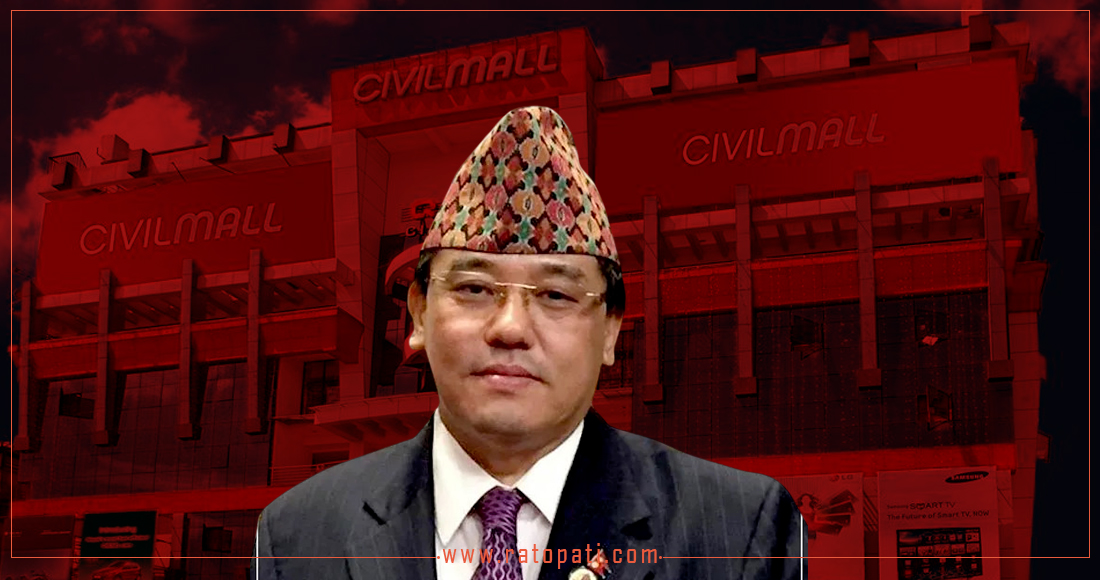
The Government of Nepal and the Election Commission have stated that all election-related processes have been completed. Peace and security are the primary basis and necessity for elections. Home Minister Om Prakash Aryal, who is also the spokesperson for the Government of Nepal, stated that complete security arrangements have been made, respecting the citizens' right to vote without any obstruction, confidently, and fearlessly. The edited excerpt of the conversation with him, focusing on election preparations and the security situation, is presented here.
The country is currently immersed in election fervor. Only a few days are left for the upcoming elections. How are the preparations for the elections?
The first priority and main 'agenda' of the current government is to complete the elections on time. Election preparations are underway on a war footing. The Election Commission had stated long ago that 90 percent of the work was complete, and now that too is fully accomplished. I believe only the procedural work of voting on the 21st remains; all other preparations are finished. Regarding security, the integrated security plan has been in effect for a long time, and since the Home Ministry administration is skillfully 'handling' it, the security situation has also become robust. Security, as well as other necessary state resources, have been mobilized for election purposes.
Security is the primary basis and necessity for elections. While the Election Commission is carrying out procedural work related to the elections, citizens rely on security. So, how has the country's security apparatus been mobilized to ensure citizens can vote with confidence?
The Government of Nepal has strengthened security arrangements for the upcoming elections. Therefore, I urge all voters to cast their ballots without fear. As I mentioned earlier, the government's main priority is to complete the elections on the scheduled date. Therefore, we have made the security arrangements, considered essential for a fair election, tight and effective. The government has deployed personnel from election police selection, the Nepali Army, Nepal Police, Armed Police Force, and the National Investigation Department, and by implementing an integrated security plan much earlier, we have strengthened and reinforced security across the country based on security sensitivity. For instance, election-related command posts are operating at the central, provincial, and district levels, and election cells have also been mobilized through the mechanisms envisioned by the integrated security plan. Furthermore, the Home Ministry administration is working with security at the center by analyzing the daily situation, needs, and challenges. After the Home Ministry formulated the integrated security plan for the elections, it envisioned various mechanisms. Those mechanisms have been formed and are functioning efficiently and effectively. Security strategy work is being carried out by coordinating among all these mechanisms through daily meetings. Based on this, we are evaluating and analyzing the daily incidents. We are also continuously coordinating and collaborating with other stakeholders such as political parties, candidates, the media, the Election Commission, and other government agencies.
Some sporadic incidents that could potentially disrupt security have been seen recently. Will these affect the elections? What is the Home Ministry administration doing to resolve them in time?
Some sporadic incidents, including minor clashes seen in some parts of the country recently, will not affect the elections. Those incidents are under control, and the Home Ministry administration is managing and resolving them in a way that does not impact the elections. We are addressing such incidents both before they occur and after they manifest. We focus more effort on obtaining prior information and prevention, and then addressing them. We have tried to find solutions primarily through dialogue. We have adopted other necessary strategies and resolved them in time. These incidents will not affect election security. Such incidents are few, sporadic, and the entire situation is under control.
When discussing security, some people still express concern that escaped prisoners and looted weapons from the agitation in Bhadra last year pose a security challenge. Is that the case?
This is not such a big challenge. I want to clarify that escaped prisoners and looted weapons from the agitation in Bhadra last year are no longer security challenges. We have recovered most of the weapons and brought back the escaped prisoners. We are working harder than before to bring back those who are still outside. Security personnel are deployed everywhere, and stakeholders themselves are also involved. We are requesting them to provide any information they might have. We have not received any reports that those who escaped have committed further crimes or used those weapons outside. Therefore, there is no such fear of insecurity now.
The Holi festival falls just two days before the elections in the Terai-Madhes region. Holi is celebrated for a few more days in Madhes-Terai than in the hills. Some people are saying that this might prevent voters from being ready for Falgun 21 or could disrupt peace. What is the Home Ministry administration's understanding or preparation regarding this issue?
The context you are trying to raise might be related to two things: snowfall in the Himalayas and the Holi festival in the Terai. Meteorologists are informing us that there will not be heavy snowfall at that time, and there will be no inconvenience to voting. The other matter, the Holi festival in the Terai, is not a security or other challenge for the elections. We have coordinated with the provincial government, local municipal heads, and other stakeholders to find ways to manage this festival and the elections simultaneously. Holi is a cultural and religious festival, which the government will facilitate as needed, and the elections will also be completed. To facilitate this, the government will create an environment for celebrating Holi in a more joyous, peaceful, and cultured manner than before, even if it means extending the public holiday by an extra day. Along with this, the elections will also be completed.
There are demands coming in that voters in some high-altitude districts should be moved to the district headquarters as there are no voters there. Is this possible? Has the Home Ministry made any preparations regarding this?
The Home Ministry administration and the Election Commission are prepared on this matter. The local municipalities in the districts are also key stakeholders. Their consent, along with the recommendations of political parties and candidates, is required. Furthermore, they must reach a consensus by understanding the intentions of the voters for this purpose. If that happens, we will address it. Such requests have come before, and they are under consideration. Therefore, if all concerned stakeholders reach a conclusion, we have no problem making a decision to move polling centers to the district headquarters or any other convenient location.
Nepal has previously received foreign assistance during election times. In what form did the Government of Nepal receive foreign assistance this time?
From the day this government was formed, friendly nations and United Nations agencies extended congratulations and best wishes. Following that, friendly nations offered assistance, including financial aid and physical support, necessary for completing the elections. Among those offers, the Government of Nepal has accepted the assistance it required from various friendly nations. There has been significant cooperation and goodwill from the international community and friendly nations in these elections.
How was it possible to reach the current stage of elections within six months after the agitation in Bhadra? How did the government work to make elections possible in this short period?
Looking at the situation in the last week of Bhadra, there was a state of lawlessness. At that time, the rule of law had ceased to function. There was fear and terror in the country, and a kind of anarchy had spread. Mechanisms of the rule of law, including the courts, had stopped functioning. It was a situation where security agencies found it difficult to operate. We have brought the country from that state of lawlessness back to a state where the rule of law is restored. Our strategy was that conflict must not be repeated under any circumstances, and the situation must be normalized. We aimed not to let enmity increase and absolutely not to allow bloodshed. Accordingly, we first reduced conflict and appealed for non-violence. After that, the legal mechanisms gradually started functioning. Subsequently, we gradually strengthened service delivery. Since this government was formed after a rebellion, we felt we needed to deliver good governance, and we focused on good governance.
Once civil society, political parties, and all stakeholders began to trust the government, our main 'mandate' became our focal point: the elections. Once the law started functioning, this government worked hard to bring all political parties and stakeholders to agree to participate in the elections through consensus. We kept our focus on making the elections successful, and today it has become possible. Therefore, I believe the world is watching these upcoming elections, which are being held on time despite such an adverse situation. Specifically, the government formed after the rebellion in the country focused on protecting the country, humanity, and the constitution. We believe that is why this situation has arisen today.
There are not many days left for the elections, but some media, social media, or individuals are still expressing skepticism about the elections being held on time. What do you have to say about this?
Look, this government absolutely has no option but to hold the elections on Falgun 21 on schedule. This government is primarily an electoral government, and it has worked by prioritizing elections accordingly. Since the constitution mandates elections within six months of the dissolution of parliament, neither the government nor anyone else can evade or shy away from these elections. It was not a simple task for the current government to bring the country from a state close to a national security crisis to the current electoral situation. Therefore, I believe everyone should understand the importance of these elections.
These elections can be considered a test of our integrity. We have taken an oath to hold fair elections on time and transfer power to the elected government through a democratic process. Therefore, there is no question of postponing or delaying the elections. We have brought all kinds of situations under control and have completed all processes for holding the elections. Not many days are left until voting day, so no one should harbor any suspicion or fear that the elections will not happen. One should not follow such baseless rumors.
The state apparatus will neutralize any tendency that creates a narrative about postponing the elections or tries to create such a situation, and this government will move forward with the support and cooperation of the people for that purpose. This government has come to fulfill the constitutional vacuum and fully restore the constitutional arrangement. This is a government born out of a very different situation in the state. The reason why Her Excellency the President set the election date for Falgun 21 is also in accordance with the constitutional provision to hold elections within six months of the dissolution of parliament. We have taken an oath to protect the constitution and act according to the constitution. Therefore, we must act in a way that tests our integrity and complete the elections on time. We or anyone else have no leeway to deviate from this.
Another point is that this government has moved forward by restoring the rule of law, restoring good governance, and strengthening the service delivery system that should be provided to the people, and by winning the hearts of the people. It is evident to everyone that the government is working in a coordinated manner at the state level, not as a ruler but as a facilitator. From the day this government was formed, we contacted the Election Commission to start the election process with tasks like updating the voter rolls. Now that the voting day has arrived, people should not discuss any alternative other than voting confidently. I say that just as this government was formed in a special situation created in the state, these elections are being held in a similar specific situation. We are eager to complete the elections on schedule and hand over power to the elected government democratically, and I urge everyone to cooperate with the elections from their respective positions and roles.
Finally, with only a few days left for the elections, what message do you want to convey to all Nepali citizens as the Home Minister?
This is a government of citizens, therefore, it is an impartial government. This government must conduct a more impartial and quality election than before. This government will complete the elections independently, impartially, and without fear. We have prepared all the necessary infrastructure for that. I believe it is easier for this government now to implement the law, restore the rule of law, and restore good governance. This is because no actions are being taken under any party pressure or compulsion. Therefore, I urge everyone to vote confidently and elect capable representatives from their areas. This time we will provide qualitative and robust security. The strengthening of security is already being felt. Therefore, I once again urge all Nepali brothers and sisters not to have any doubts about peace and security during the election time and to feel complete peace. This government was born out of circumstances and was formed to fulfill the constitutional vacuum that existed. Therefore, we are eager to fill that constitutional vacuum through elections and hand over power to the elected government as soon as possible. Understanding this situation and circumstances, I urge everyone to participate actively in the elections.
This specific news has been automatically translated by AI. As a result, there may be some inaccuracies or language errors.