
Migrant Workers Return Home to Vote Amidst Election Buzz in Far-West Nepal, While Others Prioritize Employment in India

Dhangadhi. The fervor of the upcoming election on Falgun 21 is palpable across the villages and cities of the Far-West region. However, while speculation continues about which candidate will win in the province, the situation at the main border crossings with India in the Far-West presents a different picture.
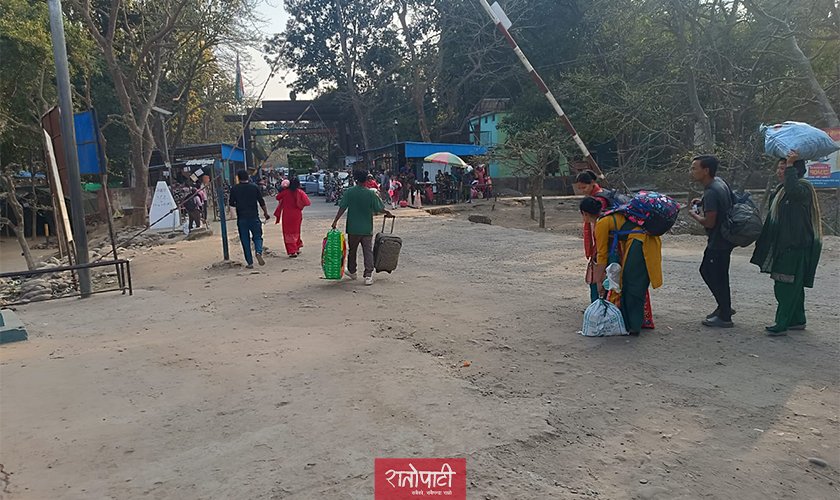
At the busy Trinagar customs point, some are returning carrying bags on their shoulders, determined to cast their votes no matter what, while others, prioritizing employment over the election atmosphere, are seen heading to India for work.
Residents of the Far-West often travel to Indian cities like Delhi, Mumbai, and Bangalore for employment. This process has been ongoing for years. Due to geographical proximity to Indian cities, a large portion of the local population is compelled to sell their labor in India. Among these expatriates who usually return only for festivals, some are coming back specifically to cast their votes.
Ramjanak Chaudhary from Gauriganga Municipality in Kailali appeared very enthusiastic while returning home via the Trinagar border on Sunday. He said, 'This election is very important. We have sweated in other people's countries for years; now we have come to vote hoping for some change in our own country.'
Krishna BK from Darchula also harbors hope for some new change in the country. He was crossing the border with the same enthusiasm. Similarly, Hari Dhami from Bajhang was coming home to exercise his right to vote for the first time. 'I have never voted before. Since I get to vote for the first time, I have taken leave from work and returned home,' he said.
Some were seen returning to Nepal with the intention of ensuring the victory of their old political parties. Just two days prior, a group carrying the flag of the CPN-UML entered the country via the Gauriphanta border.
According to the latest data from the Provincial Election Office, there are 1,715,760 voters in the Far-West. In 2079 BS, there were 1,669,411 voters here.
This time, the number of female voters is higher here: 864,423 women, compared to 851,319 men and 18 others. According to Prem Bhatt, Chief of the Election Office, Kailali has the highest number of voters district-wise, with 551,052 voters. Bajura has the lowest number of voters (86,961). Likewise, Kanchanpur has 314,385, Achham has 165,337, Baitadi has 156,372, Doti has 128,399, Bajhang has 126,903, Dadeldhura has 93,403, and Darchula has 92,948 voters.
Although the statistics show an increase in the number of voters, it is uncertain how many of them will be able to cast their ballots on election day. This is because, as the election atmosphere builds up in the country, there is a large stream of people leaving the country in search of employment at the border crossings.
Geeta Damai's family from Doti has not been touched by the election. Her family has been living in Mumbai, India, for years. Her husband works as a security guard in an apartment there. Geeta, who came home for a few days of household chores, was returning to India as the election approached, along with her two children and husband.
'What difference will the election make to us poor people? We are people who work for a living. Our stoves won't light up by voting,' she said, 'For us, hunger is more important than voting.' Other locals in the line of about 10 others heading to India with her shared the same predicament. Dayaram BK, 60, from Ghodaghodi Municipality in Kailali, met in the same line. 'There is no work in the homeland; if there is no work, how can I support my family? If I stay here to vote, I fear losing my job in India,' he said.
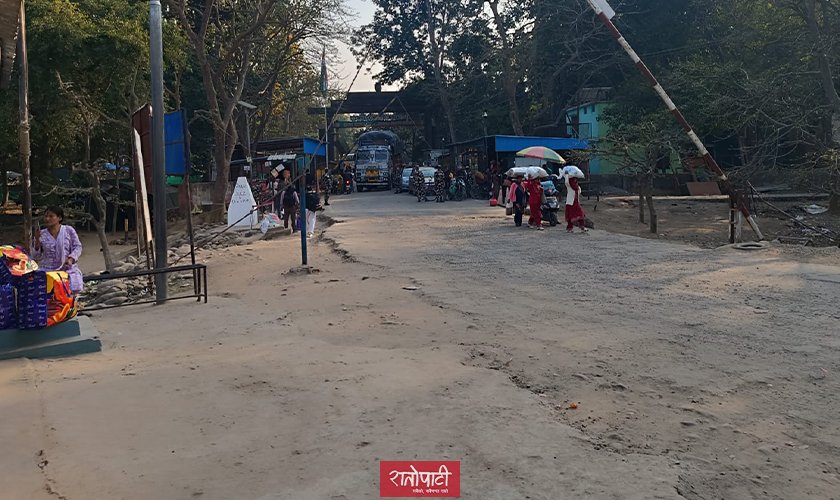
Leaders were seen soliciting votes from those returning home via the Gauriphanta border crossing in the Far-West. Those leaving the country, however, stated that they cannot sustain their livelihoods by staying at home.
This specific news has been automatically translated by AI. As a result, there may be some inaccuracies or language errors.


_Sw2x64Nala.jpg)