
Koshi Province Faces Multi-Million Loss as 24 Key Infrastructure Projects Stall, Fueling Corruption Suspicions
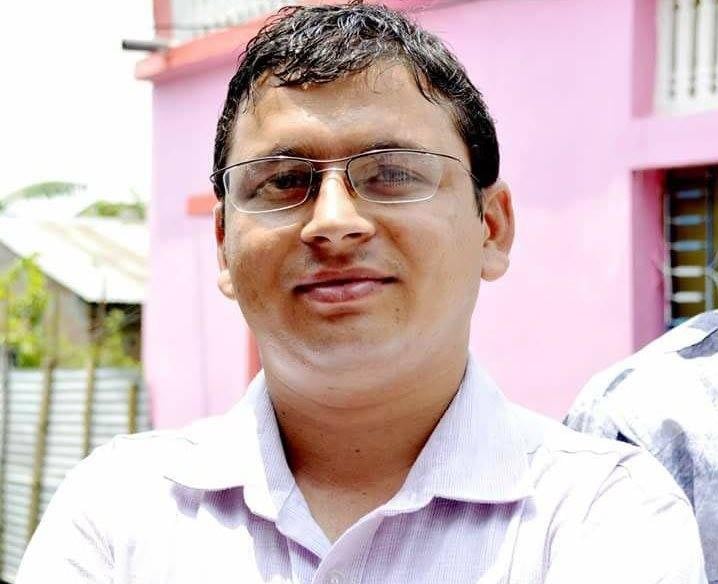

Biratnagar. Senior leader Balen Shah of the Rastriya Swatantra Party (RSP) stated during a public assembly organized by the RSP in Dhangadhi, Sudurpashchim, last Wednesday, that those who fail to build roads on time should be tied to trees or locked in cages until the roads are completed.
The very next day, on Thursday, Nepali Congress President Gagan Thapa took a swipe at Balen, saying that roads will not be built faster by whipping anyone. The back-and-forth between these two does not clarify the basis on which roads will actually be built.
However, the Koshi Provincial Government's Ministry of Physical Infrastructure Development is incurring losses of millions to the state because 24 road and other projects under its purview are not being completed on time. According to information provided by the Ministry of Physical Infrastructure Development, 24 major provincial projects have been languishing for years. As the work on these projects is not finished on schedule, and deadlines are repeatedly extended, the cost is increasing, adding an extra burden of millions of rupees onto the state.
Initially, the cost of the 24 projects was 5 billion 51 crore 3 lakh rupees. But as deadlines were extended, an additional burden (variation) of 43 crore 94 lakh rupees has been added. The cost for just 10 projects with added variation has reached 2 billion 63 crore 81 lakh rupees; previously, the cost for these projects was 2 billion 19 crore 87 lakh rupees. Among these, the cost for the Biratnagar Jogbani road alone has increased by 8 crore 47 lakh rupees. When the contract was awarded on Ashar 4, 2077 BS, the cost for this road was 29 crore 63 lakh rupees. After extensions and variations, the contract amount was increased to 38 crore 10 lakh rupees.
Similarly, the construction cost for the Taplejung Hospital building has increased by 7 crore 14 lakh rupees alone. The contract agreement for this building was signed on Ashar 22, 2080 BS, for 16 crore 94 lakh rupees. Currently, the cost of this building has risen to 24 crore 8 lakh rupees.
Furthermore, the cost for the Sankhuwasabha's Gufa Pokhari-Chainpur-Bahrabise road has increased by nearly 7 crore rupees. The contract agreement for this road, signed on Kartik 15, 2076 BS, for 62 crore 37 lakh rupees, was later increased in price upon deadline extension to 69 crore 89 lakh rupees.
The contract for the roads connecting various wards of Biratnagar was awarded in Ashar 2077 BS. Its deadline was extended to Ashar 2080 BS, but the work remains incomplete. Likewise, the contract for the Welcome Gate and Flyover Bridge in Biratnagar was awarded in Jestha 2077 BS, and its current deadline has been extended to Phagun 2082 BS, but there is still no sign of completion.
According to the ministry's data, these road, bridge, and building construction projects have not been completed even after five years since the contracts were awarded. Instead, the state's expenditure burden has increased in the name of cost escalation.
As mentioned in the details, most projects were contracted in the years 2076 and 2077 BS. Projects that should have been completed within two years according to regulations have had their deadlines extended to 2081 and 2082 BS. The ministry states that various problems persist in completing these projects even now.
The contract for the roads connecting various wards of Biratnagar was awarded in Ashar 2077 BS. Its deadline was extended to Ashar 2080 BS, but the work remains incomplete. Likewise, the contract for the Welcome Gate and Flyover Bridge in Biratnagar was awarded in Jestha 2077 BS, and its current deadline has been extended to Phagun 2082 BS, but there is still no sign of completion.
Instead of penalizing the contractor's delays, the ministry's approval of cost increases has raised suspicions of policy-level corruption. The reason cited by the ministry for most deadline extensions across all projects is the same: 'due to the changed site conditions and requirements.'
Looking at the data for these 24 projects, most have seen cost increases ranging from 5 to 30 percent. The Koshi Province Public Procurement Regulations mandate a Cabinet decision for any cost increase exceeding 15 percent.
Does a change in site condition imply a flaw in the initial survey, or is it merely an excuse to benefit the contractor? An employee of the Ministry of Physical Infrastructure Development states that this practice of extending deadlines citing site conditions even four years after work commenced, when the site should have been clear beforehand, encourages irregularities.
According to this employee, the main reasons why projects are not completed despite extensions in both deadlines and budgets are contractor negligence, the ministry's weak monitoring, and political pressure.
Looking at the data for these 24 projects, most have seen cost increases ranging from 5 to 30 percent. The Koshi Province Public Procurement Regulations mandate a Cabinet decision for any cost increase exceeding 15 percent.
According to the ministry, these 24 languishing projects have so far received payments totaling 3 billion 85 crore 58 lakh rupees. The decision to increase the cost for the Taplejung Hospital building was made by the Council of Ministers. The cost for this building alone increased by 7 crore 14 lakh rupees. The contract agreement for this building was signed on Ashar 22, 2080 BS, for 16 crore 94 lakh rupees; the current cost of the building has now risen to 24 crore 8 lakh rupees.
See the detailed description of the languishing projects

See the Koshi Province Public Procurement Regulations
52. Variation Order: (1) If circumstances arise during the implementation of a procurement contract that could not be foreseen at the time of signing the contract, the authority specified below may issue a variation order by clearly stating the reason, as follows:
(a) For variations up to five percent, by the head of the public entity who is a Gazetted Second Class Officer or equivalent to the ninth or tenth level officer, or equivalent.
(b) For variations up to ten percent, by the head of the public entity who is a Gazetted First Class Officer/Eleventh Level or equivalent.
(c) For variations up to fifteen percent, by the Secretary of the concerned Ministry.
(d) For variations exceeding fifteen percent, by the Provincial Cabinet, in the case of a public entity as per Sub-section (1) of Clause (ch) of Rule 2.
(e) For variations exceeding fifteen percent, by the highest executive body of the public entity, in the case of a public entity as per Sub-section (2) of Clause (ch) of Rule 2.
(2) When issuing a variation order as per Clause (d) of Sub-section (1), in the case of a public entity as per Sub-section (1) of Clause (ch) of Rule 2, the concerned Ministry shall form a group of experts and issue the variation order based on the recommendation received after necessary investigation through that group, upon the proposal of the concerned Ministry, and in the case of a public entity as per Sub-section (2) of Clause (ch) of Rule 2, based on the recommendation received after necessary investigation through a group of experts formed by the highest executive body of that entity.
(3) Notwithstanding anything written in Clauses (a) and (b) of Sub-section (1), an officer lower in rank than the officer who approved the cost estimate shall not issue a variation order.
(4) Notwithstanding anything written in Sub-section (1), the Secretary of the concerned Ministry may issue a variation order exceeding fifteen percent for procurement work up to sixty lakh rupees.

This specific news has been automatically translated by AI. As a result, there may be some inaccuracies or language errors.
_D4v4Yqko03.jpg)

_hXuKAenRlA.jpg)


_Y6v0INQnzs.jpg)
