
Nepali Parties Court Madhes Voters with Promises Ahead of February 21 Elections


Kathmandu. The Terai-Madhes region has become the epicenter for the House of Representatives elections scheduled for February 21. Political parties are making various assurances to the people of the Terai-Madhes to win their votes, presenting promises through their manifestos, pledges, and commitment letters.
The Nepali Congress and the Rastriya Swatantra Party (RSP) appear to be leading in this effort. Both parties are devising different strategies to attract Madhes votes. Both have already held mass rallies in the Madhes. The RSP organized a rally in Janakpur on Magh 5, one day before filing candidacies, while the Congress held its pledge assembly exactly one month later, on फागुन 6.
Both parties are focusing heavily on Madhes Province, operating under the understanding that securing the Madhes vote will make them the largest party. Consequently, these parties have included the Terai-Madhes in their respective election manifestos, presenting to the voters what they plan to do and addressing the specific problems faced in the region.
Congress: The Energy Base for Congress
Recalling that the Madhes has been the energy and base ground for the Nepali Congress since the 2007 revolution, the Congress aims to develop an emotional connection by preserving the self-respect, identity, language, and culture of the Madhes. The Congress stated in its pledge document, 'We will build a prosperous Madhes while protecting the self-respect, identity, and rights of the Madhes.'
The Congress has pledged to ensure the representation of all Madhesi castes, ethnic groups, classes, and communities in every organ of the state and party structure based on the principle of inclusive proportional representation in line with the spirit of the constitution. Furthermore, it promised to develop the identity, language, literature, culture, and arts of Madhes Province as national heritage.
The Terai-Madhes faces a severe water crisis. Due to deforestation, Chure region exploitation, and other factors, the groundwater level is continuously decreasing. Traditional ponds, wells, and hand pumps have dried up, increasing the risk of desertification. Congress has pledged to immediately implement arrangements for river water management and rainwater harvesting to break the severe cycle of floods during monsoon and drought during winter.
In addition to extensive afforestation in the Chure region, they promised to stop indiscriminate excavation and deep boring, scientifically reviving water sources and constructing community water collection centers. Agriculture is currently struggling due to a lack of fertilizer, seeds, irrigation, proper storage, and markets. Congress has pledged to bring agricultural training, technical knowledge, and access to modern technology to every local unit in the Madhes, developing subsidized loans and storage capacity, thereby creating agriculture-based employment and making Madhesi farmers self-reliant. They also promised to establish a fertilizer factory in the Terai so that fertilizer can be produced within Nepal.
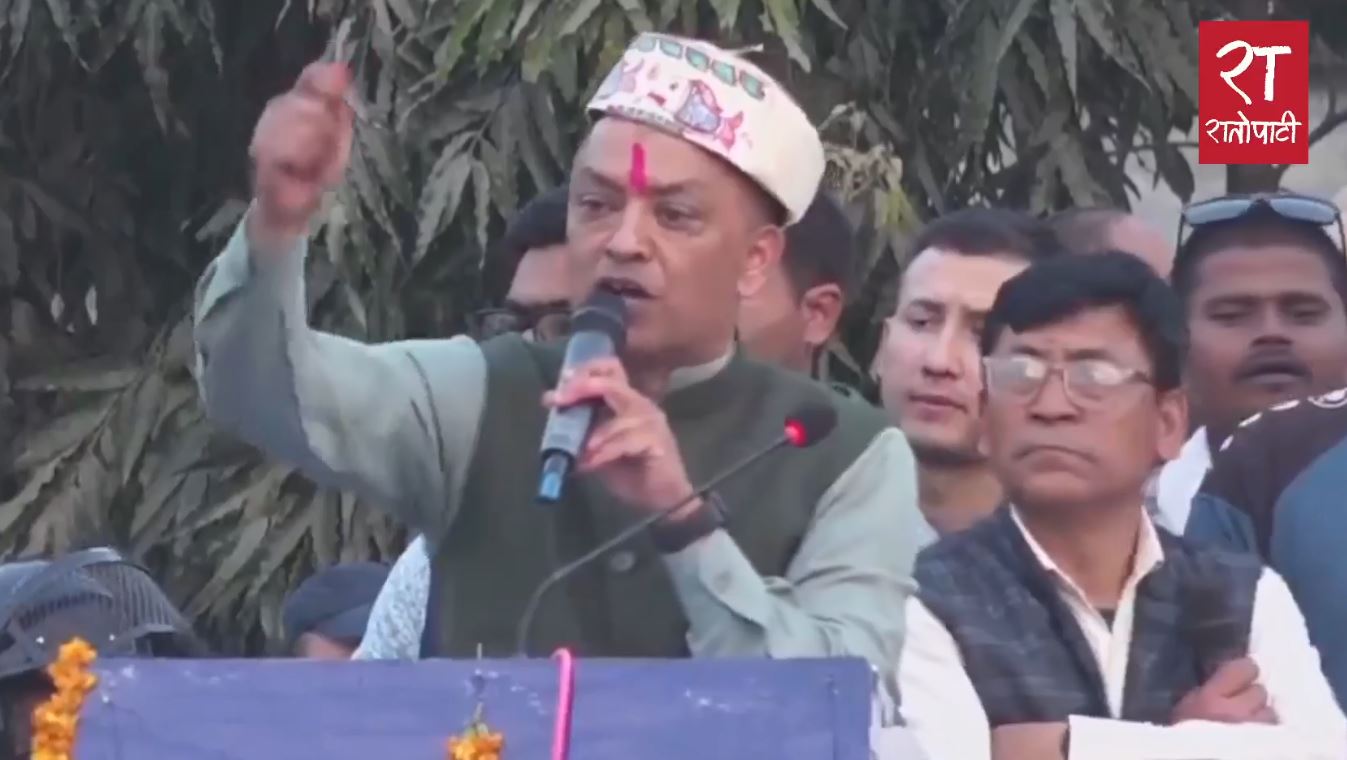
Free Health Insurance
Congress has pledged to develop the area along the Postal Highway in the Terai-Madhes and the southern border region as an economic corridor, and to provide free health insurance for impoverished Dalit families in the Madhes. Congress has also pledged that if any impoverished, marginalized, deprived, or excluded communities in the Madhes have been left out, they will be listed, and if listed communities are unable to access social services provided by the state, necessary legal and institutional arrangements will be made for their immediate implementation.
Congress also announced it would declare the Terai-Madhes an agro-industrial corridor. Furthermore, it promised to bring local products to the international market under the 'Madhes Brand.' Special programs will be implemented for the upliftment and development of Madhesi Dalit women with disabilities.
With the active participation of Madhesi women, the 'Madhes Ki Mai' program will be launched with the objective of entrepreneurship and community development for the overall progress of the Madhes. This includes subsidized loans for groups engaged in agriculture, animal husbandry, and service businesses, training for community development, distribution of nutritious food, and the implementation of special programs to promote indigenous Madhesi knowledge, arts, culture, and customs.
'Educate Daughters, Save Daughters'
Through the Chief Minister's Cleanliness Campaign, they plan to connect cleanliness and tourism by preserving religious and cultural heritage, cleaning ponds, and beautifying temple premises. The 'Educate Daughters, Save Daughters' campaign has linked girl child education and empowerment with the long-term socio-economic development of the province. They stated that the development of religious and cultural centers, including Janakpurdham, will take the province's tourism potential to new heights.
They pledged to conserve the Chure region, plant grass and seeds through a drone-based campaign, and achieve the goal of 'Greenery in Chure: Happiness in Madhes' within five years.
Congress stated it would manage the Chure region and control floods affecting rivers in the Terai through systematic embankments without affecting the natural flow or aquatic life. This will save crops and settlements from floods, and the embankments will be developed as roads to connect remote settlements in the Terai-Madhes with the transportation network. They also promised to run intensive programs to eradicate existing illiteracy in the Terai.
Arsenic-Free Terai Campaign
The Rastriya Swatantra Party (RSP) has also prioritized the conservation of the Chure region in the Terai-Madhes. They promised to give high priority to conserving the Chure region, which is linked to the existence of the Terai-Madhes, and stop the uncontrolled exploitation of stones, gravel, and sand from the Chure.
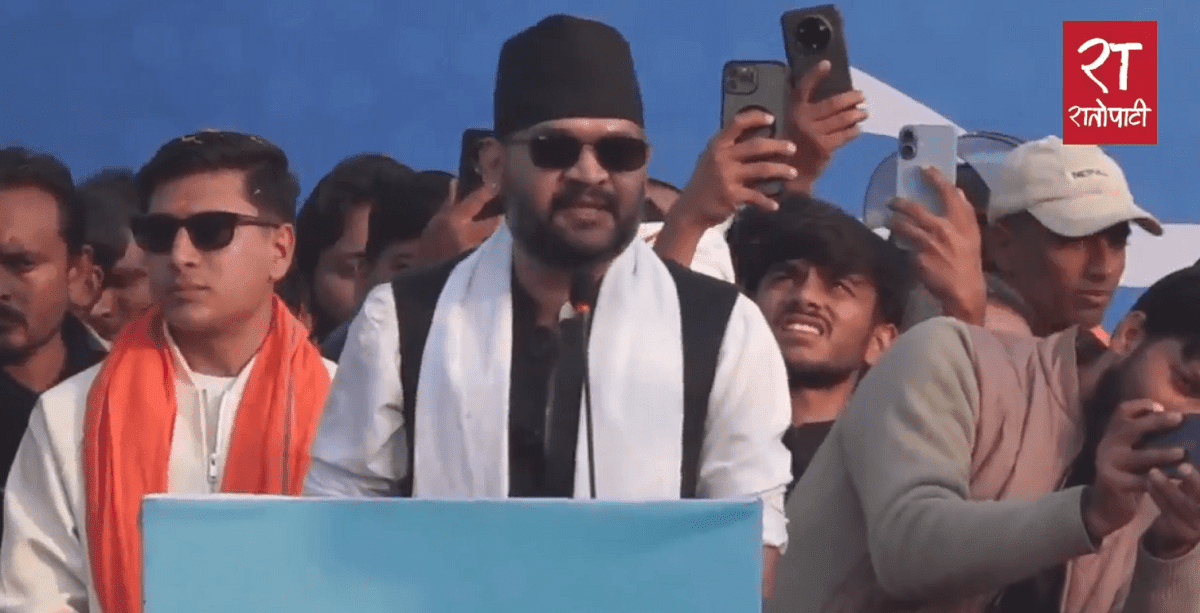
The risk of inundation in Terai rivers is high because they are filled with stones and gravel. To mitigate this, the RSP promised to implement a 'Scientific Excavation and Export Procedure.' They plan to empower the 'Integrated Chure Conservation Authority' with shared responsibility among local, provincial, and federal governments, take Chure conservation to the public level, and declare the most sensitive areas of the Chure as 'Fully Protected Zones.'
RSP also promised to connect Nepal with the rail networks of China and India, including feeder routes to major cities in the Terai. Furthermore, they pledged to launch an 'Arsenic-Free Terai Campaign,' treating the serious public health crisis of arsenic appearing in various districts of the Terai as a national crisis.
Old Thinking, New Faces
However, senior journalist Chandra Dev Kamat from Siraha says that these documents from Congress are nothing more than a way to deceive the Madhes. He states, 'The people of Madhes already know that Congress has only changed the bottle, but the liquor (alcohol) is the same. Presenting Gagan Thapa as Prime Minister is not new for the Madhes, as the Madhes has seen many Congress Prime Ministers before. Madhesi people do not expect much from Gagan even if he becomes Prime Minister.'
He further stated that he does not believe the promises made by Congress and RSP in the Madhes will be implemented. 'That requires constitutional amendment, but no party seems positive about constitutional amendment,' he says. 'If the problems were solved by amending the constitution, this situation would not have arisen in the country.' Kamat believes the parties are only employing tactics to appease the Madhes.
Similarly, Advocate Birendra Yadav from Parsa also stated that the commitments made by Congress and RSP in the Madhes are not easily believable by the public. 'The public is well aware of the Gen-Z movement and the subsequent activities of the RSP. People are looking very seriously at Ravi Lamichhane being released from jail during the movement, then going back to jail, and later being suddenly released after forming the government,' Yadav argues.
He mentioned that questions are being raised because there is no guarantee that the RSP will not act this way in the future. Nevertheless, he noted that there is currently a surge of public support for the RSP, and the public will give the new party a chance once. 'The Madhesi people have been watching Congress for 70 years,' he added.
He also pointed out that even though Congress has put forward Gagan, the perception in the Madhes is that all leaders are the same because the party's ideology and principles remain unchanged. 'How can change be possible in the Madhes like this?' he argued. He concluded that the Madhesi public is currently in a 'wait and see' mode.
This specific news has been automatically translated by AI. As a result, there may be some inaccuracies or language errors.
_D4v4Yqko03.jpg)

_hXuKAenRlA.jpg)


_Y6v0INQnzs.jpg)
