Pilgrims of Mithila's 'Mahakumbh' Reach Jaleshwar on Fifth Day of Sacred Circuit

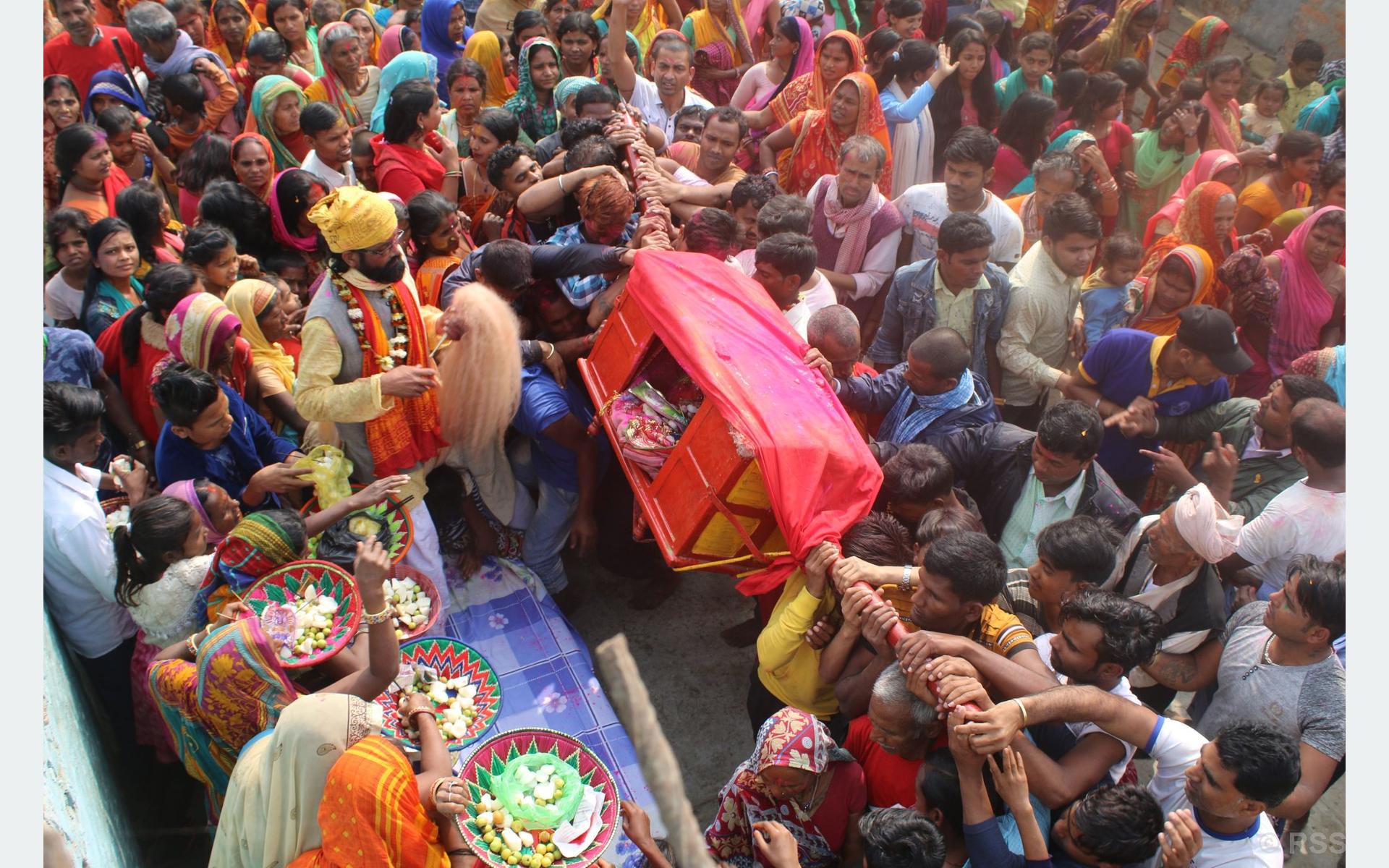
Mahottari. Pilgrims of the 15-day Mithila Madhya Parikrama, considered the 'Mahakumbh' of the ancient Mithila region of Madhes, are reaching Jaleshwar today, the fifth day of their journey.
The journey to Jaleshwar for the fifth night's halt began early this morning, following the pilgrims' arrival from Phulahar in India's Madhubani district to Matiyani in Mahottari on Thursday. An unbroken line of pilgrims is currently visible from Jaleshwar to Matiyani. Matiyani was the first overnight stop for the pilgrims in Mahottari district.
The residents of Jaleshwar welcomed the pilgrims upon their entry into the city for the fifth day's rest. The pilgrims, whose journey began last Monday, previously spent their first night at Hanuman Garhi in Dhanusha, and the second and third nights at Kalyanashwar (Kalna) and Girijasthan (Phulahar) in India's Madhubani district. Having entered Mahottari on Thursday, the pilgrims will remain in Mahottari until next Monday. As part of this schedule, today is the fifth day in Jaleshwar, the sixth in Madai, the seventh in Dhruvkund, and the eighth in Kanchanvan, before re-entering Dhanusha on the ninth day.
Earlier, the procession, which started last Monday from Therakurhi in Dhanusha, led by the palanquin carrying the idol of Mithilavihari (Lord Ram), was joined by the palanquin carrying the idol of Kishoriji (Goddess Sita) from the Agnikund (Sundar Sadan) Math in Janakpur. Today, the pilgrims will camp by setting up tents in the field near the Parikrama pond in Jaleshwar.
The ultimate goals of this pilgrimage are health, welfare, and salvation. Mahant Dr. Rabindradas Vaishnav, the successor of the Laxminarayan Math in Matiyani, explains that the tradition of the Mithila Madhyamiki Parikrama commemorates the excursions Lord Shri Ram and Sita made through various places in the then Mithila kingdom after their marriage in the Treta Yuga. Maithils believe that touching the dust of the path walked by Lord Shri Ram and Janaki during this journey leads to salvation.
Whenever the palanquins carrying the idols of Shri Ram and Janakiji arrive at a resting place, crowds gather from surrounding settlements to view the idols. A tradition exists where a religious fair, including devotional songs and chanting, is organized at the resting site upon the arrival of the palanquins for darshan. Local levels, social organizations, and monasteries at the resting sites coordinate to arrange necessary provisions, including food, lodging, drinking water, and primary medical care for the pilgrims, managed by volunteers.
This journey, covering a total of 133 kilometers across Nepal and India, involves a 25-kilometer stretch in Mahottari. Of the total, 26 km are in India, and the remainder falls in the areas of Dhanusha. Experts in Mithila culture and tradition state that this circumambulation tradition began in the 18th century. Sadhus and saints say that this journey, following the footsteps of Ram and Sita with their idols leading the way, is transcendental rather than physical. Hemnarayanlal Karna, Principal of the Yagyavalkya Laxminarayan Vidyapeeth in Matiyani, explains the Hindu Maithil belief that undertaking this journey barefoot, carrying their own meager provisions and a change of clothes, grants liberation from worldly suffering.
Sadhus and saints from various monasteries in Nepal and India, along with general devotees, participate in the journey. The Greater Janakpur Area Development Council, along with the local levels and religious monasteries along the route, coordinate and facilitate the journey.
The Madhyamiki Parikrama, which begins on the Amavasya (new moon day) of Falgun and concludes with the circumambulation of the inner sanctum of Janakpurdham on the Purnima (full moon day) of Fagu, is considered a distinct cultural festival of Mithila.
This specific news has been automatically translated by AI. As a result, there may be some inaccuracies or language errors.

_vl0CMY93gz.jpg)