Supreme Court Grapples with Recovery of Burnt Corruption Case Files Following Court Arson
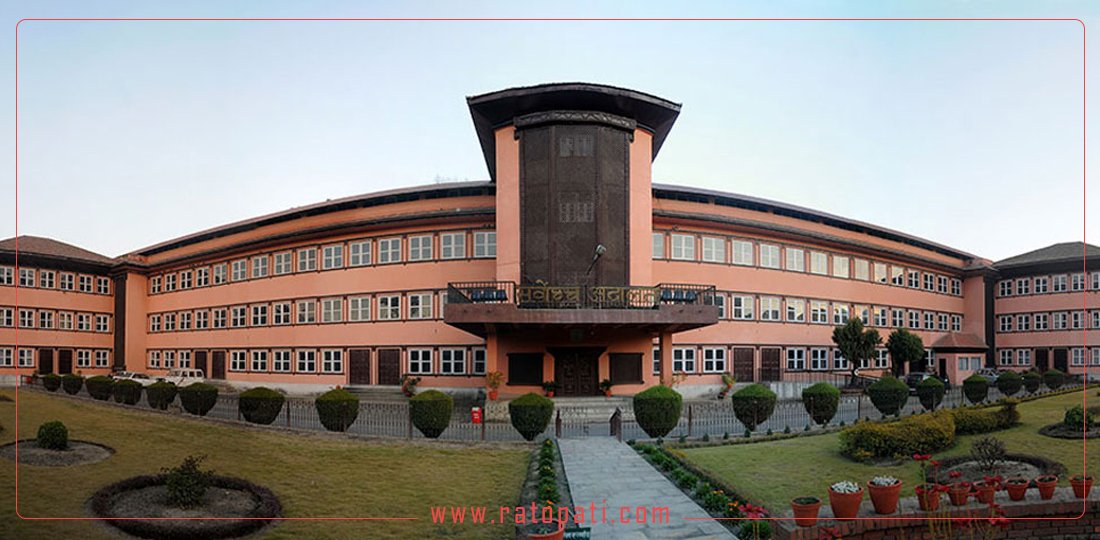
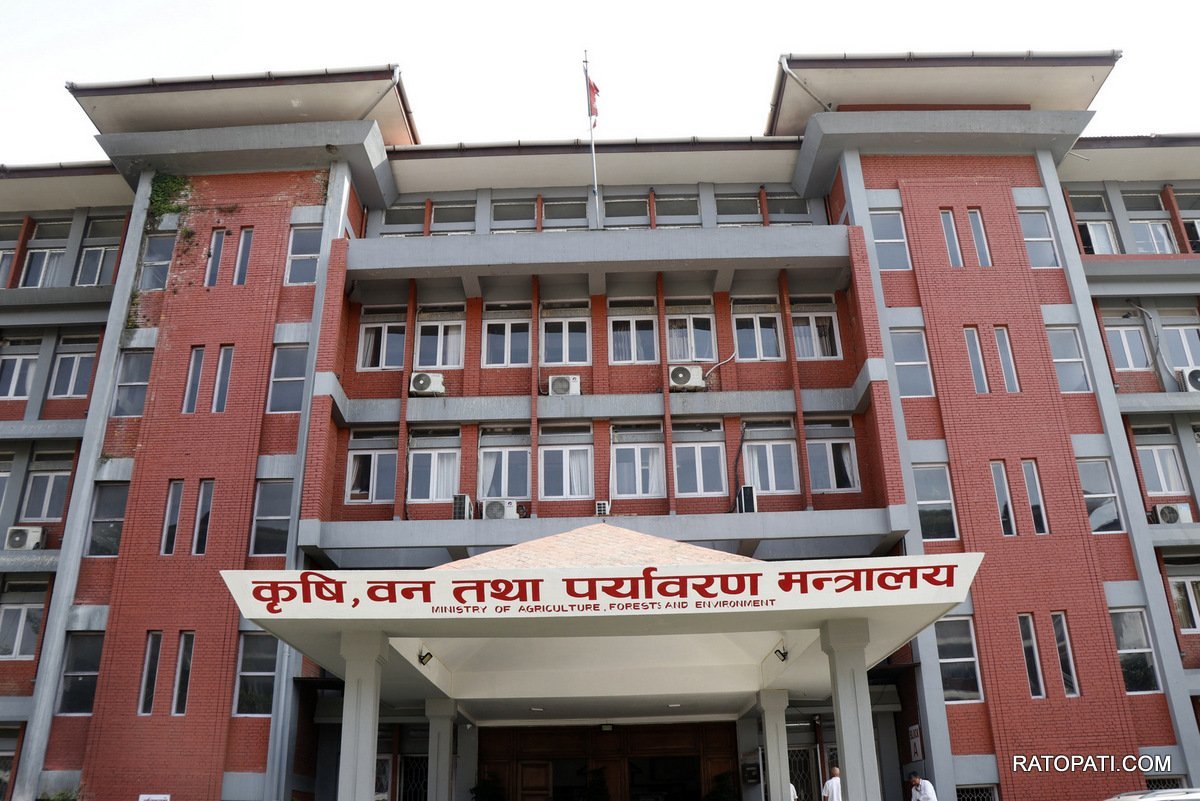
Kathmandu. During the demonstrations on Bhadra 24, 90 percent of the case files at the Supreme Court were destroyed in an arson attack. Among these, over a thousand case files related to corruption were reduced to ashes.
Many corruption cases, which had been registered in the Special Court following investigation by the Commission for the Investigation of Abuse of Authority (CIAA) and were pending appeal at the Supreme Court after judgment, had their entire files destroyed in the arson while they were listed for hearing under the 'being heard' status.
With hundreds of corruption-related case files burned simultaneously in the arson, the process of retrieving and authenticating the destroyed case documents is underway. Some case files have been retrieved, and hearings are beginning to be scheduled. While some cases were in the final stages, listed under 'being heard,' the files were destroyed.
To retrieve the destroyed files, the Supreme Court's Full Court (full meeting) issued the 'Directive on Retrieval and Authentication of Case Documents Destroyed due to Special Circumstances, 2082' on Ashoj 5. Accordingly, five methods/measures are prescribed for retrieving the destroyed files. Following the decision on file retrieval, authentication is being completed, and hearings are starting to be scheduled. Although some cases have had their files retrieved, heard, and judgments rapidly delivered, the hearings for corruption-related cases are being delayed due to slowness in file retrieval.
The corruption case concerning the substandard transformer scam at the Nepal Electricity Authority (NEA) was under hearing in the bench of Supreme Court Justices Abdul Aziz Muslim and Megh Raj Pokharel since Bhadra 12, listed under 'being heard.' The hearing was ongoing on Bhadra 22 when the file was destroyed in the Bhadra 24 arson. Following the Bhadra 24 arson, an order was issued on Magh 15 to retrieve the file for this case, suspending the general date.
After the file retrieval, a hearing date was set for Magh 25, but since the documents were found incomplete, an order was issued to summon the case papers. Once the case papers arrive, the Supreme Court will set a new hearing date for this case.
The CIAA filed the case in the Special Court in February 2070 regarding the electricity transformer corruption scandal. The CIAA filed the case in two phases. Initially, the CIAA filed a corruption case in the Special Court against 18 individuals, including the then Executive Director Dr. Jivendra Jha and then General Managers Rameshwar Yadav and Yugal Kishore Sah.
In the second phase, the CIAA filed a case against foreign agents and other NEA employees. The CIAA claimed that the state incurred a loss of approximately 500 million rupees due to the import of substandard transformers and demanded recovery of that amount.
The high-profile Lauda aircraft fare case was scheduled for hearing on Ashadh 22, 2082, in the Full Bench of Supreme Court Justices Tek Prasad Dhungana, Balkrishna Dhakal, and Megh Raj Pokharel. After being listed as 'not fit to be heard,' the date was set for Bhadra 26. However, following the court arson on Bhadra 24, the hearing scheduled for Bhadra 26 has become uncertain.
Following irregularities found in the transformer purchase, the CIAA filed four cases against 60 individuals, including NEA employees and supplier companies, in the Special Court on Bhadra 9 and 28, 2070. In its verdict on March 17, 2073, the Special Court convicted 25 people, including high-ranking NEA officials and foreigners, and ordered the recovery of 460 million rupees from them.
In the 'highly publicized transformer scam' of the Nepal Electricity Authority, 20 employees, including two former Chief Executive Directors of the NEA, were convicted. Similarly, five individuals from the Chinese and Thai companies supplying the transformers were also convicted. The Special Court ordered the recovery of over 463 million rupees in fines from those convicted.
Hearing for Shambhu Bharti's Case in Sudan Scam Remains Uncertain
Shambhu Bharti, convicted of corruption by the Supreme Court in the famous 'Sudan Scam,' was released from jail after filing a petition seeking a review of the case and being allowed to fight the case from outside. He was released from jail on Poush 20, 2076, after the Supreme Court accepted his petition allowing him to contest the case while out. He was convicted of corruption in the purchase of materials for the Nepal Police deployed in Sudan for the UN Mission. Bharti had filed a petition on Mangsir 30, 2076, seeking a review of the Supreme Court's decision. His review petition was scheduled for hearing in the Full Bench. This case was scheduled for hearing in the Supreme Court's Full Bench on Ashadh 22, 2082, but it was listed as 'not fit to be heard.' Subsequently, the case was scheduled for Kartik 20, but the hearing could not take place as the case file was burned due to the arson. The Supreme Court will schedule a hearing once the file is retrieved.
The Supreme Court had sentenced Bharti to one year in jail along with a fine of 142 million rupees. In the Sudan Scam, former IGP Om Bikram Rana, Hem Bahadur Gurung, and Ramesh Chand Thakuri were also convicted, served their sentences, and were released. Convicted former IGP Ramesh Chand Thakuri had surrendered to the Supreme Court.
File Retrieval Underway for Lauda Aircraft Fare Case
The highly publicized Lauda aircraft fare case was scheduled for hearing on Ashadh 22, 2082, in the Full Bench of Supreme Court Justices Tek Prasad Dhungana, Balkrishna Dhakal, and Megh Raj Pokharel. After being listed as 'not fit to be heard,' the date was set for Bhadra 26. However, following the court arson on Bhadra 24, the hearing scheduled for Bhadra 26 has become uncertain. The preliminary hearing in the Full Bench for this case has not yet taken place. In the Lauda fare case, the bench of Special Court Chairman Bhupadhwaj Adhikari and members Komal Nath Sharma and Cholendra Shamsher Jabara acquitted all the accused on Shrawan 28, 2064.
This corruption case, dating back 18 years, was pending in the Supreme Court. It reached the Supreme Court via the Appellate Court on Magh 13, 2064, after passing through the Special Court. It was concluded that Nepal Airlines Corporation suffered a loss of two billion rupees while leasing aircraft from Austria's Lauda Air. However, the CIAA had filed a case in the Patan Appellate Court in Jestha 2058, claiming corruption amounting to 389.7 million rupees. The CIAA had filed the case against nine individuals, including the then Tourism Minister Tarini Dutt Chataut and the then Executive Chairman of the Corporation Haribhakta Shrestha.
Hearing for Pappu Construction Owner Rauniyar's Corruption Case Scheduled for Falgun 11
The hearing for the corruption case involving Pappu Construction owner Hari Narayan Rauniyar and others, which could not be concluded on Bhadra 16, 2082, was scheduled for Bhadra 17. The hearing had been ongoing under the 'being heard' status in the Division Bench of Justices Manoj Kumar Sharma and Mahesh Sharma Paudel since Shrawan 20. This case, which reached the final stage of hearing, was given a general date for Magh 28 following the arson at the court during the Jyanji movement on Bhadra 24.
Since the case file in Bench No. 3 was completely destroyed in the arson, the court set a general date for Magh 28 and directed the collection of evidence. The hearing for this case is now scheduled for Falgun 11.
Hari Narayan Rauniyar and his son Sumit Rauniyar (Pappu) were convicted by the Special Court on charges of constructing substandard bridges and were fined. The Special Court sentenced Hari Narayan and his son to a fine of 35 million rupees each. After being dissatisfied with the Special Court's decision, the CIAA also filed an appeal in the Supreme Court against 11 individuals, making them defendants.
The Supreme Court has been hearing both appeals together. In the case filed by the CIAA regarding substandard bridge construction by Pappu Construction, the Special Court convicted Hari Narayan Rauniyar and his son Sumit Rauniyar (Pappu) and imposed fines.
File Collection Underway for Former Nepal Oil Corporation Executive Director Khadka's Corruption Case
The hearing for the corruption case filed against former Executive Director of Nepal Oil Corporation, Gopal Bahadur Khadka, was scheduled for Poush 8. On Poush 8, the Division Bench of Supreme Court Justices Nahakul Subedi and Nityananda Pandey ordered the retrieval of the file as it was destroyed in the Bhadra 24 arson. Once the file is retrieved and complete, another hearing date will be set for this case.
On Ashadh 15, 2080, the Special Court convicted Khadka of acquiring disproportionate assets and ordered the recovery of a principal amount of 91.96 million 634 rupees and an equal amount as a fine. It also ordered the confiscation of his land, shares, cash, and bank deposits. The Special Court also ordered the confiscation of three plots of land that Khadka had allegedly hidden in the names of his wife Sharmila Khadka and Amita Sodemba. Khadka appealed against the Special Court's decision on Falgun 22, 2081, and the Nepal Government appealed on Chaitra 12, 2080. The Supreme Court scheduled the hearing for both appeals together.
Order to Summon File in Corruption Case of Deputy Secretary and Engineer Shakya
Following the destruction of the file in the corruption case related to illegal asset acquisition against Senior Divisional Engineer Rajkumar Shakya of the Department of Water Supply, the Supreme Court has ordered the summoning of the case file. The Division Bench of Supreme Court Justices Nahakul Subedi and Nityananda Pandey ordered the summoning of the file in this case on Poush 8 last year. Once the file is retrieved, a hearing date will be set for this case.
On Bhadra 29, 2080, the bench of Special Court members Yamuna Bhattarai and Khusi Prasad Tharu convicted Engineer Shakya in the corruption case of illegal asset acquisition and sentenced him to one year in prison. The Special Court ruled that Shakya illegally acquired 24.263 million rupees and ordered a fine equal to the principal amount.
The CIAA had named Shakya, his wife Alka, and niece Prabha as defendants on Ashadh 16, 2077. Alka and Prabha, named as defendants for property confiscation, were acquitted. The CIAA filed a corruption case claiming that Shakya acquired 123.9 million rupees in assets while his legitimate income was only 16.1 million rupees, demanding a principal amount of 107.7 million rupees.
Order to Summon Evidence in Retired Engineer Gupta's Case
An order has been issued to summon evidence in the corruption case of retired engineer Kashi Prasad Gupta, which is pending in the Supreme Court. In the corruption case related to illegal asset acquisition, the Special Court, in the bench of members Dr. Khusi Prasad Tharu, Ram Bahadur Thapa, and Muraribabu Shrestha, convicted Gupta and sentenced him to nine months in prison. Except for Kashi, other accused were acquitted.
He was accused of illegally acquiring 167.2 million rupees, but the Special Court determined that he illegally acquired 21.6 million rupees and ordered the confiscation of that amount, along with a fine of 21.6 million rupees.
According to the records up to Poush 30 at the Special Court, among the corruption-related cases, 14 are related to illegal asset acquisition (disproportionate assets), 86 to irregularities in decision-making, 8 to fake certificates, 19 to bribery, 1 to money laundering, and 1 related to contempt of court are pending.
After the Special Court's decision, Gupta appealed to the Supreme Court. An order was issued on Ashadh 10, 2082, to summon the respondents in Gupta's case. The hearing scheduled for Poush 8 was postponed by the Office of the Attorney General on behalf of the government. On Magh 13, the Division Bench of Justices Manoj Kumar Sharma and Shrikant Paudel ordered the summoning of case documents.
The next hearing for this case is now scheduled for Falgun 8. On Bhadra 25, 2077, the CIAA filed a corruption case against retired Senior Divisional Engineer Gupta of the Department of Urban Development and Building Construction and his wife Mita Gupta. The CIAA also filed cases against Anjukumari Mahato, Udit Narayan Prasad Rauniyar, Chandeshwar Mahato, Dhiraj Kumar Gupta, Priti Kumari Gupta, Dr. Rachana Prasad Shah, Bikash Prasad Gupta, Binay Kumar Singh, Vibha Rani, Sangeeta Sah Rauniyar, and Santosh Kumar Gupta for hiding their assets.
How Many Cases Are Pending in the Special Court?
According to the records up to Poush 30 at the Special Court, among the corruption-related cases, 14 are related to illegal asset acquisition (disproportionate assets), 86 to irregularities in decision-making, 8 to fake certificates, 19 to bribery, 1 to money laundering, and 1 related to contempt of court are pending. According to Registrar Upreti, the Special Court has finally returned to full capacity after four months of the arson.
What did the Supreme Court's Full Bench decide regarding the burnt case files?
The Supreme Court's Full Court (full meeting) issued the 'Directive on Retrieval and Authentication of Case Documents Destroyed due to Special Circumstances, 2082' on Ashoj 5. Accordingly, five methods/measures are prescribed for retrieving the destroyed files.
The directive mentions that the preparation of the files should be based on whether the case files belong to the original jurisdiction or appellate jurisdiction if it is a court or body at the appellate level, and in the case of the Supreme Court, based on whether the files belong to appeal, writ, certiorari, case heard after summoning, review, petition report, review, or constitutional bench jurisdiction.
The directive mentions collecting copies of case documents/records held by any court or body, collecting judgments and documents uploaded on the websites of the Supreme Court and other government agencies, and collecting documents held by judges and employees during court proceedings. It also mentions collecting documents exchanged electronically between various courts, other government agencies, and judges and bench officers, and collecting them through 'appropriate means.'
The Supreme Court has also prepared a basis for how to prepare the collected files and other case details. Classification will be done based on the names, surnames, addresses, contact numbers of the parties, nature of the case, case number, and based on whether the files are of civil, criminal, writ, contempt of court, petition, report, or other nature, and based on the stage of action: pending, judgment delivered with the full text yet to be prepared, under execution of judgment, or execution work completed and kept as records.
The directive states that the preparation should be based on whether the case files belong to the original jurisdiction or appellate jurisdiction if it is a court or body at the appellate level, and in the case of the Supreme Court, based on whether the files belong to appeal, writ, certiorari, case heard after summoning, review, petition report, review, or constitutional bench jurisdiction.
Files will also be prepared based on which bench—single, division, full, or larger full bench—the case files were presented to. Files can also be prepared based on other criteria as needed.
This specific news has been automatically translated by AI. As a result, there may be some inaccuracies or language errors.