Nepali Author Recounts Humiliating Experience at Chennai Immigration, Citing Broader Issues in Nepal-India Relations

Even after trying to forget the experiences encountered during a recent visit to India, the shadow of deep-seated inferiority could not be erased from my mind. I tried to remain silent for some time, attempting to relegate those moments to the corner of oblivion, but the memory kept stinging and nagging me. Finally, compelled, I posted on X and LinkedIn, tagging Indian Prime Minister Narendra Modi, External Affairs Minister S. Jaishankar, Home Minister Amit Shah, and the Nepali Embassy in Delhi.
No response was expected, not even a simple acknowledgment.
Perhaps it is due to my low activity on social media, or maybe because such experiences have become 'normal' for ordinary Nepalis. Nepalis possess an amazing ability to normalize situations, whether the issue is corruption, exploitation, or injustice. All these factors might have further reinforced the silence. Being 'taken for granted' has become our destiny.
The incident is neither entirely new nor exclusively mine.
On February 4, while returning from Chennai to Dhaka, upon seeing my Nepali passport at the immigration counter, I was directed to a desk in a corner. The official there, flipping through the passport, rudely asked, "Tu Chennai kyu aaya hai?"
Surprised, I explained in English that I had come to drop my son off from college. Before my answer even settled, his temper flared, and puffing his nostrils, he grumbled in a condescending tone, "Hindi mein bol."
When I stated that I could not speak Hindi, he retorted, "Nepali hokar bhi Hindi nahin aati? Tu Nepali hai lekin tujhe Hindi nahin aati?"
I again calmly informed him that I do not speak Hindi, explaining that I work for the United Nations in Dhaka and was heading there. Before I could finish, he questioned again, "Nepali hokar Bangladesh mein kaam karta hain?"
His questions came as if I had committed some crime. Ignoring his queries, I continued to answer in English. But finally, in a highly insulting manner, he said, "Sab ke sab gulam hain."
For a moment, the thought of protesting arose. I felt the urge to remind him of India's colonial history and that Nepalis have never been slaves to anyone. However, I deemed it pointless to argue with a 'sick' person afflicted by a poor mindset and prejudice nurtured by a two-hundred-year slave mentality. So, I said, "Get well soon," and left.
His words bothered me immensely throughout the journey and afterward. Two days later, I publicized the matter through social media.
I had a faint hope that at least the Nepali Embassy would respond. But the picture of the esteemed Ambassador and the Minister of Agriculture looking grand on the Embassy's X page remained unchanged, nor did a single word appear. Sometimes it seems our embassies do nothing other than maintain the feudal tradition of arranging escorts for visiting ministers and leaders, rather than addressing the public concerns and grievances of citizens.
Anyway, let's set aside my experience for a moment!
Nepal-India relations are often described as a 'Roti-Beti relationship,' a 'special and historic,' and a 'unique' relationship. But what I feel is that these adjectives force the display of fake cordiality by sweeping the reality and the patronizing attitude in Nepal-India relations under the carpet.
Open borders, unequal treaties and agreements, pressure in policy-making, and periodic institutional mistreatment—these narratives, instead of helping to critique the Indian hegemonic mindset and correct it, actually fuel it further. So, are these words not Indian narratives designed to expand Indian dominance?
My experience is by no means novel or an exception. In reality, it is like the 'tip of the iceberg.' My experience is a small but profound reflection of the long-standing power imbalance and hegemonic dominance in Nepal-India relations. Such incidents transcend personal pain and become a question of state-to-state relations.
Raising this issue now, on the eve of elections, might seem a bit 'off the track,' but this is the appropriate time. Elections are not just a process of changing the government; they are also the moment to decide what kind of foreign policy to adopt, how to deal with neighbors, and how much self-respect to maintain.
Unfortunately, in Nepal's political discourse, relations with India are often confined either to exaggerated nationalism or complete silence. This is the time to decide whether to be content with the gift of a few hundred vehicles or to draw a line and debate issues of long-term, mutual benefit, self-respect, and independence.
This is the time to choose whether to sound the alarm of the 'Monroe Doctrine,' beat the drum of nationalism calling ourselves 'Thori ka Ram,' or reach Asian standards by riding an Indian buffalo.
Certainly, Nepal-India relations are based on friendship. But co-existence is more important than friendship. Therefore, criticizing Indian dominance and pointing out the humiliating treatment meted out to us is a question raised for the recognition of our national identity, rather than being anti-India.
It seems appropriate to discuss what the state, government, and Ministry of Foreign Affairs think about the humiliating treatment of their citizens and what should be thought in the coming days. Because the status of citizens in any sovereign country in the world is equal. Just because one is large in geography does not mean its sovereignty is greater, and just because one is small in geography does not mean its sovereignty is smaller.
When maintaining relations with neighbors, a small country like ours must adopt even clearer, institutional, and self-respecting diplomacy. More precisely, firm and balanced diplomacy are our needs. We are harmed as much by ultra-nationalism as we are by neo-Zelenskys.
Therefore, we need neither the romantic tales of tunnel warfare nor rulers who describe the Indian blockade as a 'difficult situation at the border.' What we need are rulers who protect self-respect and develop relations based on co-existence, keeping national interest paramount.
Diplomacy without respect is hollow, and democracy without self-respect is incomplete. The upcoming election is an opportunity to reassert this self-respect—not just within the border, but across it too. This writing is an attempt to seek a citizen's self-respect, rather than an expression of personal anger.
It is hoped that the current government and the future government will give paramount importance to the self-respect of their citizens because, ultimately, a nation rests on the self-respect of its citizens.
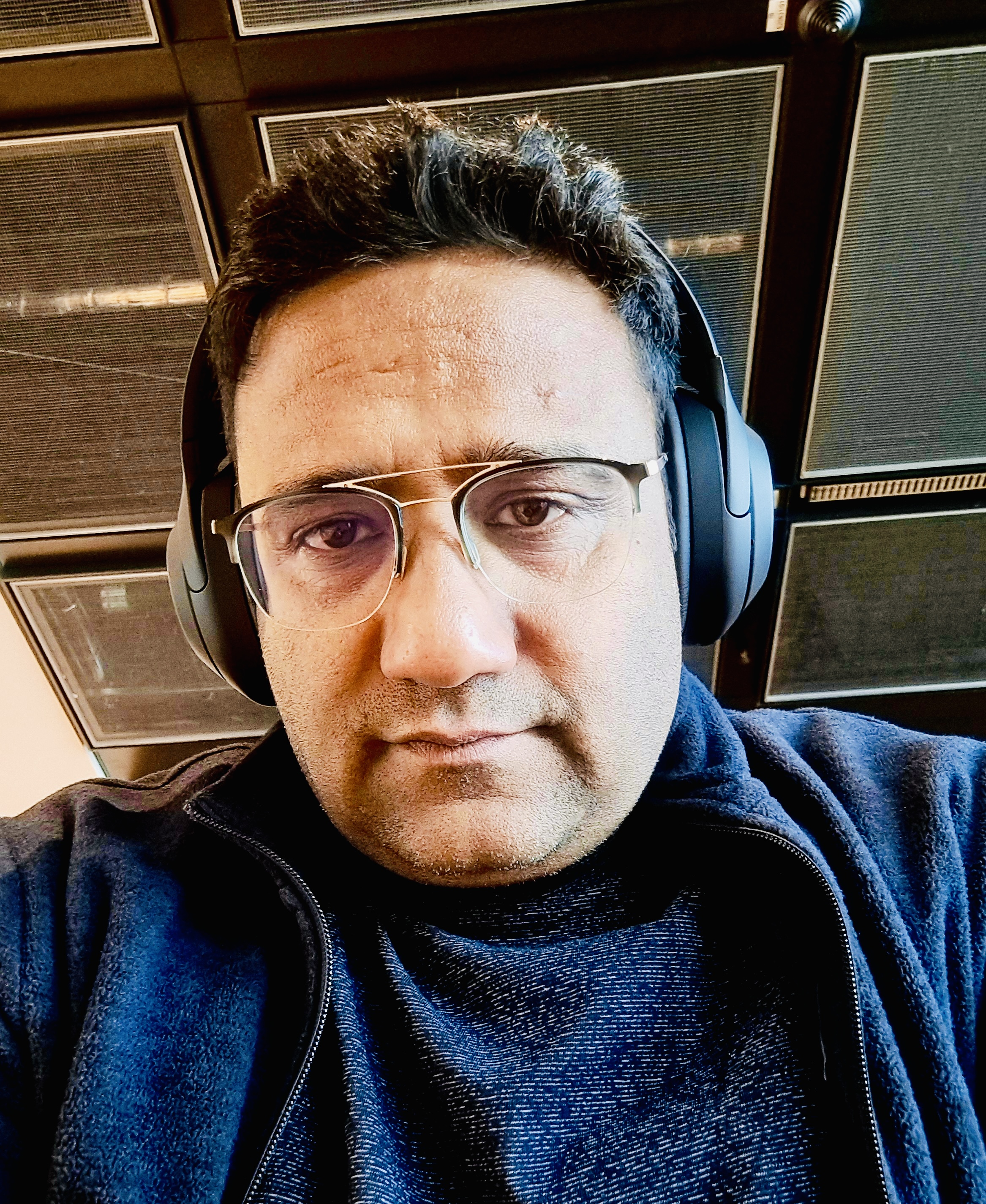
(The author, Karnel, is currently working at the United Nations, Dhaka, Bangladesh.)
This specific news has been automatically translated by AI. As a result, there may be some inaccuracies or language errors.