Nepali Election Campaign Sees Voters Shift from Passive Listeners to Assertive Questioners

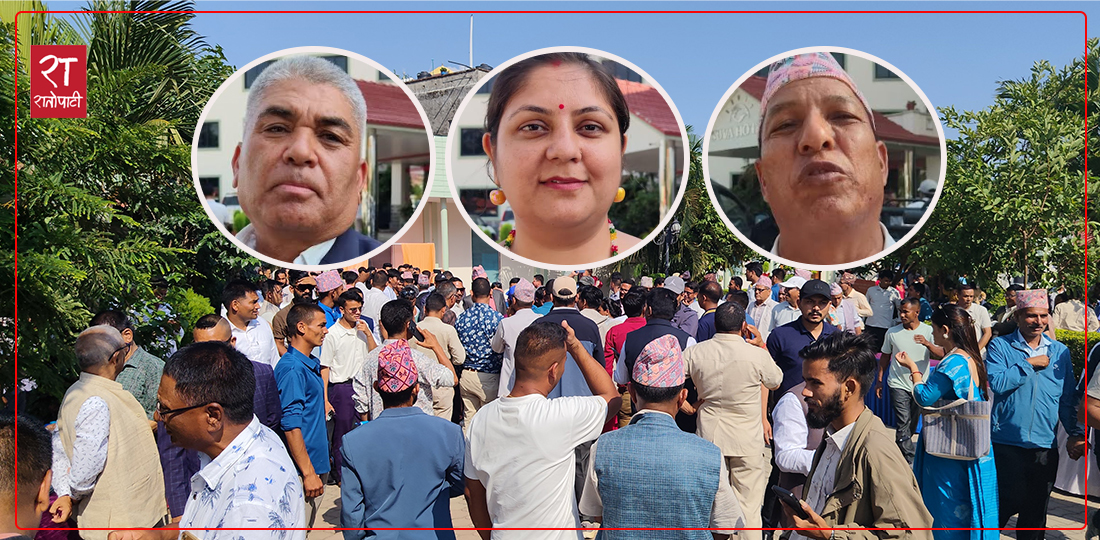
Kathmandu. The race for candidates in the House of Representatives election scheduled for February 21st is in full swing across the country, but the scene is different compared to previous elections. The political tradition of standing on a stage, delivering monologues, and making grand promises seems ineffective this time.
From top leaders of major parties to 'celebrity' candidates reaching out during door-to-door campaigns, everyone is facing sharp questions from voters this time. Voters, who previously acted only as 'listeners,' have now emerged as 'questioners,' forcing candidates to be ready with explanations alongside their electoral agendas.
For CPN-UML Chairman and former Prime Minister KP Sharma Oli, Jhapa-5 was always considered a safe constituency, but this time he is facing unexpected questions during his door-to-door canvassing. Firstly, his competition includes Balen (Balendra) Shah, who has been put forward as the Prime Ministerial candidate by the Rastriya Swatantra Party (RSP). Furthermore, the sharp questions posed by voters have put Oli in an uncomfortable position.
Locals in Jhapa-5 have specifically questioned Oli about the delay in constructing embankments for the Ratuwa and Mawa rivers, the lack of a permanent solution to the landless squatters' problem, and the major promises he made while he was Prime Minister, leaving the youth to 'grill' him.
Oli has also been questioned on issues ranging from the shooting of Gen Z individuals while he was PM to the fact that he only shows up to ask for votes during elections. Oli, who previously won consecutive easy victories, is now going door-to-door seeking votes and facing questions this time.

KP Oli had not faced such a challenge since 2064 BS. He is currently responding defensively and is also trying to woo voters.
Nepali Congress leader Dr. Sunil Sharma, a candidate in Morang-3, is one of the leaders expected to win easily. Sharma, who operates a medical college, previously won easily by claiming to have provided significant personal assistance to the voters in that area. This time, locals have also questioned him. 'Are you going to treat people using personal funds, or strengthen the state? Can you trade our health for votes?' a youth asked him during his campaign.

Ganesh Karki of the RSP, Sharma's competitor, was also questioned by local youth: 'Why should we vote for you? What is your basis?'
Balen, who resigned from the post of Kathmandu Mayor to contest against Oli in Jhapa-5 from the Rastriya Swatantra Party (RSP), faces an 'acid test' in this election. While his work in Kathmandu is discussed, he also faces significant questions in Jhapa.

During discussions with locals, Balen was questioned about rumors of him using bulldozers in the landless settlements.
After listening to the locals, Balen stated that the landless squatters' issue must be viewed from both humanitarian and legal perspectives. Balen explained that the nature of the risky settlements along the rivers in Kathmandu is different from the old settlements in Jhapa, assuring that genuine squatters would not be unjustly treated.
He also assured that in the coming days, arrangements would be made to ensure that only genuine victims receive land ownership certificates by making the Land Commission impartial.
Locals asked Balen, 'What is your manifesto? Why should we vote for you?' In response, Balen stated that in the first week of Falgun, his party, the RSP, would release a manifesto covering the issues of the Prime Minister and the specific regional issues of Jhapa-5.
Rishi Dhamala, who left journalism to enter the electoral arena, has been put in a very difficult position by voters in Rautahat-4. The public is now questioning him in the same manner he used to question others. 'What did you do for the common people while staying close to centers of power for decades?' local voters asked him. In some villages, videos of youths leaving him speechless by asking, 'What is the meaning of Dhamala without a camera?' are going viral on social media.

RSP candidate Toshima Karki is being viewed with a slightly different perspective by voters in Lalitpur-3 this time. She has had to face questions like, 'Why didn't you return after winning the election last time? Why did you neglect development work?' It is becoming difficult for her, who previously sought votes 'for change,' to ask for votes now by 'showing the work done.'
Although considered an intellectual leader, Chandra Bhandari is facing significant pressure from youth in Gulmi who are seeking an alternative to the old parties. Locals are specifically questioning him about why he doesn't return to the village after winning the election and why he doesn't directly interfere in the internal democracy of the Congress party. He is being forced to clarify to the public about the Congress's weak role in federalism and corruption control.

In Makwanpur, Congress leader Mahalaxmi Upadhyaya 'Dina,' who has been defeated multiple times, is being sternly questioned by voters this time with, 'Why you again?'
UML leader Jwala Kumari Sah is having to provide more clarifications than campaign in her home district of Bara. Locals are putting her under scrutiny, accusing her of not having a concrete impact on the district while serving as a minister.
Locals are continuously questioning Sah for defending KP Sharma Oli and for defaming the Gen Z movement. Furthermore, Bara locals are questioning her directly regarding the recent derogatory remarks made by UML Chairman Oli about Madhesi issues.
These are just a few examples; currently, most candidates are having to face local grievances and questions.
Questions of Vision for the New, Grievances for the Old
It appears that candidates in this election are primarily facing two types of questions. Many have expressed grievances towards candidates from old political parties and those who are long-standing candidates, while new political parties and first-time candidates are being questioned about their vision and agenda.
Voters are frequently complaining to the UML, Congress, CPN (Maoist Centre), and Madhesi parties about neglecting them after winning elections and paying no attention to the development of their constituencies. New candidates from these same parties are also seen suffering the consequences of the actions of their party's previous candidates.
Similarly, local people are asking candidates from new parties, including the RSP which is participating in the House of Representatives election for the second time, 'What will you do after winning the election and going to parliament?' Locals are questioning House of Representatives candidates on issues ranging from national matters to constituency development.
The Changing Hue of Elections: Questioning Voters and Public Opinion Like 'Smoke from Incense'
Sociologist Suresh Dhakal states that he senses a very large and fundamental shift in voter behavior and electoral culture in this year's election.
He says that in the past, election rallies used to be like a 'monologue.' 'In previous elections, leaders would come, speak, abuse others, and voters would applaud in support or opposition, but that style has completely collapsed now,' he said. 'Voters are not just greeting candidates with a 'Namaste'; rather, they are grilling them and starting to ask questions.'
Dhakal clarified that this time, constituencies are clearly not geographically 'isolated' or separate, stating that even a small area has now become a vibrant part of the entire country's politics.
'Voters are no longer just talking about the canal and roads in their village; they are demanding answers about the role of candidates in parliament, the party's national stance, and some controversial decisions of the state,' he said. 'I see this change elevating the activism of citizens in Nepali democracy to a new height.'
Dhakal believes that the recent 'Gen Z' rebellion has played a significant role behind this social change. 'This is a wave that has given ordinary people a new kind of moral strength to question,' he said. 'I perceive the youth as representing the questioners. Voters are now seeking a clear roadmap from their candidates about what they will do in parliament.'
On the other hand, there has also been a significant change in the style of election campaigning. The development of technology has displaced large public rallies, forcing leaders to go to the doorsteps and alleys of the people.
Dhakal notes that door-to-door campaigning has now become somewhat like a 'performance.' He mentioned that candidates are prioritizing content for their camera teams and social media over building intimacy with voters.
'The most interesting aspect is the change in voter psychology,' Dhakal said. 'I explain this through an analogy. Previous voters were like clouds, which had a definite shape and whose direction could be predicted, but this time I find the voters to be like smoke coming out of incense. Smoke has no fixed shape and can change direction at any moment.'
Dhakal stated that although political 'interest' among the public has sharply increased, he is still not clear on how much of that interest has transformed into political 'consciousness.' 'The public mandate this time is very undecided and uncertain. Voters from Kathmandu to the Terai are carrying the flags of various parties, but until the election results are out, no one can definitively say whom their inner heart has chosen,' he said. This uncertainty, he added, makes this election very confusing and interesting.
This specific news has been automatically translated by AI. As a result, there may be some inaccuracies or language errors.