Nepali Entrepreneur Proves Success Possible with Low Investment in Vermicompost Production

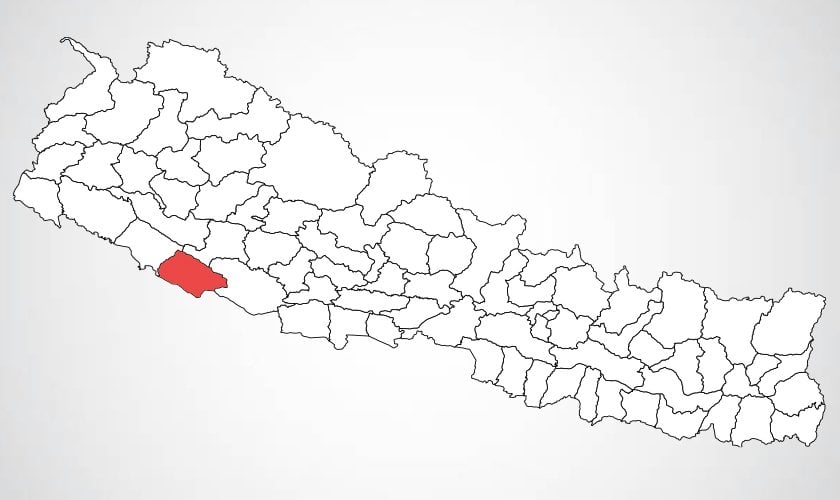
Banke. Bir Bahadur Hamal of Nepalgunj Sub-Metropolitan City-18, Tejnagar, stands as an example that significant economic success can be achieved with minimal investment, maximum utilization of local resources, and continuous hard work. For the past 12 years, he has been operating 'Everest Organic Agrofarm' and actively involved in producing earthworm manure, also known as vermicompost.
“I have been able to earn substantial profit from earthworm manure production with low investment,” Hamal said confidently, “If there is dedication and patience, there is no shortage of possibilities in agriculture.” According to him, earthworm manure is extremely effective in increasing soil fertility, balancing crop growth, and contributing to environmental conservation. He noted that its demand is gradually expanding in the context of increasing use of organic manure as an alternative to chemical fertilizers.
Hamal believes there is ample potential to make youth self-reliant through the agricultural sector within the country, rather than being attracted to foreign employment. “If we focus on producing organic manure using local resources, youth do not need to go abroad,” he said, “If the agricultural sector is modernized and commercialized, good income can be earned right here.”
For earthworm manure production, cow dung, straw, weeds, and organic materials available in the yard are used. He informed that the organic manure is prepared using a special breed of earthworm, 'Eisenia fetida'. “The earthworm we use is a special species that produces manure quickly,” he said, “Once the earthworms are purchased, there is no need for repeated investment.”
The initial phase of the industry was challenging. Hamal started his work amidst a lack of market, financial difficulties, and a shortage of technical knowledge. “Initially, farmers and locals were not very aware of earthworm manure,” he recalled, “Many did not believe it, but I had faith in my own efforts.” Hamal stated that the current situation is possible due to continuous effort and patience despite difficult circumstances.
He mentioned that it took time to bring the initially produced manure to the market and win the trust of consumers. “Even when producing tons, it was difficult to sell according to demand,” Hamal said, “But now, interest in this has grown in every local level, especially among the youth.” According to him, awareness that organic manure should be used has now developed in about 25 percent of farmers.
Currently, Hamal is producing manure using 60 beds after taking four katthas of land on lease. He informed that 18 to 20 trolleys of cow dung are purchased at one time, from which about 12 quintals of earthworm manure are produced per trolley. “Manure can be produced up to four times from the cow dung purchased once,” he said, “This helps in reducing costs and increasing income.”
The produced manure is mainly transported to the Himalayan districts. Hamal stated that its use is widespread in high-value apple orchards and vegetable crops. “There is a high demand for organic produce in the Himalayan region,” he said, “Our product has found a good market there because the farmers seek quality manure.”
Hamal's journey is also remarkable in financial terms. According to him, about 160 quintals of manure are produced in three months, and production up to 640 quintals is possible in four months. The current market price is about Rs 2,500 per quintal. “Annually, manure worth about Rs 1.5 million to Rs 1.6 million is sold, and the total turnover is between Rs 2 million to Rs 2.5 million,” Hamal said, “Youth engaged in manure production can generally earn between Rs 40,000 to Rs 50,000 per month.”
He believes this helps prevent youth from going abroad. Hamal's view is that many youth go abroad due to a lack of information and inspiration, despite the potential in the agricultural sector. Hamal, who started in B.S. 2071 by purchasing only one kilogram of earthworms, has sold nearly 50 quintals of earthworm manure to date. He believes that a large achievement can be attained if a small start is sustained. “I never focused only on profit; I always prioritized quality and customer satisfaction,” Hamal said.
According to Hamal, honesty, integrity, and long-term vision are necessary to achieve success. “Work is neither small nor big,” he clarified, “The commitment shown in it determines the result.”
Hamal's experience from earning a good income through earthworm manure production shows that agriculture can be established as a professional and respected occupation through the proper utilization of local resources, the application of scientific methods, and continuous hard work. His success has inspired struggling farmers and youth to seek opportunities in their own country. He advised youth considering going abroad that if they remain patient, all possibilities exist in their own country.
“There is a lot of potential in the agricultural sector; what is needed is only trust and continuity,” Hamal said, “With strong willpower and a positive outlook, significant achievements can be made even from ordinary circumstances.”
This specific news has been automatically translated by AI. As a result, there may be some inaccuracies or language errors.