Thailand Begins Using Birth Control Injections for Wild Elephants Amid Human-Wildlife Conflict

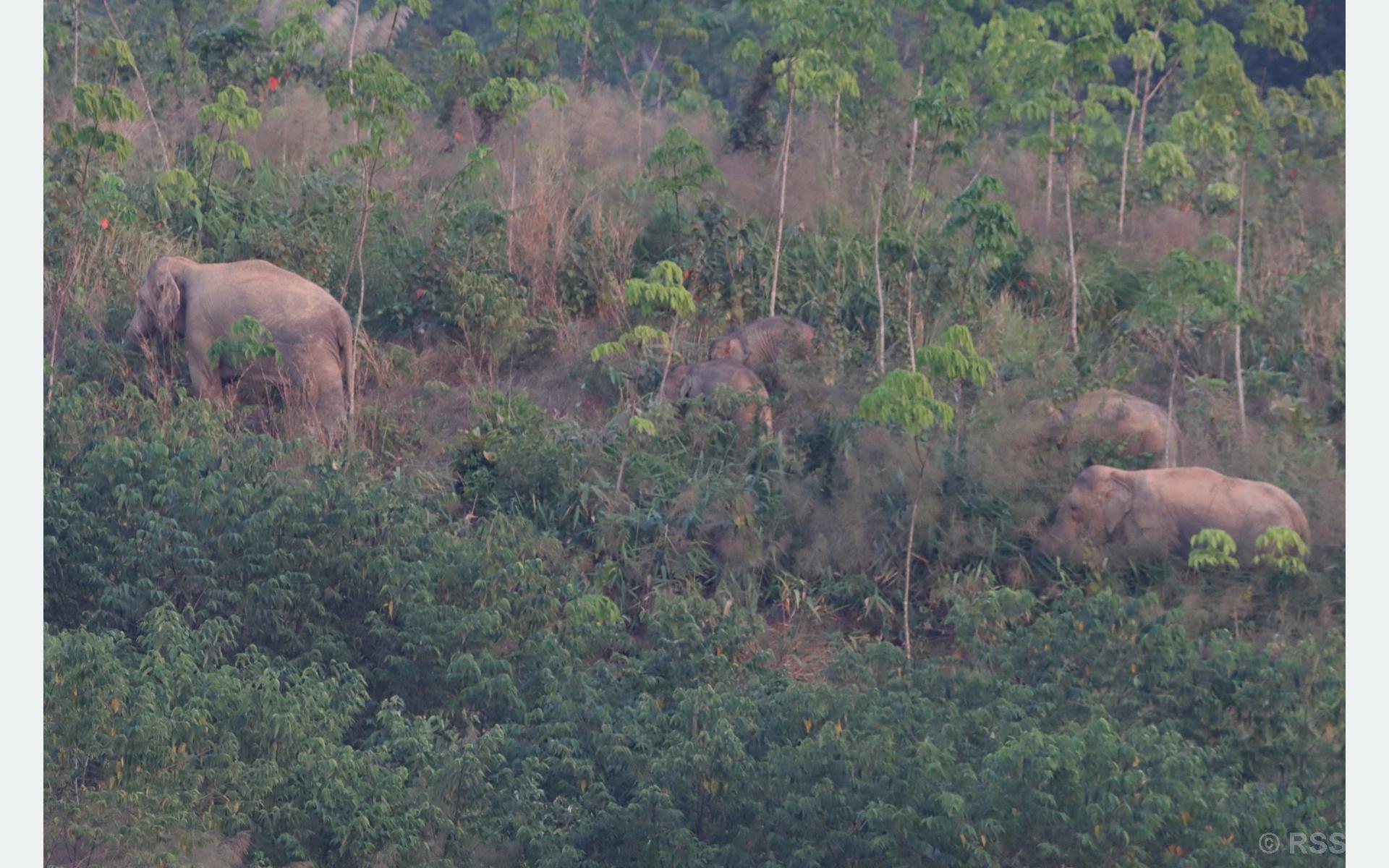
Bangkok. Thailand has started using birth control vaccines on wild elephants to control the escalating human-elephant conflict, which is being driven by the expansion of arable land and the shrinking of forest areas. According to officials, this program was initiated after the rapidly increasing elephant population near residential areas posed risks to human life and property.
Official statistics show that last year, 30 people were killed and 29 injured in wild elephant attacks. Additionally, more than 2,000 incidents of crop damage were registered. The conflict has intensified because elephants are being forced out of their natural habitats due to deforestation and agricultural expansion.
Sukhie Bunsang, Director of the Department of Wildlife Conservation, stated that controlling the population has become imperative due to the rapid increase in the number of elephants residing around residential areas. He informed that the department received 25 doses of the vaccine manufactured in the United States and tested it on seven captive elephants for two years. He mentioned that seven doses were used and the test yielded positive results. According to him, the vaccine prevents pregnancy not by stopping ovulation in female elephants, but by interrupting the fertilization process.
Three wild elephants were vaccinated in the eastern Trat province at the end of last January. He noted that preparations are underway to use the remaining 15 doses, and a study is being conducted to prioritize which areas will receive them. It is reported that the vaccine will prevent pregnancy for seven years, and fertility can be restored afterward if a booster is not administered. Elephants receiving the vaccine will be closely monitored during that period.
However, the program is also facing criticism from conservationists. Thailand has a centuries-old tradition of using elephants for farming and transportation, and the elephant is considered a national symbol. Sukhie clarified that this plan is limited only to wild elephants in areas where violent conflict is more prevalent. The annual birth rate in those areas is 8.2 percent, which is more than double the national average of 3.5 percent. It is reported that out of approximately 4,400 wild elephants, about 800 reside in these conflict-prone areas.
“If intervention is not made in time, the impact on local residents could become unbearable,” he warned. Alongside the vaccination campaign, measures such as creating more water and food sources within the forest, installing protective barriers, and deploying rangers to guide elephants straying into residential areas have also been implemented.
Public criticism increased earlier this month after an elephant died during the relocation of a wild elephant involved in repeated clashes in the northeastern Khon Kaen province. Officials stated that the preliminary autopsy indicated death by respiratory arrest.
Athapol Charoensunsa, Director-General of the Department of National Parks, Wildlife and Plant Conservation, expressed regret over the incident and claimed that established protocols were followed. He informed that an investigation is ongoing to ensure such incidents do not recur.
This specific news has been automatically translated by AI. As a result, there may be some inaccuracies or language errors.