Maoist Revolution's 30-Year Journey: From Armed Struggle to Political Transformation and Internal Strife

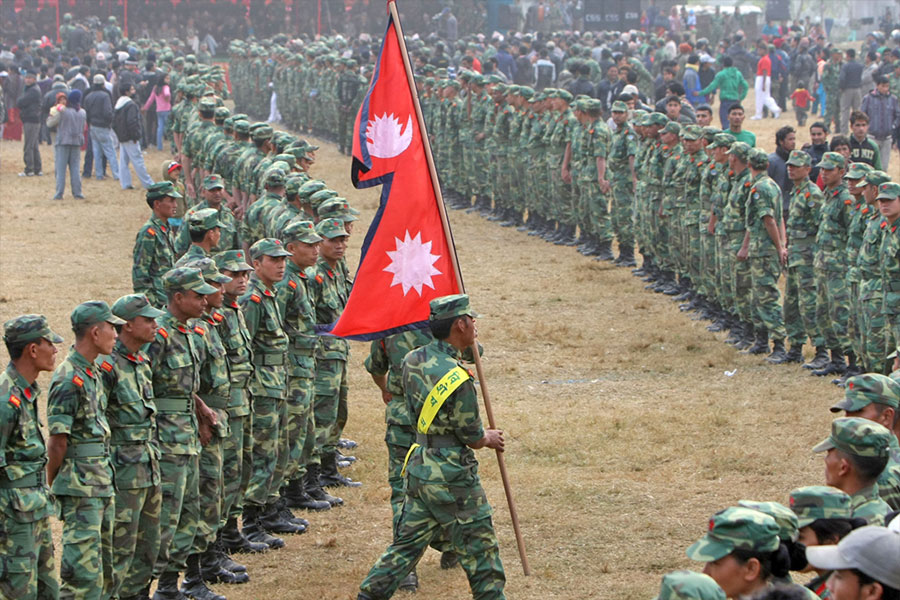
Kathmandu. As the Maoist People's War completes 30 years, the then CPN (Maoist) has changed its identity. After mergers with various parties, the party has transformed into the 'Communist Party of Nepal'.
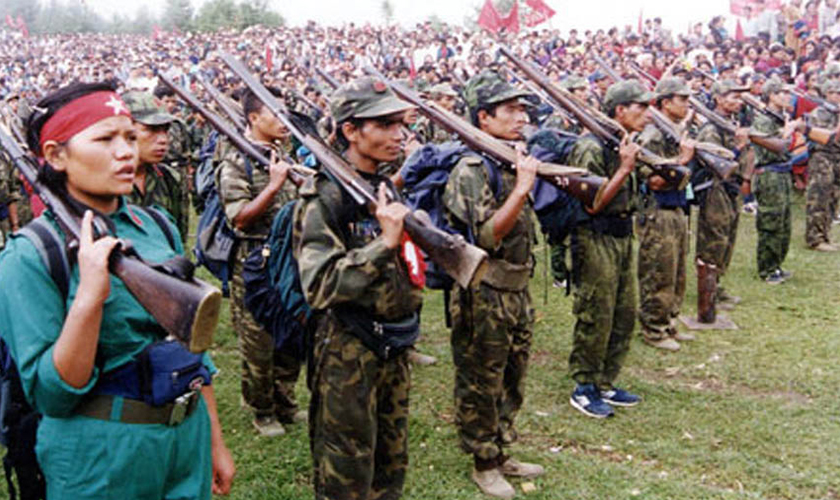
The Maoists launched an armed insurgency on Falgun 1, 2052 BS, presenting 40-point demands concerning nationality, democracy, and people's livelihood to the state establishment.
The insurgency garnered support from oppressed laborers, workers, farmers, women, indigenous/Janajati, Tharu, Muslim, and Madhesi communities facing class and ethnic oppression. Following the strategy of surrounding the cities from the villages, the insurgency continued for 10 years. It was on the strength of this armed struggle, which claimed approximately 17,000 sacrifices, that the Joint People's Movement of 2062/063 BS became possible. That movement ended the traditional monarchy in Nepal and established a Federal Democratic Republic.
In the 2064 Constituent Assembly elections, the Maoists emerged as the leading party, winning 229 seats with 3.1 million votes. Pushpa Kamal Dahal 'Prachanda', the supreme leader of the People's War and hailed as the hero of the proletariat's class liberation, successfully became the first elected Prime Minister of the Republic of Nepal in 2065 BS. After he became the executive head, the general public held high hopes for change, but Prachanda resigned in Baisakh 2066 BS, nine months into his term, following the Chief of Army Staff Rukmangad Katuwal controversy.
_hhL9ATK2tm.jpg)
Dr. Baburam Bhattarai became Prime Minister in 2068 BS. During Bhattarai's tenure, the army integration process was completed, but the constitution drafting process could not move forward.
In Asar 2069 BS, the party split due to the 'two-line struggle' that emerged between Prachanda and Mohan Baidya 'Kiran'. For six years after the Constituent Assembly election, Prachanda neither worked according to public expectations while in government nor played a significant role in drafting the constitution. He even failed to prevent the party split.
In the second Constituent Assembly elections of 2070 BS, the Maoists slipped to third place with weak numbers. Despite the party falling to third place, Prachanda played a crucial role in drafting the constitution of the Federal Democratic Republic in 2072 BS. The Maoists agreed to promulgate the constitution while registering a 'Note of Dissent' on issues raised by the party, such as the form of governance, federalism, and the electoral system.
In 2073 BS, Prachanda became Prime Minister for the second time after ousting KP Oli. Having achieved little significant work during his nine-month tenure, he proposed a party unification with CPN-UML Chairman Oli before the 2074 elections. Following his proposal, the parties unified to form the Nepal Communist Party (NCP). The alliance formed with the UML for the elections resulted in a nearly two-thirds majority. However, due to power struggles between Oli and Prachanda, the party dissolved in less than three years.
Professor Krishna Pokharel states that every change brings a revolution of expectations among the people, and when these expectations are not met, frustration deepens. He believes the current situation arose because the NCP failed to institutionalize the golden opportunity it received at that time.
'At that time, Prachanda and KP Oli had a golden opportunity in their hands. But they missed it, leading to an unhealthy, unprincipled alliance formed for the immediate purpose of gaining power in government,' Pokharel said.
The Maoists, which have been on a continuous decline since the 2070 elections, have failed to regain the glory of 2064 BS. Having held a leading role in government for a decade out of the two decades since entering the peace process, the Maoists became unpopular. Due to the incomplete remaining tasks of the peace process, the martyrs, the disappeared, and the injured/disabled from the war have still not received compensation.
Due to all these developments, Prachanda found himself in a difficult position both within and outside the party. He attempted to regain lost prestige by merging with various parties rather than transforming and strengthening the party. However, he did not appear successful in this endeavor.
Prachanda, who has served as Prime Minister three times, faced accusations within the party of focusing too much on the race from one election to the next and from one government to the next. After becoming Prime Minister for the third time following the 2079 elections, he took positive steps towards good governance, social justice, and prosperity. He launched major awareness campaigns for party transformation. He was forced to leave the government on Asar 31, 2071 BS, after the alliance between the Congress and UML was formed.
Immediately after leaving power, the Maoist Centre, which was engaged in the 'Mission-084' campaign, became the target of the 'Genji' (Gen Z) uprising in Bhadra. Prachanda himself was not spared. The Gen Z generation, extremely frustrated by the failure of the Oli government, specifically targeted the offices of the opposition CPN (Maoist Centre) and the homes of its leaders, setting them on fire.
To evade the intense pressure for leadership handover and party transformation following the uprising, Prachanda called for a special general convention in Mangsir. However, contrary to the party's decision, he formed a new party by merging the CPN (Unified Socialist) which was on the verge of dissolution, the Nagarik Unmukti Party, and other smaller leftist factions and groups. Leaders such as Janardan Sharma, Ram Karki, and Sudan Kirati rebelled against the reorganization of the party, which changed the Maoist ideology, party name, and election symbol adopted 30 years ago.
In the elections scheduled for Falgun 21, taking place under special circumstances following the Genji uprising, the CPN (Maoist Centre) has dared to compete alone. Prachanda, who previously contested elections in alliance with Congress or UML, is taking his party into elections without an alliance after 12 years. However, the actual strength of this party will only be known once the election results are out.
Haribol Gajurel, who has consistently advocated for party unity and polarization from the beginning, asserts that the main weakness lies in the working style and the severance of ties with the class, led by the leadership. 'The class struggle and internal struggle that existed during the war period were not connected. Once we came to open politics in Kathmandu, the environment connected class struggle and internal struggle,' he said. 'Once connected to the class, when it was not addressed as it should have been, it was pushed further and further. It's like pushing a worn-out vehicle a little further only for it to stop again; if you keep pushing without repairing it, it stops again after going a bit further. That's what happened to the Communist Party of Nepal.'
Gajurel, who was expelled from the party due to intense internal conflict during his candidacy for the House of Representatives election in Sindhuli-2, had given a four-point suggestion to Prachanda in the last secretariat meeting of the former Maoist Centre on Kartik 15. At that time, he questioned the leadership whether they would choose the path of correction or remain stuck in the quagmire of past mistakes and self-interest.
- Four-Point Suggestion Presented by Gajurel:
Comrade Coordinator,
CPN (Maoist Centre)
Subject: Regarding Ideology, Politics, Working Style, and Polarization.
The briefing presented by the Comrade Coordinator regarding party unity in the secretariat meeting held after Dashain was indeed serious and thought-provoking, but the fact that the meeting concluded without any discussion on the subject left most of us somewhat agitated.
However, since discussions regarding party unity had already begun before the Genji movement, there was no immediate reason to distrust the leadership. Yet, the absence of influential leaders from the other side during negotiations naturally became a cause for suspicion. Especially given the background where those leaders were dissatisfied with their own top leadership, the question naturally arose whether this was being ignored.
Against this backdrop, I managed to take time from Comrade Prachanda for a detailed and serious debate. He took the matter seriously and has also initiated dialogue with the leaders of the other side. Since then, the situation has gradually moved in a smoother and more positive direction. We have also tried to contribute to creating an environment conducive to unity to the best of our abilities.
First and foremost, heartfelt thanks to Comrade Coordinator Prachanda for taking serious initiative and creating a favorable environment for left-wing polarization! His initiative has effectively put a brake on the right-wing polarization attempt led by KP Oli. Furthermore, our collective effort has opened a new door for unity and polarization among socialists.
Currently, not only the country but also the party is in a deep crisis. However, this crisis also brings a great opportunity—an opportunity for transformation. The Genji movement has initiated the transformation we failed to achieve in the past in its own way. This movement has instilled the courage and confidence to speak the truth, advocate for it, and stand against falsehood.
It is no longer possible to survive by hiding, lying, or covering up the truth. The truth must be heard by everyone, and actions must align with it. History will consign to the dustbin anyone who does not listen, understand, or prepare to change.
In the past, honest, dedicated, and ethical workers were neglected; opportunists, selfish, and dishonest individuals were promoted. As a result, the Communist Party itself weakened. Opportunism prevailed, ideology and class perspective were lost. The party drifted away from its mass base and ultimately became 'neither here nor there'. We were drowning in the arrogance of 'we are right, others are wrong,' but our stature in the eyes of the people was diminishing.
The Genji movement has exposed these distortions and deviations. It has demolished the walls of old political culture, hypocrisy, and falsehood. Now, only two paths remain—to perish or to correct.
At this decisive juncture, we must self-reflect: Do we choose the path of correction, or do we remain stuck in the quagmire of past mistakes and self-interest?
If we choose to correct, it is necessary to take the following issues seriously:
1) Struggle Against Parliamentarism:
The dominance of a narrow mindset limited to one election cycle and the development of a tendency to 'win elections by aligning with anyone' is clear evidence of falling into parliamentarism.
In this context, making a decision not to field any candidate who has served as a Federal Minister or Member of Parliament in the upcoming election in Falgun 2082 would help re-establish public trust. This would also contribute to erasing the stain of parliamentarism.
2) Ideological Decline and Need for Reform:
We are severely trapped in pragmatism in ideology and utilitarianism in organization. All the mistakes and shortcomings occurred because of problems in ideology. Until this is cured, the socialist revolution will remain mere talk.
We must accept the ideological decline and make a firm commitment to avoid such deviations and distractions in the future. Transformation is impossible without restoring ideological clarity and revolutionary discipline.
3) Creating a New Environment:
It is necessary to create an environment to re-energize and activate comrades who played effective roles at various levels in the past but remained sidelined in opposition to parliamentarian tendencies. The public is now ready to listen to and accept what they say—this opportunity should not be missed.
4) Extremism within the Party and the Need for Synthesis:
It is now imperative to properly resolve and settle the unhealthy internal conflicts seen in Sindhuli district, where the central leadership is involved. Ideological and organizational synthesis is essential before party unity. Failure to synthesize in time may hinder other party functions.
Haribol Gajurel
Secretariat Member, Communist Party of Nepal (Maoist Centre)
2082/7/15
However, Dev Gurung, the then General Secretary of the Maoist Centre and a Secretariat Member of the NCP, interprets the process of drafting the new constitution through consensus among political parties as positive, despite some shortcomings in institutionalizing the journey following the Comprehensive Peace Accord.
'During the journey following the Comprehensive Peace Accord, the process of drafting a new constitution moved forward to institutionalize it. A new constitution was indeed drafted, and despite many limitations and weaknesses, it was created through consensus among political parties. This is certainly positive,' he said.
Gurung clarified that since the Maoist movement is a long series of ideologies, the process of some leaving and some joining will continue. 'The implementing actors might deviate slightly to the right or left; it happens. The leadership implementing it might shift slightly,' he said.
He stated that election matters are tactical, and all members must adhere to the party's policy, rules, and procedures. 'Matters of tactics must be followed according to the party's rules and procedures. Anyone who becomes a party member must follow them. Whether they agree or disagree, they must follow,' he said.
The CPN expelled several individuals, including Haribol Gajurel, former Chief Minister of Lumbini Kul Prasad KC, and Maheshwar Dahal, for filing rebel candidacies in areas like Sindhuli-2, Dang-1, and Udayapur-2, against the official candidate nominated by the party.
This specific news has been automatically translated by AI. As a result, there may be some inaccuracies or language errors.