Remote Nepali Village Remains Unreached by Election Buzz Amidst Demands for Basic Services


Baglung. As the House of Representatives election scheduled for February 21 approaches, the country has become election-focused. Electoral slogans are echoing from cities to villages. Candidates are going door-to-door seeking votes, but Nisheldhor, the most remote area of Baglung, remains deserted.
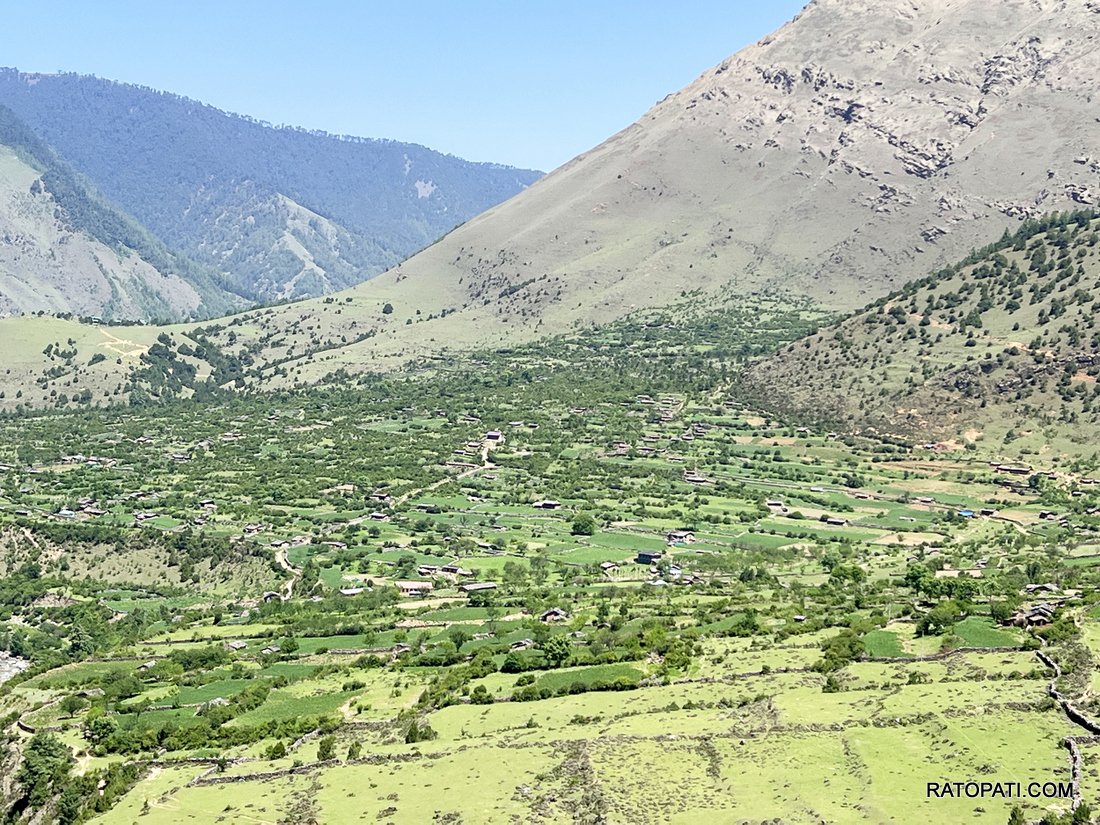
This village sees no hustle and bustle during any election. Due to its geographical remoteness, candidates do not even reach out to seek votes.
Voters here must travel for a full day to Nisi village to cast their ballots. Nisheldhor, which falls under Nisi Khola Rural Municipality-5, experiences extreme cold in winter, leading most locals to migrate temporarily. While locals reside in Nisheldhor (the upper region) during the monsoon, they descend to Nisi (the lower region) during winter.
The number of people staying permanently in this village has been increasing recently. This season too, 70 households are residing in Nisheldhor.
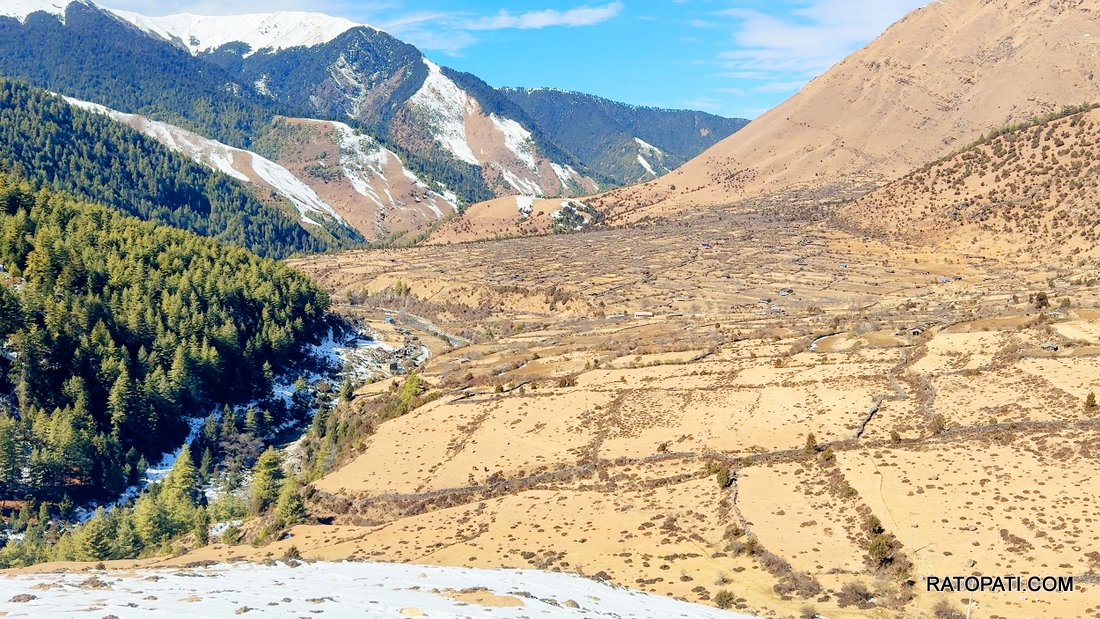
Although discussions about the election are slowly starting in the lower region, there has been no political activity here. Even if leaders and cadres meet and ask for votes when they come down to the lower region, no one visits the village itself. Since candidates do not come to solicit votes, the locals have little interest in the election. Nisheldhor residents, plagued by poverty, illiteracy, and darkness, are waiting for development. Locals state they will vote for leaders who promise electricity, drinking water, education, and health facilities.
- No Electricity, Relying on Kerosene Lamps and Firewood
Electricity service has not yet reached Nisheldhor village. Due to the lack of electricity, locals are forced to live in darkness. Out of approximately 300 households in Nisheldhor, 70 families reside there during winter. Although a few houses have recently obtained electrical facilities via solar panels, most households in the area still rely on kerosene lamps and firewood.
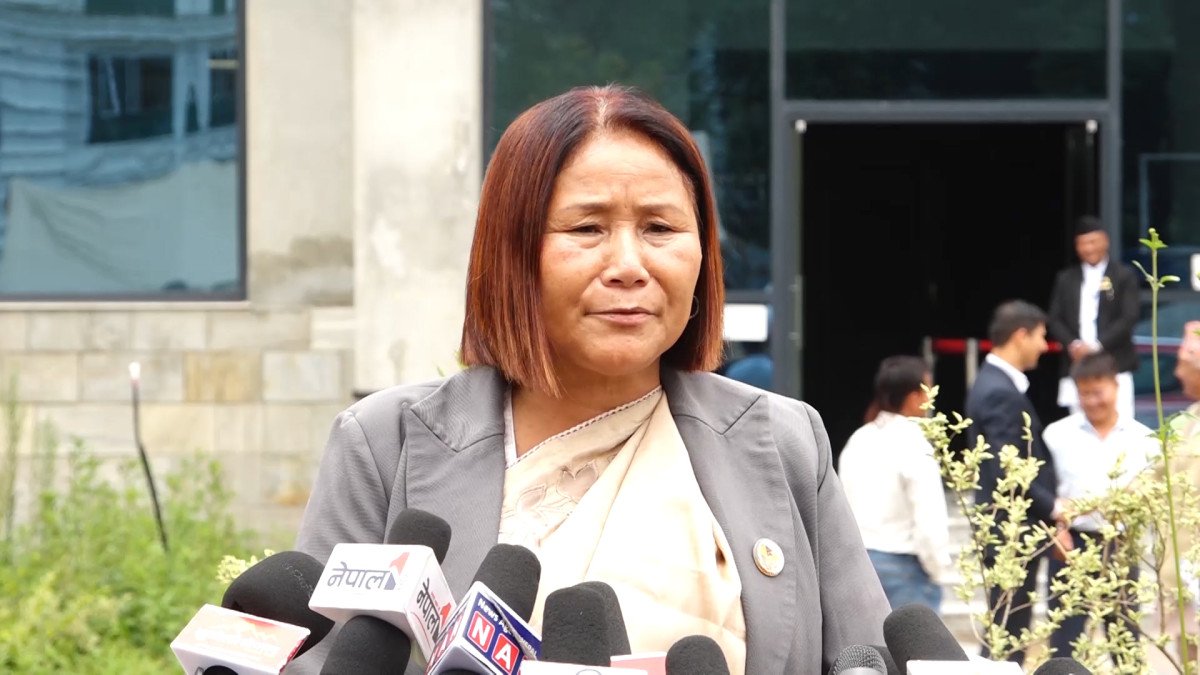
Nisi residents, who previously only visited Nisheldhor during the monsoon, have now started staying there permanently. Local Samjhana BK stated that despite the expansion of the settlement in Nisheldhor, the state has failed to provide electricity, forcing them to light kerosene lamps. She mentioned the compulsion to travel for hours to Dhorpatan to bring kerosene oil.
Samjhana said, 'When we go down to the lower region, we see lights on. Here, the line hasn't arrived yet. Leaders occasionally say they will bring electricity, but there is no clue when it will come. We are also citizens of this country. When will we get the facility of electricity?'
Local Kul Bahadur Gharti Magar stated that the absence of electricity in the village causes problems in listening to the radio, watching television, and charging mobile phones. Although they gained the convenience of making phone calls three years ago after Nepal Telecom installed a tower, they cannot charge their mobiles due to the lack of electricity. Gharti mentioned that currently, they are compelled to walk for two hours to Bhuji village in Dhorpatan Municipality-9 just to charge their mobile phones.
'Two or three years ago, there wasn't even a tower here. If we had to call relatives in the lower region, we had to go to the ridge above the village. Now the tower is built, but the electricity hasn't arrived,' he said, 'The tower also runs in winter. It doesn't run in the monsoon. If the line came, it would be a great convenience.'
- Roads are Not Organized
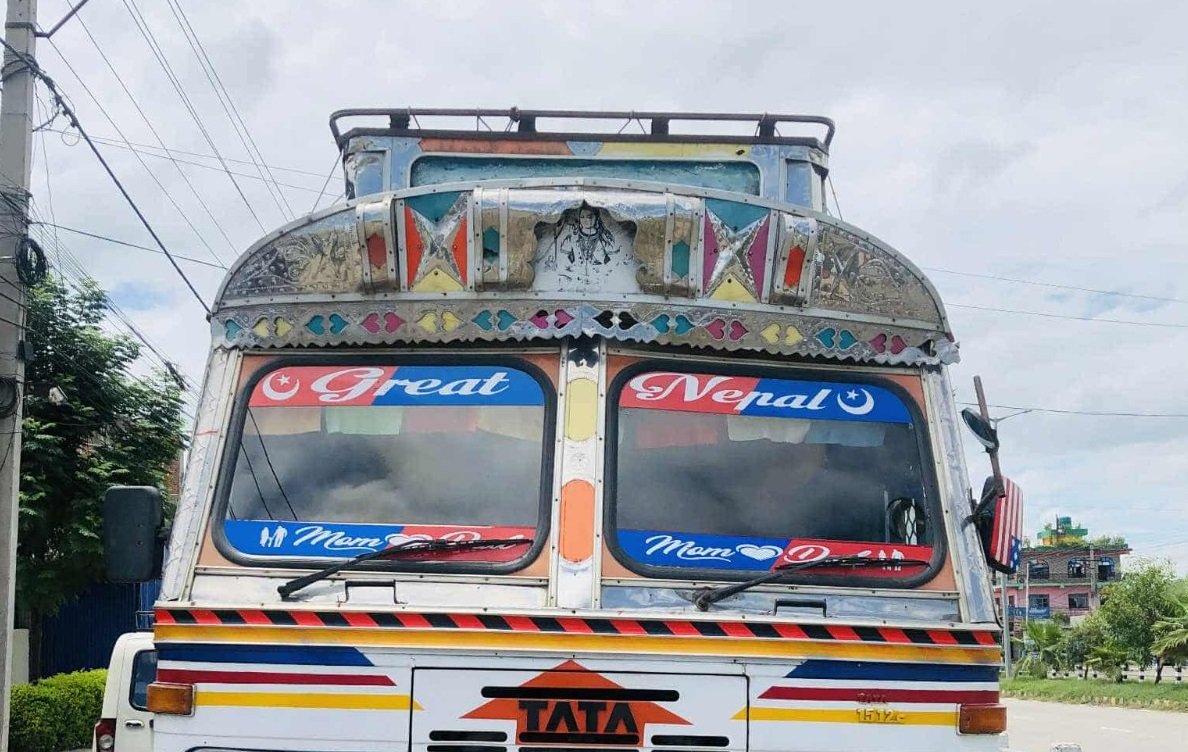
Nisheldhor, which falls within Dhorpatan Hunting Reserve, Nepal's only hunting reserve, was connected by road in 2076 BS. The road connecting Dhorpatan to Nisheldhor is not well-maintained. However, Nisi Khola Rural Municipality has started upgrading the road this year. The road from Mashkhola to Nisheldhor is very narrow and disorganized, causing vehicles to operate precariously.
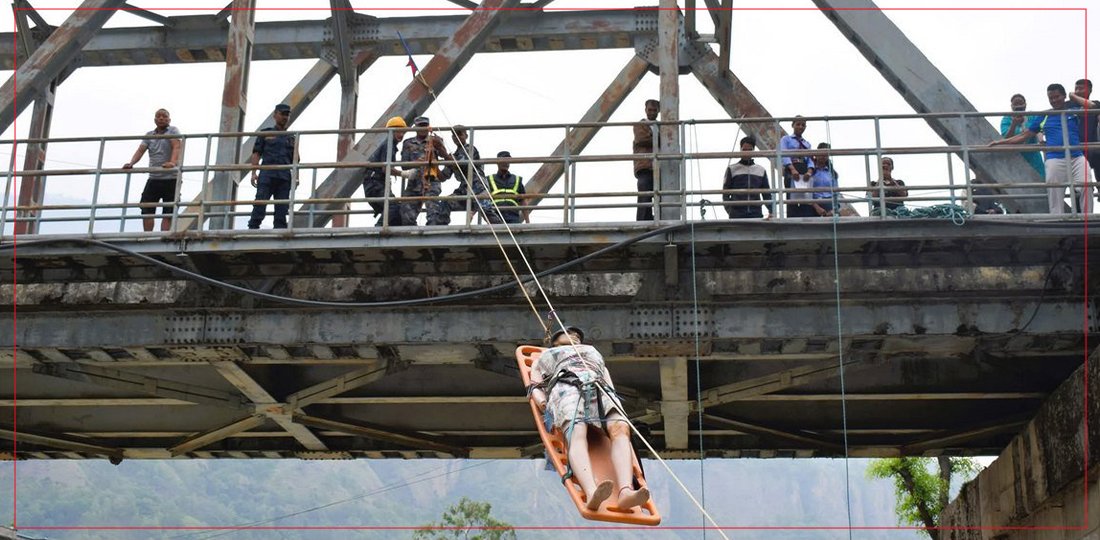
Local Thamsara BK stated that vehicles cannot operate on the road during the monsoon since it was opened. She mentioned that although vehicles can somehow manage to run in winter, operations halt for about four months during the monsoon. BK recalled that on several occasions, sick people had to be carried on litters to the hospital because vehicles were unavailable.
She said, 'When I was in Nisi, leaders used to come asking for votes. They used to say they would bring good roads, electricity, and drinking water facilities to Nisheldhor for you. After winning the election, where did they go? Our suffering remains here. Elections are coming again this time! We should vote for those who work, not those who just talk.'
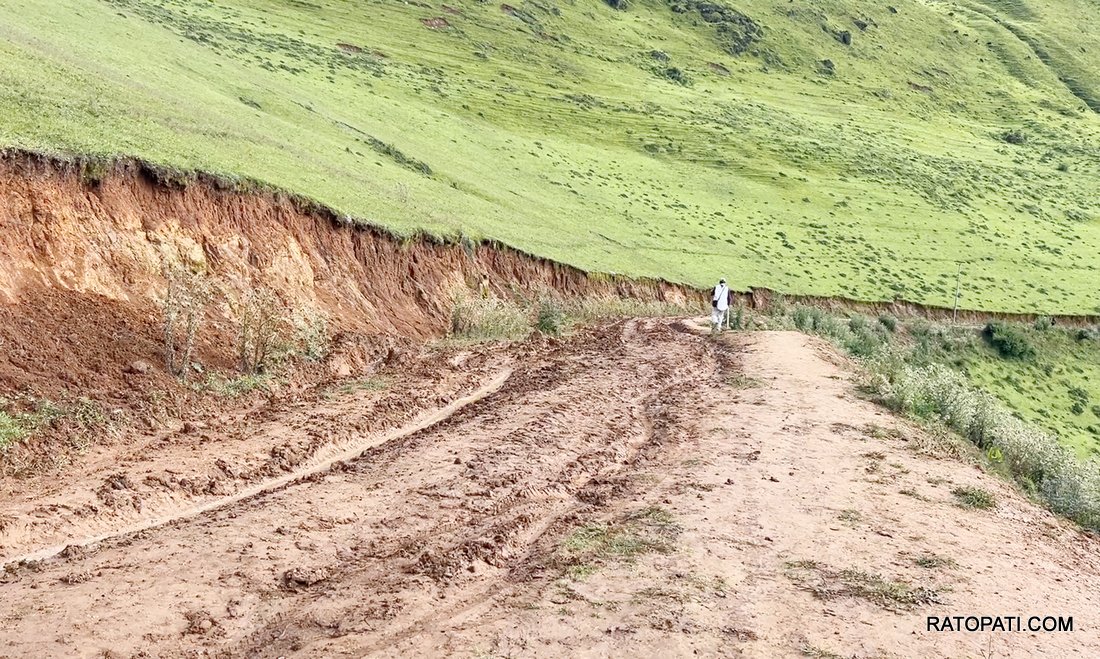
Although Nisheldhor holds significant potential for tourism, tourists visit sporadically due to the difficult roads. Since transportation stops during the monsoon, locals are compelled to stock up on food supplies during the winter. Locals say that agricultural products like potatoes, apples, and beans grow well in Nisheldhor, but the poor condition of the roads causes problems for marketing them.
- Restrictions from the Hunting Reserve for Cutting Wood and Fishing!
The residents of Nisheldhor face difficulties in making a living as they are not allowed to collect fodder and firewood from the forests or fish in the rivers. The Dhorpatan Hunting Reserve's restrictions on collecting necessary items from the nearby forest and rivers are affecting their daily lives. The hunting reserve prevents locals, who sustain their livelihoods through animal husbandry and farming involving hundreds of animals, from accessing the forests and rivers.
Local Sur Bahadur Gharti complained that while they were not stopped from cutting wood to build houses previously, the Nepali Army is now creating obstacles. Gharti Magar stated that they face harassment even for bringing one load of firewood from the forest. He believes that votes should be given in the election to leaders who create citizen-friendly laws and an environment where the people here can live freely.
'Every local living here raises livestock. Where will farmers who raise dozens of animals, not just one, get fodder and firewood if not from the forest? The state does not understand the problem well; they don't even let people fish in the river. Are the people here only meant to suffer?' he said.
This specific news has been automatically translated by AI. As a result, there may be some inaccuracies or language errors.
_iL3K2wYemS.jpg)