Dailekh-2: A Battleground Where Maoist Party Has Never Won Faces a Tight Three-Way Contest
Surkhet. Dailekh-2, Karnali's constituency where the CPN (Maoist Centre) has never won any election (local, provincial, or federal). While the party won two local levels in Constituency No. 1 in the 2079 elections, Constituency No.-2 remains an 'untested' territory for the Maoists.
Before 051 BS, the contest here was between NSP-Congress, and in subsequent elections, between UML-Congress. After the 60s decade, UML made this area its stronghold.
In the 2079 elections, riding on the alliance, Congress's Dikpal Kumar Shahi managed to break the UML fortress for the House of Representatives. In this constituency, which has been a battleground for Congress-UML for nearly 30 years, both parties now feel insecure.
For the upcoming House of Representatives election on Falgun 21, eleven candidates are in the fray, but the competition appears to be a three-way contest between UML, Congress, and the Communist Party of Nepal (CPN), while the Rastriya Swatantra Party (RSP) is assessed to potentially damage the vote share of the established parties.
It would not be an exaggeration to say that the candidates from Congress and UML are stressed due to the candidates from CPN and RSP, as CPN and RSP have fielded intellectual individuals and engineers, while UML-Congress have nominated familiar faces.
Internal Fear for Congress-UML, CPN Seeking Opportunity
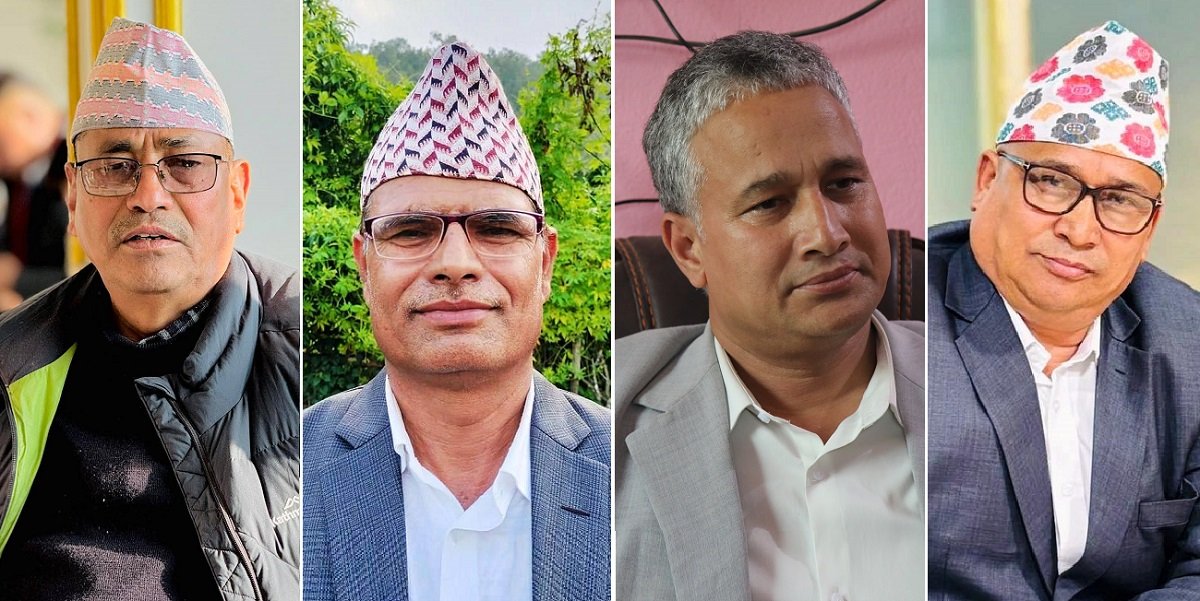
Here, Shahi is the Congress candidate again. He had defeated UML's Laxmi Prasad Pokharel in the 079 election in this constituency with the strength of the Left-Democratic Alliance.
UML has also fielded the same Laxmi Prasad Pokharel in the electoral field again.
Yogendra Bahadur Shahi is the candidate from CPN, and Bakhat Bahadur Shahi is from RSP. The electoral clash between the three Shahis and one Pokharel is being watched closely not just in Dailekh, but across Karnali. The reason is that this is a stronghold of UML and Congress and a region with many senior leaders.
UML's Pokharel is an experienced veteran leader. He first contested the election in 056 BS from the Malé, securing the fourth position with 2,712 votes.
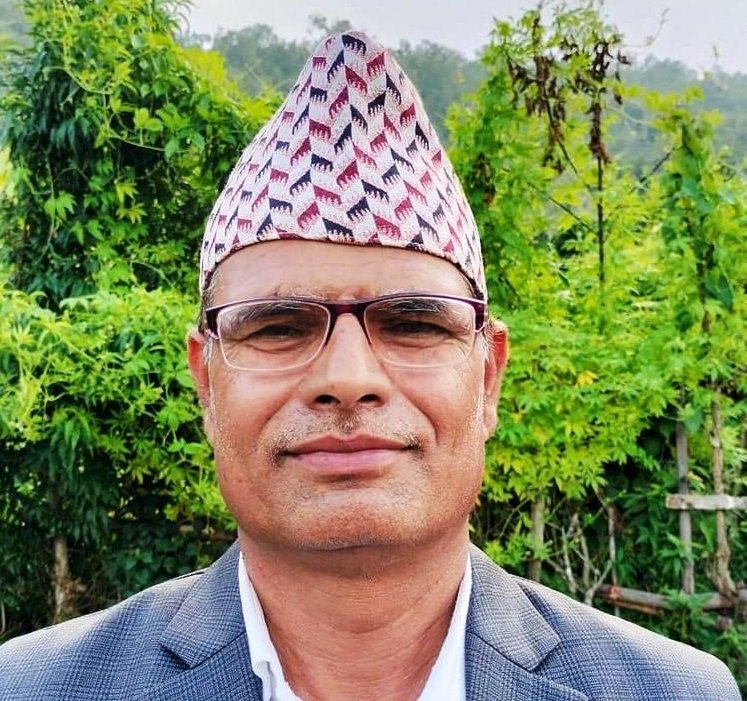
After that, he returned to UML and was elected in the second Constituent Assembly election of 070 with 15,619 votes. In 079, after getting the ticket again, he lost to Congress's Shahi by a margin of 167 votes. He is considered a struggling and honest leader in Dailekh, but this time his biggest fear is internal rather than external.
During the candidate selection process, Bishnu Rijal received votes for the first position, but Pokharel, who was second, got the ticket here. Pokharel says, 'The party gave me the ticket because I lost the previous election by a narrow margin.'
'If I receive the support of organized and united leaders, I will win the election,' he claims. 'As a former Constituent Assembly member, I advanced many development projects, and personally, I am an unblemished leader,' he says. 'Since this is an organized party, that is my basis for winning.'
This area has many UML leaders, but UML leaders themselves say that Pokharel is finding it difficult to get the support of leaders within UML.
Other leaders often accuse him of not supporting UML candidates in past elections. If he does not receive full support from the leaders, the possibility of UML votes crossing over is extremely high. On the other hand, CPN candidate Yogendra Shahi, who has a UML background, is likely to draw many votes from UML itself.
In this situation, leaders close to him analyze that the electoral field will be costly for him.
Congress candidate Shahi has a background as a contractor. He was embroiled in controversy after leaving road projects he undertook while serving as a Member of Parliament unfinished.
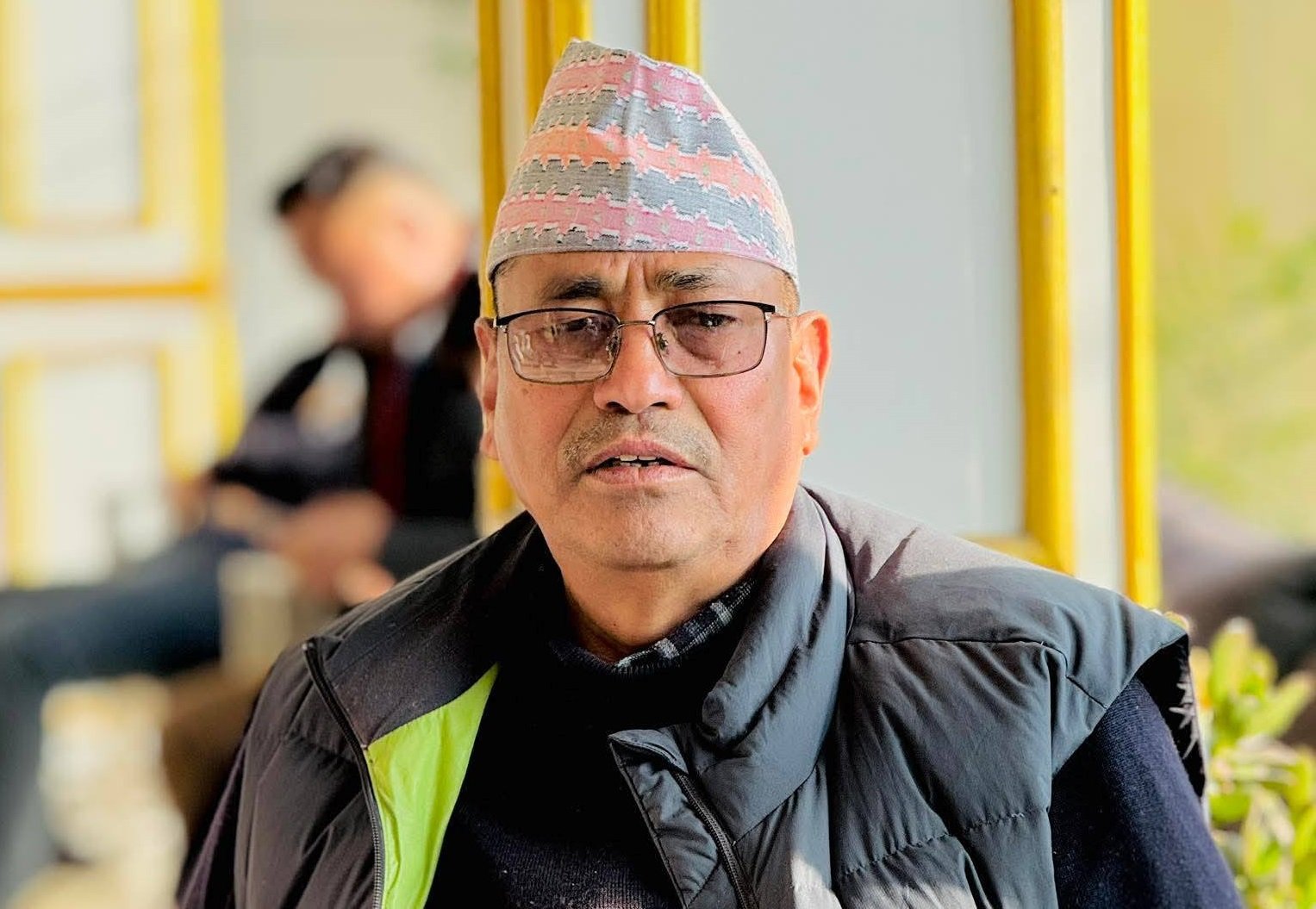
Although there were many aspirants from Congress in that constituency, Congress President Gagan Kumar Thapa handed the ticket to Shahi after he openly supported the special convention. He also became a central member of the party.
While he benefited from openly supporting the special convention, Shahi appears to face significant challenges in managing internal party affairs. Sita Rana, who was a central member from the Deuba faction here, wanted to contest the direct election but did not openly support the special convention. Similarly, most leaders considered to be from the Shekhar faction have not openly supported it, which is expected to have a direct impact on the election.
The benefit of the internal disputes and past weaknesses of the two old parties could go to the CPN; the votes cut by both CPN and RSP will be from Congress-UML.
Controversial background and the fact that he rarely spoke in parliament during his previous tenure as an MP mean this election is not easy for him, but he briefs that he brought projects worth crores of rupees to the constituency during his previous term as an MP and has returned to the field to complete them, thus ensuring his victory.
On the other hand, the argument against Congress-UML is that the 'Gen-Z' movement occurred in the country while they were in power, and development projects in the constituency were not adequately implemented.
Meanwhile, the benefit of the internal disputes and past weaknesses of the two old parties could go to the CPN; the votes cut by both CPN and RSP will be from Congress-UML.
CPN candidate Yogendra is an intellectual young leader. He contested the election from Province (1) previously but was defeated by a narrow margin, yet he is popular among the youth.
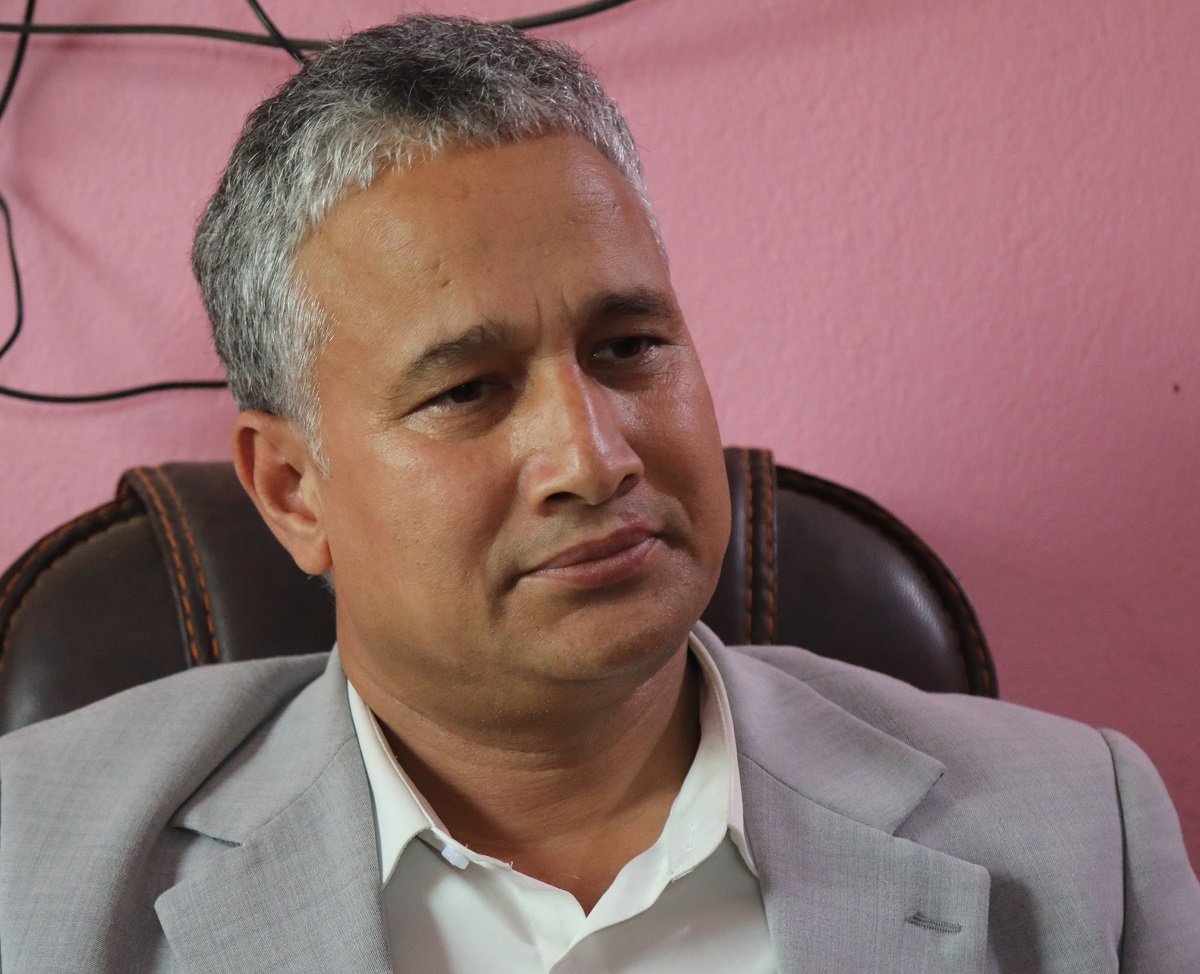
He holds an M.Phil in Regional Development from Jawaharlal Nehru University and is currently pursuing a Ph.D. He has experience serving as a member and then Vice-Chairman of the Karnali Planning Commission, formulating the province's strategic plan.
Looking at the political history of Dailekh-2 over the past 40 years (048-079 BS), Congress has won 3 out of 7 House of Representatives elections. UML has won 3, and NSP won once.
His political background is rooted in UML. Active in the anti-Panchayat movement, he made history by becoming the Student Union Chairman (051 BS) of Surkhet Education Campus at the age of 18. Having served as the Secretary of UML's Finance and Planning Department, he states he left UML due to Oli's arbitrary and autocratic style of functioning. He served as a political advisor to then-Prime Minister Jhalanath Khanal for international political party conferences and has participated as a speaker in over 60 countries as the Vice-President of the World Democratic Youth League.
He hopes to capitalize on his long struggle in UML, his work at the Planning Commission, and the sympathy from his previous defeat in this election. He says, 'Looking at the current situation, we feel we will break the legacy of UML-Congress.'
RSP candidate Bakhat Bahadur Shahi is the former Chief Executive Officer (CEO) of Nepal Electricity Authority. Although known among the intellectual class, he is not widely known among the general public.
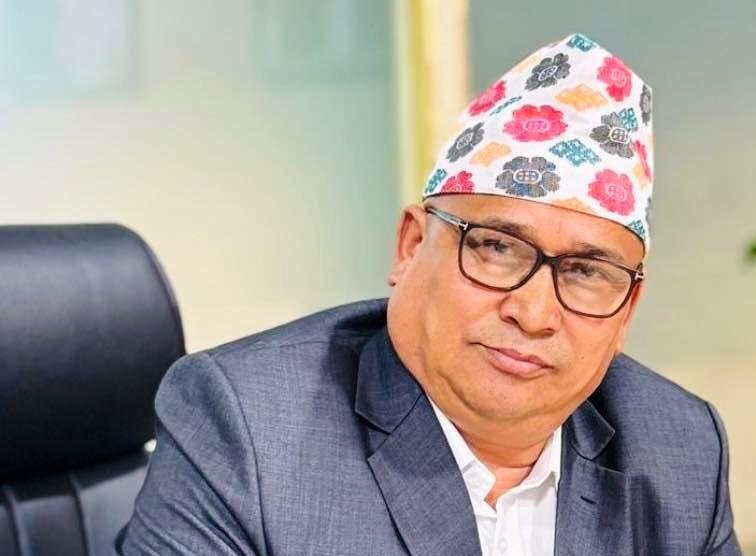
However, due to the current attraction towards RSP, it is assessed that he might cut some votes from Congress-UML. He argues that the old parties have failed to deliver and that RSP is the changing force now.
Electoral Analysis Based on Data
Looking at the political history of Dailekh-2 over the past 40 years (048-079 BS), Congress has won 3 out of 7 House of Representatives elections. UML has won 3, and NSP won once.
In 2048 BS, Congress's Rang Bahadur Shahi won the election by securing 16,182 votes, while the competing NSP candidate received 11,848 votes.
In 2051 BS, Binod Kumar Shah from NSP was elected with 13,640 votes, while Congress's Ram Bahadur Shahi got 6,725, and RPP received 5,017 votes. NSP's Shahi later joined UML. Dailekh, which was like an NSP stronghold, was integrated into UML under his and other leaders' leadership. After that, NSP weakened in Dailekh, and in the 056 election, UML became the main competitor to Congress.
When UML split in 2054 BS, Binod Kumar Shah, again a candidate from UML, was defeated in the 056 election. Congress's Shivraj Joshi was elected with 18,882 votes, while Shah received 14,000 votes. Laxmi Pokhrel, now the UML candidate, contested from Malé that time, securing the fourth position with 2,712 votes, while NSP was third.
After the 60s decade, as Maoists emerged in other areas of Karnali, UML emerged as the first force in this area. The reason is the 'Dullu Rebellion' that occurred during the war period, the effect of which is that the Maoists have not been able to establish their position here yet.
In 2064 BS, UML's Raj Bahadur Buda was elected with 16,292 votes, while Congress's Him Bahadur Shahi received 13,877 votes. Maoists secured over 11,000 votes, and NSP received 6,000 votes.
This constituency has a voter base of 81,503. However, it is assessed that voter turnout will be significantly lower than in the past. With all parties contesting independently, a candidate securing over 15,000 votes has a chance of winning.
In 2070 BS, Laxmi Prasad Pokharel contested again from UML and won with 15,619 votes, while Congress's Him Bahadur Shahi received 13,096 votes. This time, the Maoists increased their vote share to 7,747. But in 074 BS, when there was a Left Alliance, UML got the ticket, and Raj Bahadur Buda won for the second time with 23,323 votes, while Congress's Shivraj Joshi received 16,634 votes.
In 2079 BS, Congress's Dikpal Kumar Shahi received the ticket under the Left-Democratic Alliance. He was elected with 20,183 votes, while UML's Laxmi Prasad Pokharel secured 20,016 votes.
In that election, NSP received 3,000 votes, and RSP received 700 votes.
Looking at the proportional representation votes received by the parties in 2079, the defeated UML received the highest 17,317 votes in the direct election, Congress got 15,504, and Maoist got 6,354 votes.
Currently, with the Maoist Centre and CPN (Unified Socialist) uniting, the CPN's vote share is around seven and a half thousand. This constituency comprises Dullu, Chamundabindrasaini, and Athbisk Municipalities, and Bhairavi and Thatikandh Rural Municipalities.
In the 2079 election, Congress won 3 local levels here, while UML won one.
However, analysts suggest that the votes received by parties in the past should not be the basis for the current election. Currently, CPN and RSP appear to be a challenge to Congress-UML in this area.
This constituency has a voter base of 81,503. However, it is assessed that voter turnout will be significantly lower than in the past. With all parties contesting independently, a candidate securing over 15,000 votes has a chance of winning.
This specific news has been automatically translated by AI. As a result, there may be some inaccuracies or language errors.

_1PHK75GdcC.jpg)