Political Landscape Heats Up in Siraha-1: From Madhes Movement Epicenter to New Contenders


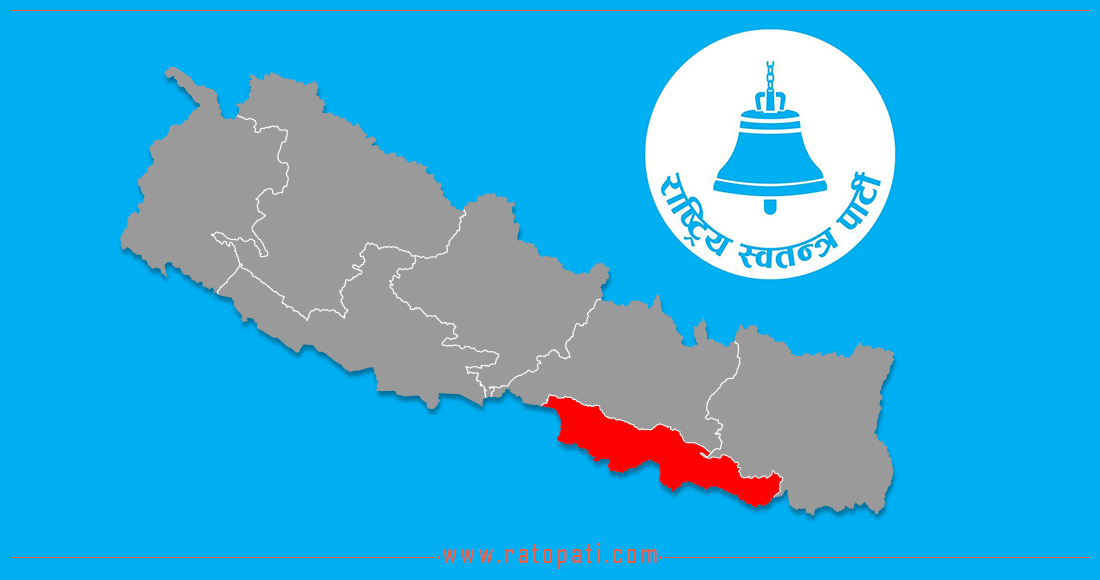
Kathmandu. Siraha-1 encompasses Lahan, which is considered the 'epicenter' of the Madhes Movement. In Siraha-1, previously dominated by the Nepali Congress, Laxman Mehta of the then Madhesi Jana Adhikar Forum Nepal (now JSP Nepal) won the first Constituent Assembly election.
In subsequent elections, Congress and UML maintained their dominance. In the second Constituent Assembly election in 2070 BS, Padmanarayan Chaudhary of Congress won, and in the 2074 House of Representatives election, Pradip Giri of Congress was victorious. In the 2079 House of Representatives election, Ramshankar Yadav of UML emerged as the winner.
UML's Ramshankar was supported by JSP Nepal in that election; UML and JSP Nepal had formed an alliance in the previous election. In the 2079 election, Ramshankar Yadav secured 29,462 votes, while Congress came second with 27,379 votes, and Janmat Party was third. At that time, the Rastriya Swatantra Party (RSP) only garnered 304 votes.
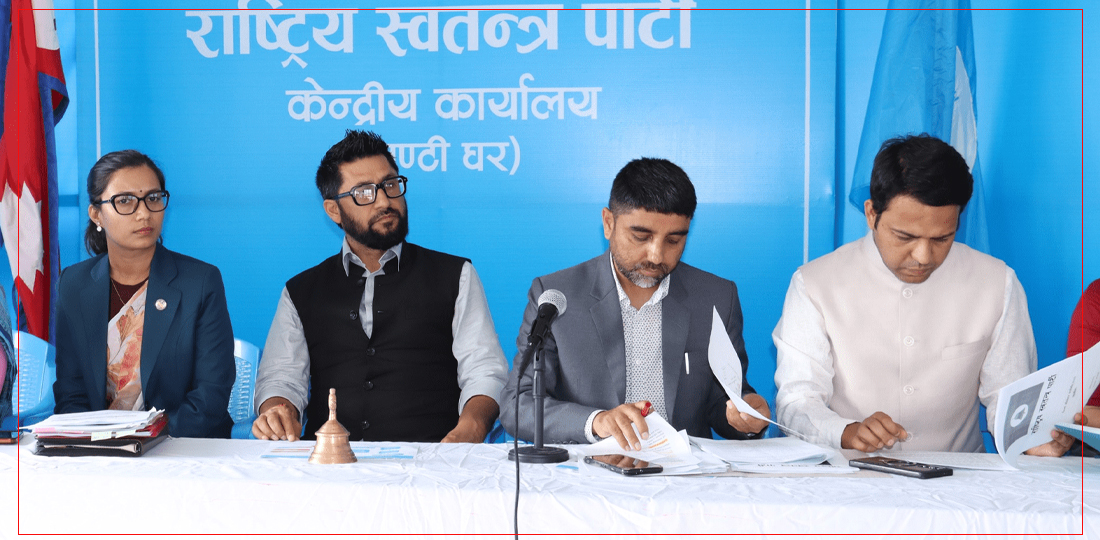
For the upcoming election on Falgun 21, Bablu Gupta, a leader of the Janatagyan Andolan (JGA), is contesting from RSP in this constituency. He also served as the Minister of Youth and Sports in the civic government. With the current wave surrounding RSP, Gupta is being assessed as a potential threat to the older parties.
This time, Ramshankar Yadav is again the candidate for UML, while Congress has fielded a new candidate. Ram Sundar Chaudhary is contesting for Congress in Siraha-1. Other candidates include Satyanarayan Yadav from JSP Nepal, Ramswarup Chaudhary from Janmat Party, Ramchandra Yadav from CPN (Maoist Centre), and Dr. Jeevachh Thakur from Shram Sanskriti Party.
Furthermore, Basudev Sah is contesting from RPP, Siria Paswan from NMKP, Bandrinarayan Chaudhary from Federal Democratic National Forum, Pravinkumar Chaudhary from Nagarik Unmukti Party, Ramkumar Sah from Nepal Ka Lagi Nepali Party, and Tara Kumari Chaudhary from Ujyalo Nepal Party have filed their candidacies.
Given that it is the birthplace of the Madhes Movement, JSP Nepal could be the main competitor to Congress and UML in Siraha-1. However, RSP might pose a significant challenge to everyone this time. JSP Nepal has nominated Satyanarayan Yadav as its candidate this time.
Before the Madhes Movement, Satyanarayan was in UML. When Mahesh Basnet was the president of the Youth Association, Satyanarayan was the vice-president. After the Madhes Movement, he joined the then Forum Nepal (now JSP Nepal) and worked there for a long time. In 2079, he joined CPN (Unified Socialist) led by Madhav Nepal. After the unification between CPN (Maoist Centre) and Unified Socialist, Satyanarayan rejoined JSP Nepal.
'In terms of buzz, my competition is with RSP. If voting happens based on the buzz, then the competition with that party will be tough. If votes come based on organization, then JSP Nepal will be ahead,' Yadav claims.
In Siraha-1, the largest vote bank belongs to the Yadav community, followed by the Tharu community, and then the Koiri community. Satyanarayan Yadav seems to have a claim over the Yadav votes. However, there are three candidates from the Yadav community. The Tharu community, which holds the second-largest vote bank, also has three candidates.
There are local murmurs in this constituency that the public is displeased with Ramshankar Yadav, who previously won from UML. Despite winning the last election, he has reportedly shown little presence or delivered development work in the constituency. The impact of recent statements made by UML leaders might also be felt. However, in terms of organization, UML still appears strong in the area. In the 2079 local level elections, UML won two out of the four municipalities falling under this constituency, along with several wards.
UML candidate Ramshankar Yadav states, 'UML has become stronger after the JGA movement. People are drawn to UML because they understand the many changes brought about in the country by UML.'
JSP Nepal leader Roshan Gupta makes a similar claim. 'There is a lot of talk about RSP, but they lack organization; that much support won't come based on mere talk,' he says. 'Votes come based on organization; whoever has a strong organization here will win.'
Congress also has a very strong organization in Siraha-1. However, internal party disputes are affecting the constituency this time. Padmanarayan Chaudhary is disgruntled after not receiving the ticket. It is said that his support will make a difference in Congress's victory or defeat. He was the runner-up in the 2079 election.
After the special general convention of Congress, Gagan Thapa became the president. Padmanarayan Chaudhary belongs to the Deuba faction. Ram Sundar Chaudhary, the current Congress candidate, belongs to the Gagan faction.
Meanwhile, RSP's Bablu Gupta has a family political background in Congress. His father, Bishnu Gupta, recently resigned from Congress. Bishnu Gupta was once the Vice-Chairman of the Congress Siraha District Committee. He is currently active in the election campaign to ensure his son's victory.
'Most of the Congress votes will go to my son Bablu Gupta,' Gupta claims. He asserts that because he worked in Congress for a long time, many leaders and cadres are still in his favor. Despite the family's political background in Congress, Bablu was not actively involved in the party; he had been active as a social activist.
This specific news has been automatically translated by AI. As a result, there may be some inaccuracies or language errors.

_1PHK75GdcC.jpg)