Kathmandu-3 Election: Water Source Area Faces Tight Race Amidst New Entrants and Traditional Battles

Kathmandu. Kathmandu-3, which encompasses a general geography, is also the source that quenches the thirst of the valley. This constituency includes major water sources like Shivapuri, Baghdwar, and Sundarijal.
There is uncertainty over which political party the voters of Kathmandu-3, capable of meeting nearly half of the valley's drinking water demand, will support in the upcoming House of Representatives election. Twenty-four candidates are ready to face this test of fire to navigate this uncertainty.
Viewed this way, the upcoming House of Representatives election on Falgun 21 appears set for an interesting contest in Kathmandu Constituency No. 3. This area is also known as a constituency that changes its representative in every past election.
In the 2074 House of Representatives election, CPN-UML leader Krishna Rai of the Left Alliance was elected from Kathmandu-3. Subsequently, in the 2079 House of Representatives election, Nepali Congress's Santosh Chalise was elected. CPN-UML won this constituency in the Second Constituent Assembly election of 2070 BS.
In the upcoming election on Falgun 21, the old parties are aiming to reclaim their proud legacy in this constituency.
In terms of votes, this constituency appears to be an area dominated by the traditional political forces of Congress and UML. Kathmandu-3 is often considered a left-leaning influence area.
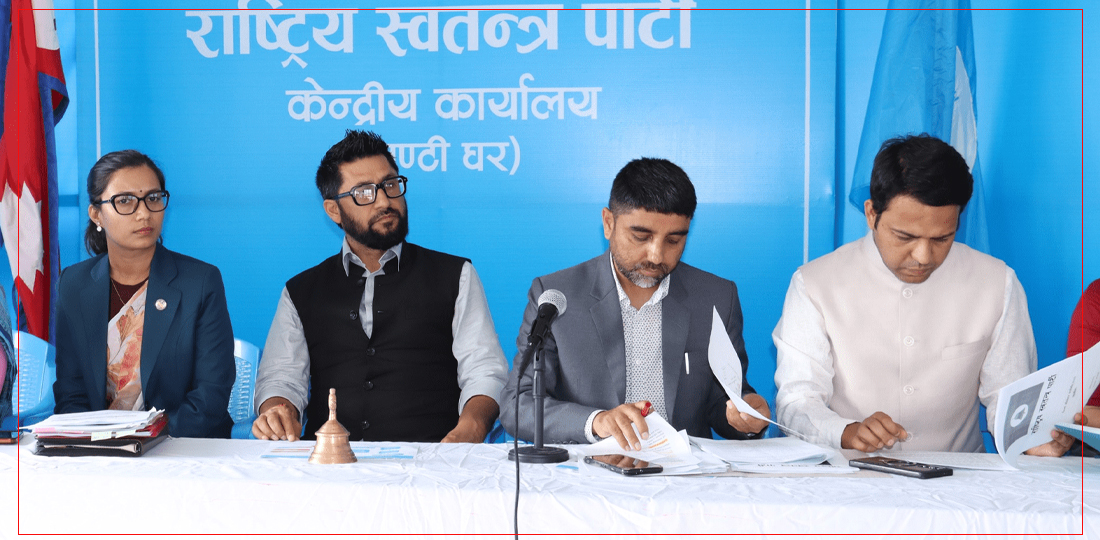
In the 2079 election, UML was divided, and due to the Congress-Maoist Center alliance, Congress's Chalise secured the victory. Since there are no alliances between parties in the upcoming election, a tough competition is expected between traditional parties like CPN-UML, Nepali Congress, CPN (Maoist Centre), along with new political forces such as Ujyalo Nepal Party and Rastriya Swatantra Party (RSP).
First-time political entrant Kulman Ghising chose Kathmandu-3 for his election 'debut'. Ghising, chairman of the nascent Ujyalo Nepal Party, is striving to win the trust of voters in an area dominated by Congress and UML.
Ujyalo Nepal Party Chairman Kulman Ghising has joined the electoral field in Kathmandu-3 this time. Along with Ghising, candidates include Ramshwar Fuyal of CPN-UML, Ramesh Aryal of Nepali Congress, Rajunath Pandey of Rastriya Swatantra Party (RSP), Niraj Lama of CPN (Maoist Centre), Dr. Sundarsingh Bohara (Sundarram) of Rastriya Prajatantra Party (RPP), along with 18 candidates from various parties and 6 independents.
The vote count results for proportional representation in the 2079 election also signal an interesting contest in this constituency. In the previous election, Congress received 10,619 votes, while CPN-UML received 9,449, RSP received 9,219, and RPP received 4,960 votes.
Among the 24 candidates, some are knocking on voters' doors burdened by experience, while others are riding the wave of change and popularity.
Kulman's 'Entry', The Dream of Ujyalo Nepal
First-time political entrant Kulman Ghising chose Kathmandu-3 for his election 'debut'. Ghising, chairman of the nascent Ujyalo Nepal Party, is striving to win the trust of voters in an area dominated by Congress and UML.
Ghising has been popular among the general public since his tenure as the Executive Director of Nepal Electricity Authority. He is credited with ending load-shedding. Ghising is favored by the public due to his role in ending load-shedding and his managerial efficiency. Based on this, he got the opportunity to handle three important ministries in the government formed after the 'Gen Z' movement. While holding a ministerial post, he resigned to form a political party and fully enter political life.
The popularity of outgoing Mayor Balen Shah within Kathmandu Metropolitan City is still at its peak. Riding on that popularity, RSP has fielded Rajunath Pandey in the field.
Ghising appears to have some community-based advantage in Kathmandu-3. He resides in Ward No. 6, Boudha, Kathmandu Metropolitan City. Areas like Boudha, Kageshwori Manohara Municipality, and Gokarneshwor Municipality-1 have significant populations of Tamang, Lama, and Sherpa communities. Kathmandu-3 has over 5,500 Lama voters, over 5,000 Tamang voters, and around 2,500 Sherpa voters. It is estimated that Kulman Ghising will draw significant votes from these communities.
Ghising's personal popularity and emotional connection with the ethnic communities make him a strong contender. However, Rastriya Swatantra Party (RSP), recognized as a new political force, has positioned itself as an alternative to change-seeking voters. This suggests a potential division of youth and change-oriented voters between Ujyalo Nepal Party and RSP.
RSP's 'Balen Card'
The popularity of outgoing Mayor Balen Shah within Kathmandu Metropolitan City is still at its peak. Riding on that popularity, RSP has fielded Rajunath Pandey in the field.
Pandey, who gained attention for managing footpaths and clearing encroached areas as the Chief of Kathmandu Metropolitan City Police, is contesting from this constituency. He entered the electoral field after securing a ticket under Balen Shah's quota.
Pandey's strong point is RSP's popular vote base and Balen's craze. However, he faces some disadvantages as he is not a local resident of this area. It remains to be seen how much RSP's organization and Balen's craze will cover up Pandey's weaknesses.
UML's Experienced Ramshwar Fuyal in the Field for the Fifth Time
Ramshwar Fuyal from CPN-UML is in the electoral field. Fuyal is not only a native of this area but also a leader deeply involved in local politics for over four decades. Having served as VDC Chairman twice, a Constituent Assembly member, and a Provincial Minister, this is Fuyal's fifth electoral contest.
Fuyal's strengths are his grassroots reach and activism in development construction. He has been a continuous candidate from this constituency in every parliamentary election since 2064 BS.
He was a candidate for the First and Second Constituent Assembly elections from this area. Having contested for the Provincial Assembly member in 2074 and 2079, he is now a candidate for the House of Representatives member again. Having contested four times previously, Fuyal has been elected twice and defeated twice.
After being elected as a Provincial Assembly member in 2074, he became the Minister of Physical Infrastructure Development for Bagmati Province. He was elected as the Chairman of the erstwhile Alapot VDC twice (2049 and 2054 BS). In 2054 BS, he became the Vice-Chairman of the Kathmandu District Development Committee. His role in the construction of Kagewori Dham and the development of the Tarebhier tourism area is still fresh in the minds of voters.
In the 2079 election, Congress's Santosh Chalise won in Kathmandu-3, securing 15,158 votes. Chalise won easily in that election based on the alliance.
Nepali Congress has taken a big risk and experiment this time. Instead of giving the ticket to Santosh Chalise, who won with 15,158 votes last time, Congress has put forward Ramesh Aryal, former ward chairman of Gokarneshwor Municipality-6.
In that election, UML's Krishna Bahadur Rai received 11,196 votes, and RSP's Durgavikram Thapa received 5,865 votes. RPP's Ganesh Giri received 2,511 votes. This time, Sundarsingh Bohara is contesting from RPP.
Managing the defeat of UML's Krishna Bahadur Rai and the party's internal equation in the 2079 election will be Fuyal's main challenge.
In the 2074 election, UML's Krishna Bahadur Rai was elected with 19,169 votes, while Nepali Congress's Ambika Basnet received 14,884 votes. At that time too, Bibeksheel Sajha Party's candidate Sumitra Singh Lama, emerging as an alternative political force, received 2,005 votes. In that election, there was an alliance between UML and Maoists.
Congress's Local Strategy
Nepali Congress has taken a big risk and experiment this time. Instead of giving the ticket to Santosh Chalise, who won with 15,158 votes last time, Congress has put forward Ramesh Aryal, former ward chairman of Gokarneshwor Municipality-6.
Aryal was elected as the Ward Chairman of Ward No. 6 of Gokarneshwor Municipality in the 2074 local level elections. In 2079, he was an aspirant for the mayor's position but did not get the ticket. He was a General Member of the Congress. Although he has a low profile in national politics, Aryal appears to be a very familiar and popular name at the local level.
Out of the 13 wards in this constituency, Congress won Wards No. 2 of Kagewori Manohara, Wards 5, 8, 9 of Gokarneshwor, and Ward No. 6 of Kathmandu Metropolitan City. Being a candidate rooted locally, Congress still feels secure in Kathmandu-3.
Congress considers its strong organizational base as the main key to victory here. Congress has dominance in most of the 13 wards, but it remains to be seen how Aryal will protect his vote bank amidst the dissatisfaction of Santosh Chalise and the crowd of popular candidates.
Niraj Lama: Youthful Zeal and Native Influence
Niraj Lama from CPN (Maoist Centre) is in the competition. Lama, a permanent resident of Boudha, is a leader who has served as a Bagmati Provincial Assembly member and holds good influence among the youth.
There is a strong possibility that the Janajati vote will be split as both Kulman Ghising and Niraj Lama belong to the same community.
Geography and Voters: The Decisive Force of 13 Wards
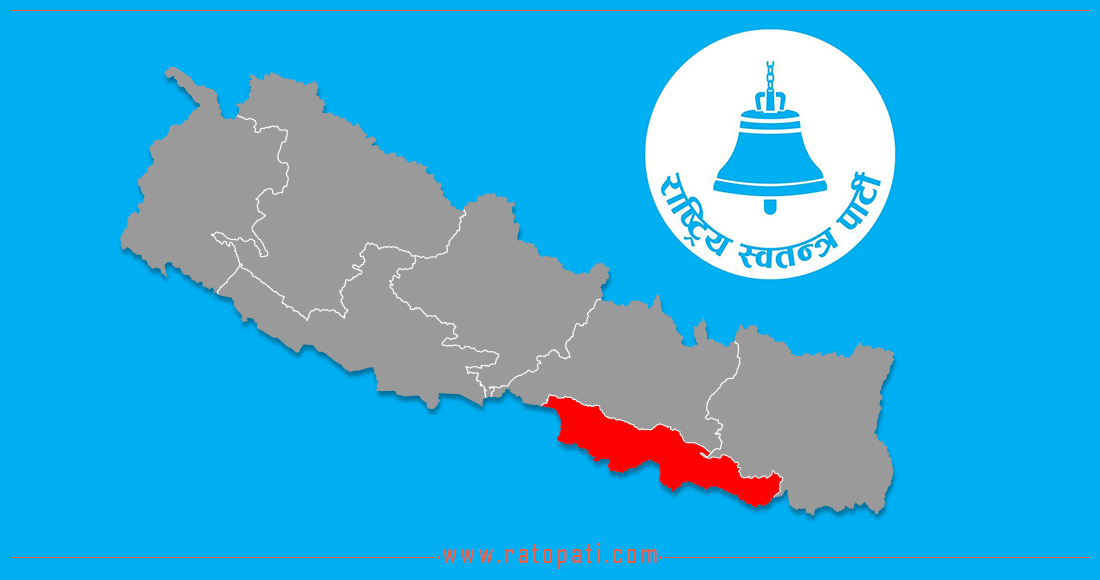
This constituency, with 64,479 voters, is small geographically but politically dense. It encompasses Wards 1, 2, and 3 of Kageshwori Manohara Municipality, Wards 1 through 9 of Gokarneshwor Municipality, and Ward No. 6 of Kathmandu Metropolitan City.
The main vote concentration is in the Jorpati and Boudha areas. Voters in Kathmandu-6, Gokarneshwor-5, 6, and 8 appear decisive here. Although half of Kathmandu's water comes from Sundarijal, residents in these areas are still suffering from a lack of drinking water. Drainage, waste management, and the poor condition of roads are the main election issues here.
This specific news has been automatically translated by AI. As a result, there may be some inaccuracies or language errors.

_1PHK75GdcC.jpg)