
Dhading-2 Constituency Remains Quiet Amidst Election Buzz, Featuring Diverse Candidates and Internal Party Dynamics
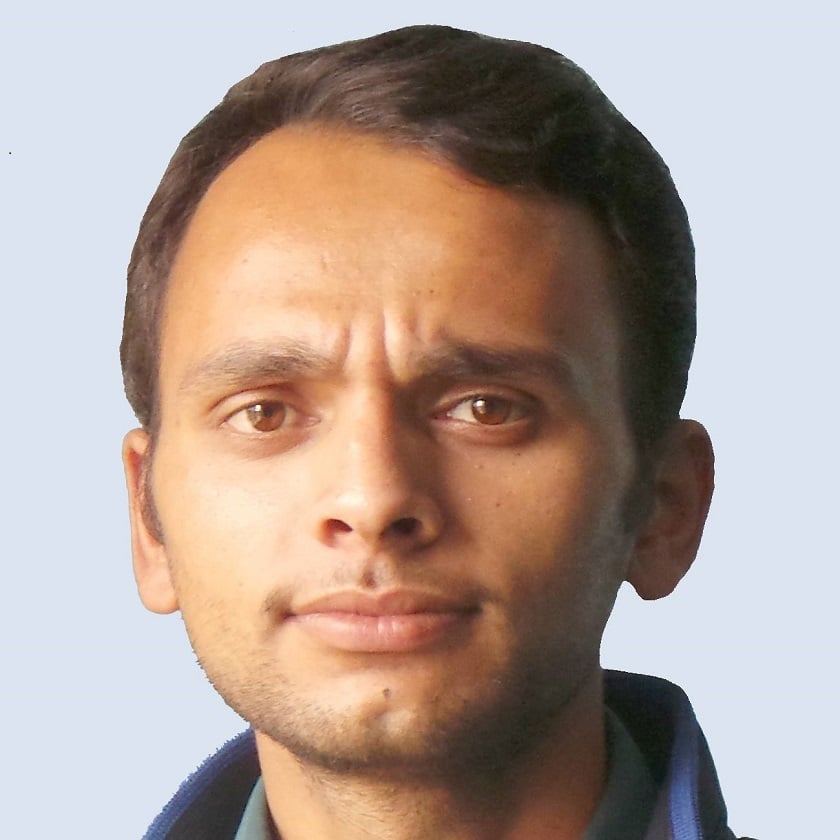

Kathmandu. With only about five weeks remaining until the House of Representatives elections, Dhading Constituency No. 2 remains relatively calm. While discussions about electoral arithmetic and potential outcomes are ongoing in various districts and constituencies across the country, this constituency is proceeding with healthy competition.
One reason this district has not garnered national attention is that neither viral faces nor top leaders have arrived for election campaigning. Nevertheless, the competition in this constituency is not insignificant.
This constituency covers the northern part of Dhading district. It stretches from Ruby Valley, which borders China, down to Dhading Besi, the district headquarters, reaching the boundaries of Budhigandaki and Trishuli rivers. It encompasses six rural municipalities: Ruby Valley, Gangajamuna, Khanibas, Netrawati, Tripurasundari, and Jwalaimukhi, along with Nilkantha Municipality.
Currently, the candidates in this constituency are Ramesh Dhamala from the Nepali Congress, Dhan Bahadur Ghale from CPN-UML, Ram Bahadur Bhandari from the CPN (Maoist Centre), and Bodhnarayan Shrestha from the Rastriya Swatantra Party (RSP). Additionally, 11 other parties have fielded candidates. These include the Rastriya Prajatantra Party (RPP), Janata Samajbadi Party Nepal, Nepal Workers' Peasants Party, Pragatisheel Loktantrik Party, Mongol National Organisation, United Civil Party, National Republic Nepal, Shram Sanskriti Party, Miteri Nepal Party, CPN (Maoist Centre), Ujyalo Nepal Party, and Aam Nepal Party. Eight independent candidates have also filed their nominations during this period.
What is the profile of each candidate?
Based on party history, national prominence, and candidate popularity, the electoral outcome in Dhading-2 does not appear likely to go outside the main four parties.
Among them, Dhamala, the Nepali Congress candidate, is a former chairman of the party's district committee. Also a tourism entrepreneur, he is a former president of the Trekking Agencies' Association of Nepal (TAAN). His permanent address is in Nilkantha Municipality-13.
Dhan Bahadur Ghale, the CPN-UML candidate, is a local businessman. Originally from Ganga-Jamuna-6, Dhading, he was elected from the then Dhading-1 in 2070 BS and served as a member of the Constituent Assembly.
Ram Bahadur Bhandari, the CPN (Maoist Centre) candidate, is a permanent resident of Tripurasundari. Two of his sons were disappeared during the Maoist insurgency, and he himself lost a leg. The then Maoist party declared him a living martyr.
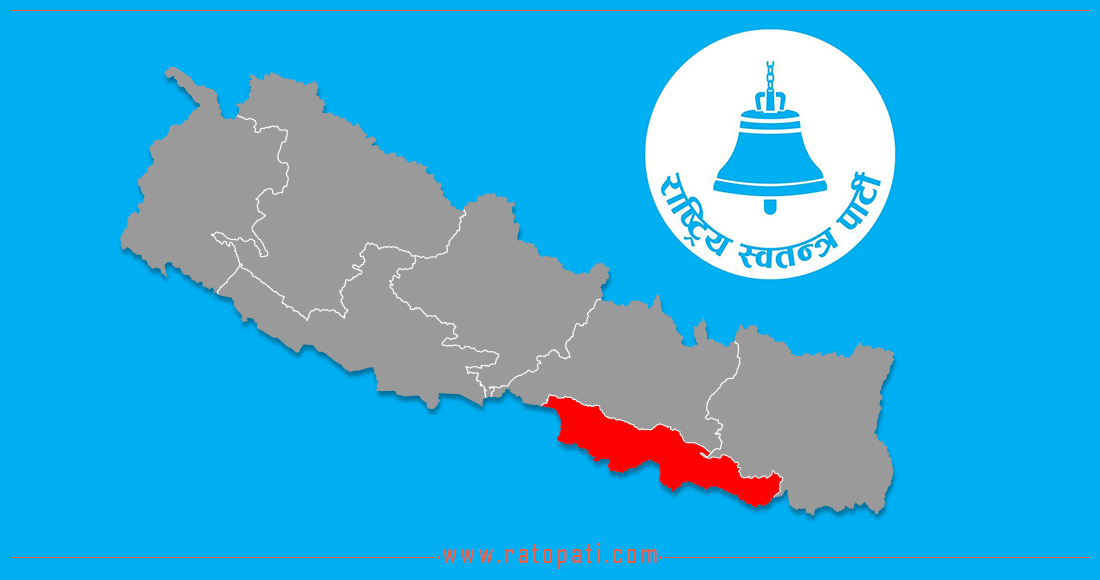
Bodhnarayan Shrestha received the ticket for the RSP in this constituency. He is a permanent resident of Jwalaimukhi-2. He serves as the Deputy Chief of the party's Central Organization Department and is also a former UNICEF employee.
Past Arithmetic
Looking at the election history, Dhading-2 has always been 'selective'. Since the new constitution established 165 House of Representatives constituencies, Dhading has sent candidates from different parties to victory in two elections.
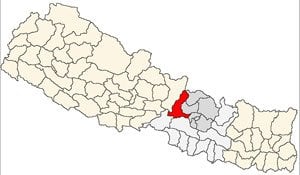
In the 2074 BS election, Khem Lohani of CPN-UML won the House of Representatives seat, securing 36,200 votes, while Ramnath Adhikari of the Nepali Congress was defeated with 35,600 votes. At that time, the then Maoist Centre and RPP supported the CPN-UML candidate.
In the 2079 BS election, Ramnath Adhikari of the Nepali Congress was elected, securing 34,736 votes, while Khem Lohani of CPN-UML received 24,190 votes. This time, there was an electoral alliance between the Nepali Congress and the Maoist Centre. The RPP supported CPN-UML again, and RSP candidate Basu Maya Tamang secured 5,569 votes.
For the Provincial Assembly, in constituency 2 (B), the northernmost area of Dhading, the Rastriya Prajatantra Party secured 14,383 votes, and the Maoist Centre also secured 14,383 votes. This indicates that the Maoist candidate was defeated despite the Congress-Maoist alliance. In Provincial Assembly 2 (A), the Maoist Centre supported the Congress candidate. In this scenario, the Congress candidate received 19,474 votes, while the CPN-UML candidate received 16,458 votes. The RSP did not field any candidate in the Provincial Assembly.
When direct elections involve alliances, proportional representation votes can give an indication of the strength of each party's candidate base. In 2079 BS, Congress received 20,957 votes, while CPN-UML received 16,275. The Maoist Centre received 11,494, RPP 7,630, RSP 5,628, and CPN (Unified Socialist) 2,934 votes. This totals approximately 60,000 votes. At that time, a total of 66,754 votes were cast. The remaining votes were held by smaller parties and independent candidates.
In the 2079 BS election, Dhading-2 had a total of 134,000 voters. The total valid votes in the proportional representation category accounted for 49.55 percent of the total voters. In the upcoming election, 3,868 voters have been added in this constituency, which is a 2.87 percent increase.
What is the influence of each candidate?
While the above data can be taken as a reference, assessing this year's election results solely based on this data may not be appropriate. The national political climate is different now. Elections are being held in a different atmosphere, and nationally, the RSP has emerged to challenge the older parties.
The Nepali Congress is also heading into the election with new leadership under the slogan 'Change Congress, Change the Country.' CPN-UML seems to be repeating its 2074 BS strategy of positioning itself as the national power while accusing other parties of being externally managed. The RPP, which has a strong influence in the upper region, might be trying to consolidate its vote bank.
_dsHpiW5V28.jpg)
However, amidst all this, the presence and influence of the candidates will make a significant difference. The winning party from the previous election, the Nepali Congress, faces the challenge of preventing internal sabotage due to intra-party conflict. The party's district president, Ramnath Adhikari, belongs to the Shekhar Koirala faction. He was one of the 47 district presidents who issued a statement advocating for a regular general convention while a special general convention was being held. On the other hand, Bhim Dhungana, who is also the mayor of Nilkantha Municipality, represents the Deuba faction. If internal retribution persists in the Congress, it appears sufficient within their own ranks to defeat Dhamala, who belongs to the Gagan Thapa faction.
There is also a positive aspect to this. Due to the criteria set by the Congress not to give tickets to incumbents, Dhungana did not expect a ticket. Since District President Adhikari had previously announced he would not contest, his name was also not in the recommendations. Similarly, Dilman Pakhrin, considered influential in the upper belt, was recommended for proportional representation, so he also did not expect a ticket. Although names like Basudev Timalsina, Tilak Prasad Ruwali, and Gopal Bishwakarma were recommended, they might be content with former district president Dhamala securing the ticket.
Dhamala's personal strength lies in his experience leading the organization as the district president and his connections across the geography, the capital, and abroad through the tourism sector.
On the CPN-UML side, internal conflict is also not insignificant. The situation of giving, taking back, and re-giving tickets shows conflict within Dhading's CPN-UML. CPN-UML initially gave the ticket to the current candidate, Dhan Bahadur Ghale. However, following opposition from leaders in the lower belt, CPN-UML gave the ticket to Chandra Rijal, but after opposition and pressure from the Ghale faction, they revoked Rijal's ticket and officially accepted Ghale again.
This situation has dissatisfied cadres in the lower belt on one hand, and on the other, the Rijal faction, having had their ticket snatched after receiving it, appears likely to withhold cooperation from Ghale. Furthermore, Khem Lohani, who was a candidate previously and lost by a narrow margin, was also in Rijal's camp. Even on the morning of the nomination filing, he wrote a status stating that Rijal was the official CPN-UML candidate. For CPN-UML, which is experiencing the biggest national political impact, this kind of internal conflict appears sufficient grounds for defeat.
There are positive aspects to this as well. Although Ghale was elected when there were three constituencies in 2070 BS, he did not receive a ticket in the subsequent two elections. Instead, the lower belt received the ticket both times. Guru Burlakoti, who contested in 2074 BS, and Khem Lohani, the candidate in 2079 BS, are both from the lower belt area, which is Ghale's strongest point. In this context, it seems fair that the upper region receives a candidate.
Furthermore, some view Ghale, whose base is geography-centric, as more suitable than Rijal, who conducts politics from Kathmandu. When Ghale gets the ticket, the Tamang community and RPP votes in the upper region are also likely to be more 'loyal' to him.
The CPN (Maoist Centre) has also emerged strongly this time. Although their organizational vote count might be lower, the candidate's advantage seems to favor the CPN (Maoist Centre). Ram Bahadur Bhandari, known as a living martyr, has many sympathizers in Dhading; his background is his strongest asset.
On the other hand, former MP Jagat Bahadur Sinkhada, who has a strong influence in the upper belt, is leading the election campaign command, which should make things somewhat easier for Bhandari. It is estimated that the CPN (Maoist Centre), formed by the alliance of CPN (Unified Socialist) and other parties, has narrowed the gap with older competing parties.
However, it is not easy for the CPN (Maoist Centre) to succeed as they are competing on their own strength for the first time since 2070 BS. While they might increase their vote count by a few thousand based on sympathy, securing the result requires more than doubling their votes, and nationally, there is no scope to increase hopeful votes, making it as difficult as chewing a hard nut for this party to win the election.
Now, let's look at the RSP. The RSP, which is preparing to sweep the results based on social media influence and viral faces, still holds optimistic and expected standing in Dhading, similar to other places. Since most voters in Dhading-2 come from urban areas like Kathmandu, Chitwan, and Pokhara, this area is considered fertile ground for the RSP. Although they received fewer votes in 2079 BS, they have expanded their organization in all wards since then, which might positively impact the RSP's organizational vote.
However, there is extreme dissatisfaction with the candidate within the RSP. Especially after Bodhnarayan Shrestha, who has not been very active in the field, was nominated by sidelining other potential candidates in the district, widespread dissatisfaction is visible within the RSP. This time, although candidates like Krishnaman Shakya, Anil Adhikari, Upendra Pandey, and Rajan Aryal aspired for the ticket, RSP cadres are disappointed that Shrestha was given the ticket due to the strong influence of Deputy Chairman DP Aryal.
The RSP, which received about 5,500 votes last time, needs to increase its votes by at least five times to win the election. With only about 4,000 new voters added, the RSP is compelled to attract voters who voted for other parties. In Dhading-2, the RSP has neither prioritized faces nor the ground presence, which poses a challenge for them.
Considering all these circumstances, the electoral battle in Dhading-2 appears even more interesting. The hard work put in by the candidates and cadres now can lead to a result in favor of any candidate in Dhading-2. The loyalty shown by the RPP to which candidate will also influence the election outcome. Furthermore, the votes that new parties like Ujyalo Nepal Party and Shram Sanskriti Party can attract are also estimated to influence the election results to some extent.
This specific news has been automatically translated by AI. As a result, there may be some inaccuracies or language errors.



_1PHK75GdcC.jpg)