
Lalitpur-3 Battleground: No Clear Frontrunner as Voters Demand Accountability and Local Connection


In Lalitpur Constituency No. 3, no single candidate currently commands a unilateral wave. Dr. Toshima Karki faces pressure to showcase her past work, while Jitendra Shrestha must secure local and organized votes. Candidates like Sandan Thapa and Rajkaji Maharjan are struggling to establish themselves as viable alternatives.
Kathmandu. Lalitpur Constituency No. 3, which borders the federal capital and holds significant historical and cultural importance, has become a focal point of political interest.
In this constituency, where the Rastriya Swatantra Party (RSP) made an unexpected breakthrough in the previous election, the current electoral atmosphere appears somewhat altered. On one side, Dr. Toshima Karki, who won by a significant margin last time, is striving to defend her legacy, while candidates from the Nepali Congress, CPN-UML, and the CPN (Unified Marxist-Leninist) are strategizing to reclaim their 'lost prestige.'
Amidst the claims and campaign hustle of political parties, voters appear highly conscious and critical.
Looking at the arithmetic of the previous election in Lalitpur-3, 'swing votes' played a decisive role. In the last election, Dr. Toshima Karki of RSP won with 31,136 votes, while CPN-UML's Amrit Khadka came second with 12,963 votes, and the alliance candidate from the Maoist Center, influential leader Pampha Bhusal, was reduced to 8,769 votes. The situation has changed now.
The wave that brought 'change' and 'new faces' last time is now being tested on the scales of 'performance' and 'public contact.' Local voters do not seem entirely satisfied with Toshima's work and presence during her two-and-a-half-year tenure.
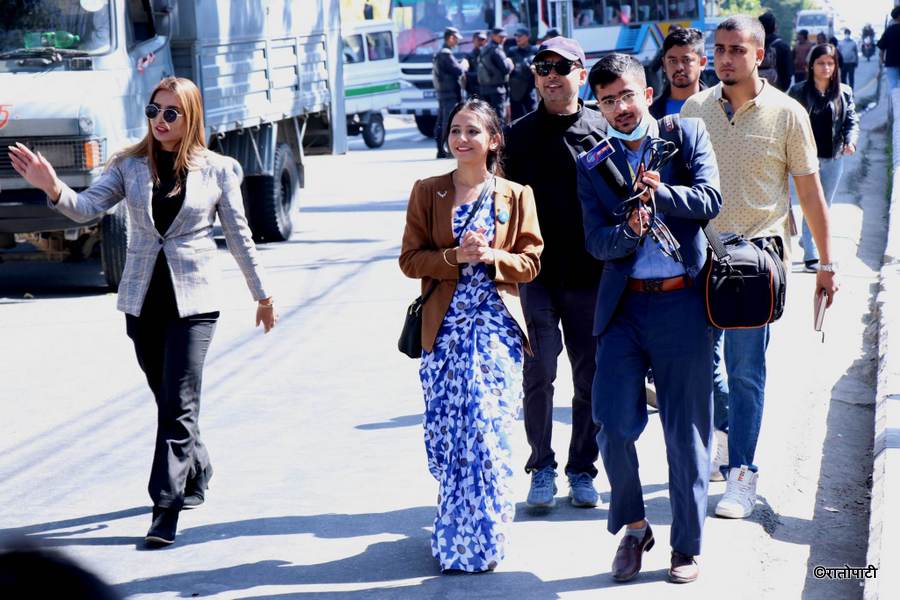
Dr. Toshima Karki, re-contesting from RSP, is campaigning relying on the nationwide mood. However, local grievances against her seem to be increasing. Some locals allege that even after being elected, she did little for the constituency and did not visit the public's doorsteps after the election.
'We voted for her seeking change, but what did she accomplish in two and a half years?' This question is now being raised in local squares and tea stalls. Some voters feel they should reconsider their vote for the direct election, even if they support the party in proportional representation. Criticism regarding Dr. Karki's lack of personal accessibility and absence in the locality appears to pose a significant challenge this time. Nevertheless, some voters argue she should be given another term as her previous tenure was incomplete.

Meanwhile, the Nepali Congress has fielded District President Jitendra Shrestha in the electoral field this time. Shrestha, considered close to Gagan Thapa, is a local figure born and raised in Pulchowk. He is well-known in Lalitpur's economic, social, and political spheres. Congress workers, who were compelled to vote for the alliance last time due to the absence of their own candidate, appear very enthusiastic now that their District President is the candidate. Shrestha's main strength is the Nepali Congress's strong organization and his local identity. However, the challenge of attracting the 'new wave' of RSP and young voters to his side is equally significant.

Sandan Thapa Magar is competing from the CPN-UML. Sandan, a local from Jhamshikhel, presents himself as a youth and social worker. He claims victory based on the disciplined organization of the UML and his past work in the social sector. He argues that since he is entering the field for the first time, the public will trust him over 'old' and 'tested' candidates. However, securing the new voters and neutral 'swing votes' appears to be an uphill battle for him.
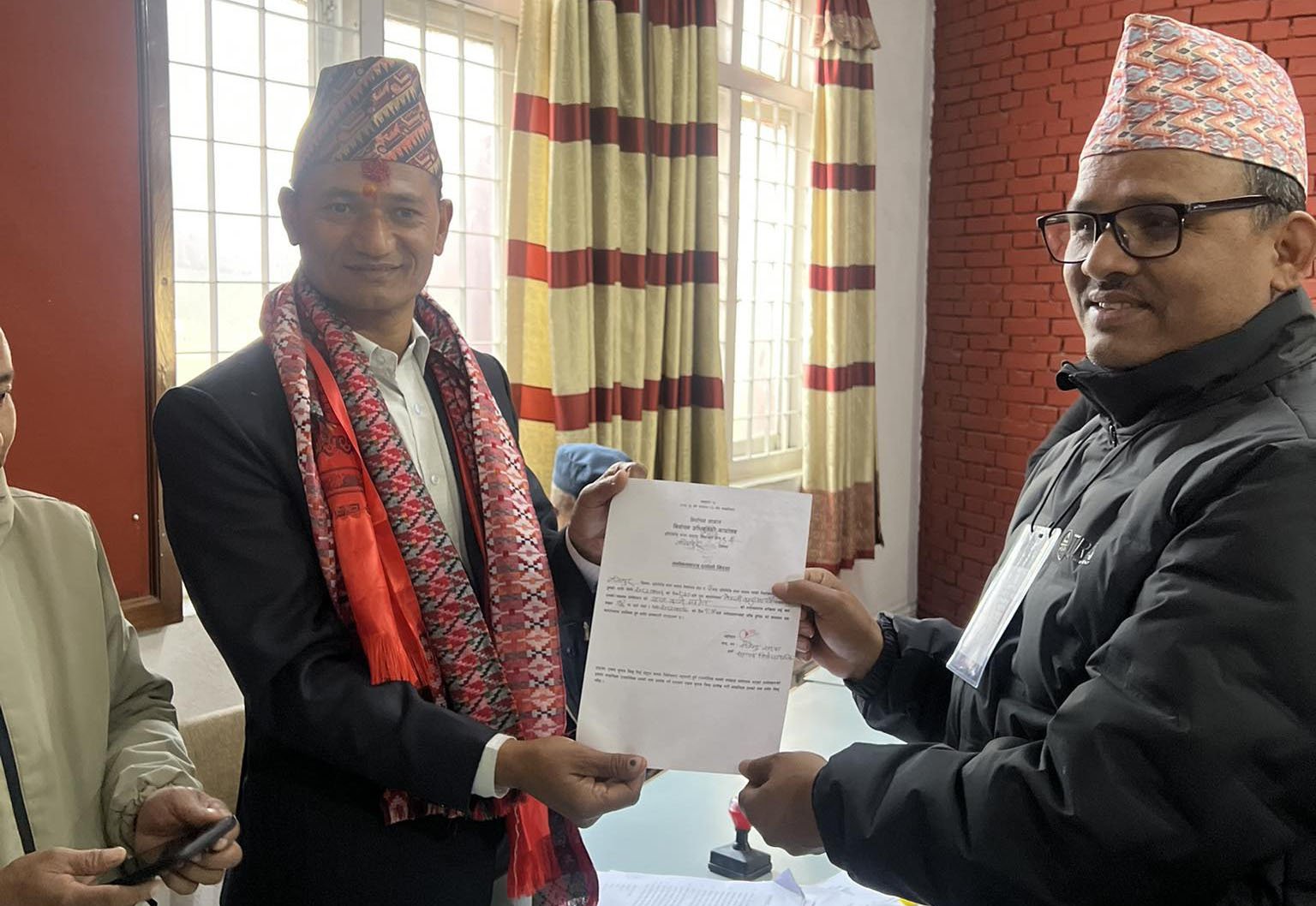
Furthermore, Rajkaji Maharjan from the CPN (Unified Marxist-Leninist) is a main competitor. In this constituency where a stalwart leader like Pampha Bhusal had to lose last time, the path is not easy for Rajkaji either. The main basis for his victory will be how many votes he can garner by establishing his identity as a local candidate.
Impact of the 'GenZ' Movement
Understanding voter psychology, the 'GenZ' movement appears set to have a major impact on this election. Sharada Kunwar, a resident of Patipati, Ward No. 4 of Lalitpur Metropolitan City, says, 'There is enthusiasm among everyone regarding the election now. We need a representative who can create employment opportunities within the country so that our children do not have to go abroad.'
She is inclined to vote based on an individual's thoughts and ideas rather than their party affiliation. Her assessment is that the current necessity is for someone who works for the nation's interest, rising above nepotism and favoritism.
However, there is also a sense of disillusionment among voters. Bekh Bahadur Tandukar, a former ward member from Sanepa, states that the election atmosphere has not yet heated up. 'There are many candidates, but their agendas and manifestos have not yet been clearly presented,' he said. 'In the current scenario, a simple greeting is not enough to win votes; voters will decide based on the agenda.' He signaled that this election competition will be very tough, and the results could be unexpected.
The debate of 'Local versus Outsider' has also gained significant traction in Lalitpur-3. Decision Bikram Dangol, a young local from Ward No. 2, says, 'We want a local person to be the candidate. Only someone born in Lalitpur can understand Lalitpur's problems.'
He has made corruption his main issue and stated that leadership capable of ending corruption is needed. He added, 'The situation of 'this one didn't work, let's give that one a chance' is gone. Today's voters are very selective.' Dangol analyzes that this election will be worth watching because there is no hundred percent support for any party or candidate.
The public grievance is particularly focused on the tendency of elected officials not returning after being elected. Rajkumar Maharjan, who works as a gardener, expresses a slightly different form of anger. 'Toshima Karki won once and left, but she is never seen touring this area,' he said. 'The only official we meet is the Ward Chairman; we can never meet the Member of Parliament.'
He complains that leaders only appear during election time and do not mingle with the public. He also expressed dissatisfaction that older parties like UML and Congress did not give tickets to capable individuals who are connected with society.
Bimala Rana from Ward No. 4 has a more philosophical and long-term demand. She wants a capable representative who can change the country's laws, not just one preoccupied with small-scale road development. 'We need someone who can raise their voice in parliament and take the laws in a new direction,' she said.
According to her, awareness about the election has reached everyone from small children to the elderly, and this time, voting will not just be the act of casting a ballot but an 'exercise of conscience.'
Based on RatoPati's field reporting, no single candidate in Lalitpur Constituency No. 3 commands a unilateral wave this time. Dr. Toshima Karki is under pressure to demonstrate her 'past work,' while Jitendra Shrestha faces the challenge of securing 'local and organized' votes. Candidates like Sandan Thapa and Rajkaji Maharjan are struggling to position themselves as 'alternatives.'
Voters are searching for the end of corruption, job creation, and a publicly accountable representative. It is certain that in this election, the personal merit, local roots, and proximity to the people of the candidate will be the main key to victory, rather than the old legacy of any party.
This specific news has been automatically translated by AI. As a result, there may be some inaccuracies or language errors.



_1PHK75GdcC.jpg)