Nepal Police Arrest Six in Connection with Years-Long 'Fake Rescue' Scam Targeting Tourists

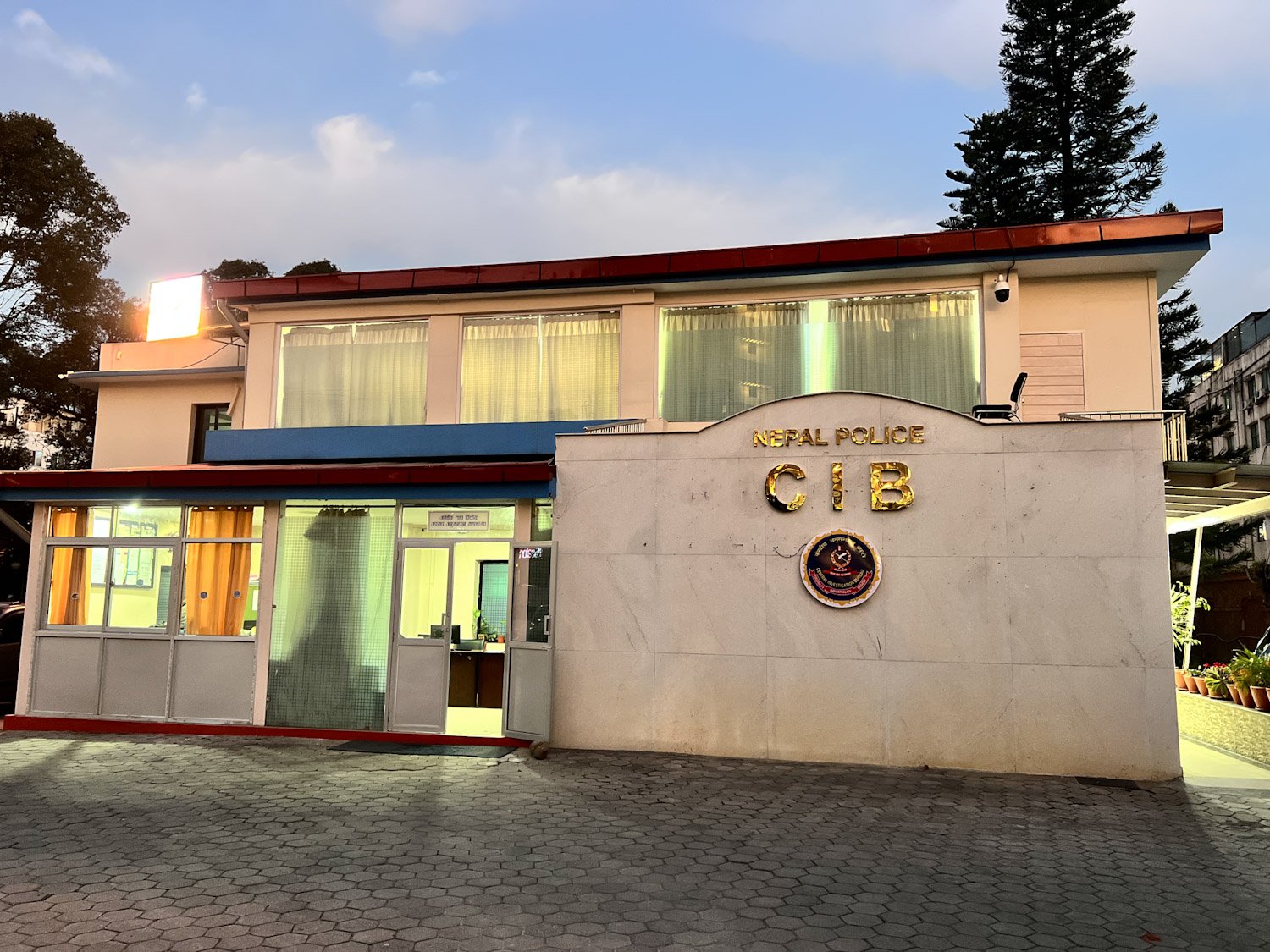
Kathmandu. On Sunday, the Central Investigation Bureau (CIB) of Nepal Police arrested six individuals accused of fraud through 'fake rescues.' This police unit, which received responsibility for investigation from a government body nearly seven years ago, has only now shown activity in this special investigation.
This case, which garnered significant national attention back then, had faded in recent years. While speculation suggested the illegal activities might have ceased due to the intense national focus, the burden and stain of this issue continued to affect the sector. However, the CIB's action indicates that no improvement has occurred in this matter so far.
- What is the Fake Rescue Scam?
Hundreds of thousands of foreigners visit Nepal annually for trekking and mountaineering. They primarily come to destinations like the Everest region, Annapurna region, and Langtang region for trekking and climbing the mountains there. Being home to the world's highest peak and mountain ranges, this area is inherently an attraction for everyone.
Trekking and mountaineering are adventurous tourism activities, and tourists purchase insurance when they come. They secure insurance in their home countries to mitigate potential losses from any accidents during this process. In case of any problem requiring rescue or treatment, claims are filed with the insurance company. This is a very natural and common international procedure.
However, according to the police, some businesspersons in Nepal have exploited this system. The CIB stated that out of 2,020 rescues conducted by three transport service companies over the last four years, 317 rescues were found to be 'fake,' resulting in fraud amounting to $19.69 million (approximately 2.90 billion Nepali Rupees at the current exchange rate).

Preliminary police investigation suggests that fake rescues were carried out in two ways: first, by coercing the traveler into a rescue, and second, by colluding with the traveler.
During mountaineering and trekking, climbers often fall ill due to high altitude. This problem arises due to the cold and low oxygen levels when ascending to higher elevations. The easiest solution for this is to bring the traveler to a lower altitude. If the traveler is brought down 200 to 300 meters from the altitude where they feel discomfort, the problem usually resolves itself.
However, in such situations, the guide frightens the trekker. By instilling fear that anything could happen without immediate rescue, the person is coerced into agreeing to a rescue.
On the other hand, when a traveler completes a destination, the guide tempts them on the return journey. The Additional Inspector General of Police, Dr. Manoj KC, explains that the guide suggests a rescue, arguing that since the journey is complete, there is nothing new left to see, and the traveler would have to bear the cost and risk of returning on their own. At that point, the traveler agrees to unnecessary rescue and treatment.
When this issue first surfaced around 2075 BS (2018/2019 AD), the Ministry of Tourism formed an investigation committee led by then Joint Secretary Ghanshyam Upadhyaya. At that time, there were discussions that travelers were even forced into fake rescues by mixing substances in their food that caused diarrhea or other short-term ailments. That committee concluded that 35 percent of rescues were fake and recommended a detailed investigation by the police's special investigation unit. However, no investigation had been conducted until now.
Currently, the police have not found evidence of such substances mixed in food, but they have documented instances where fear was used to coerce rescues even for minor issues.
- ..And the Police Operation Succeeded
Although the Ministry entrusted this responsibility to the police, the investigation was not easy. This is because finding a complainant in cases of rescue was difficult.
Since a rescue does not happen without the traveler's consent, and speaking out about a fake rescue that occurred with their consent could lead to the traveler facing legal action themselves, travelers were unwilling to speak openly. The informal information they provided was sufficient for news reports and global gossip, but not for investigation and prosecution. That is why the police had not been able to take action until now, even though travelers and the Nepali tourism sector were bearing the cost. The police stated that insurance premiums, which were around $1,200 earlier, have now been increased to $2,500 by insurance companies.
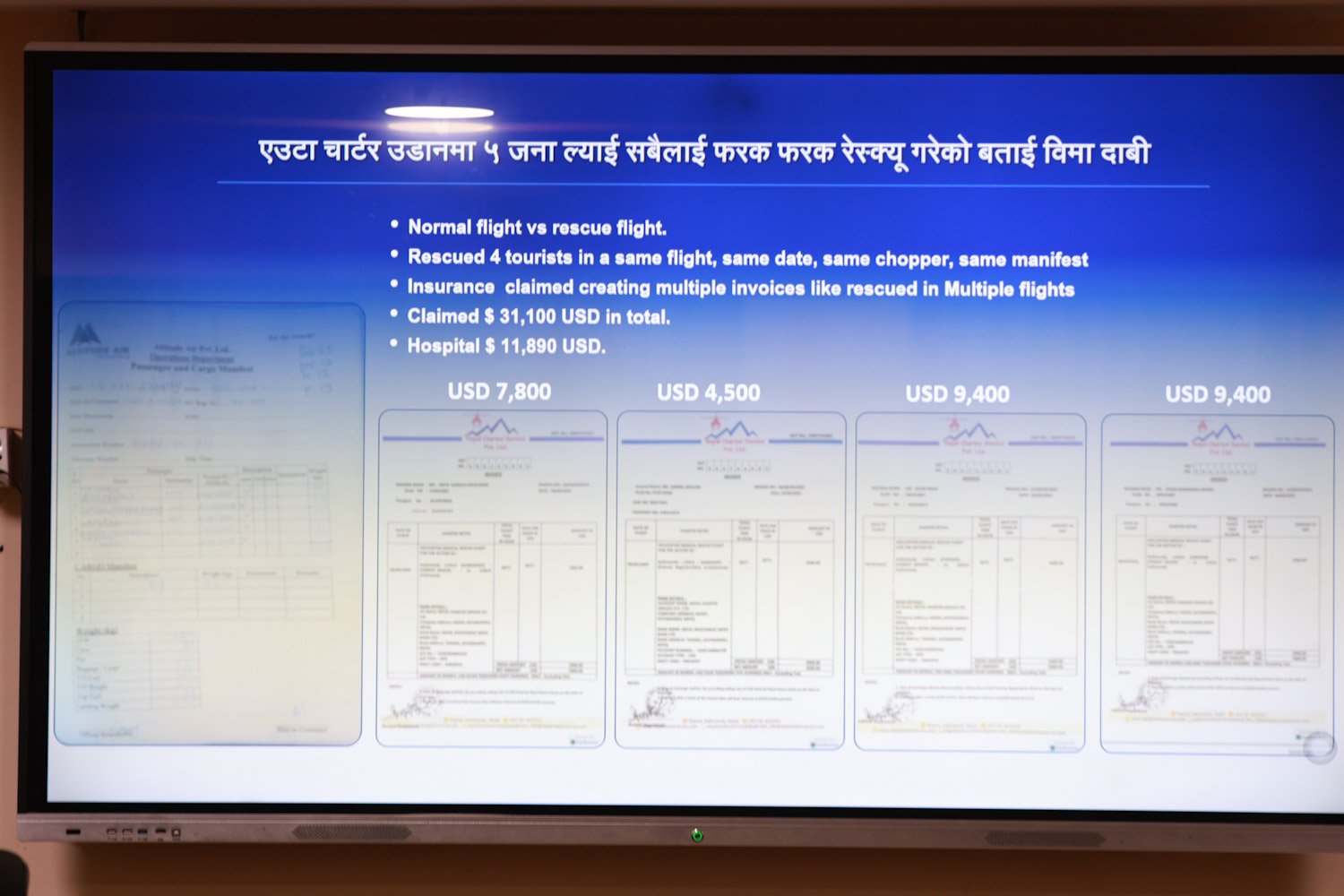
But those companies did not limit the fraud to that alone. Police investigation revealed that they were claiming flights that never happened, creating bills showing multiple people on a single flight across various locations and flights, and inflating bills many times higher than the actual cost. The police reported that claims were made for as much as nearly $12,000 for minor treatment at a hospital, and up to $31,000 from a single individual.
_b3ibIX7MYz.jpg)
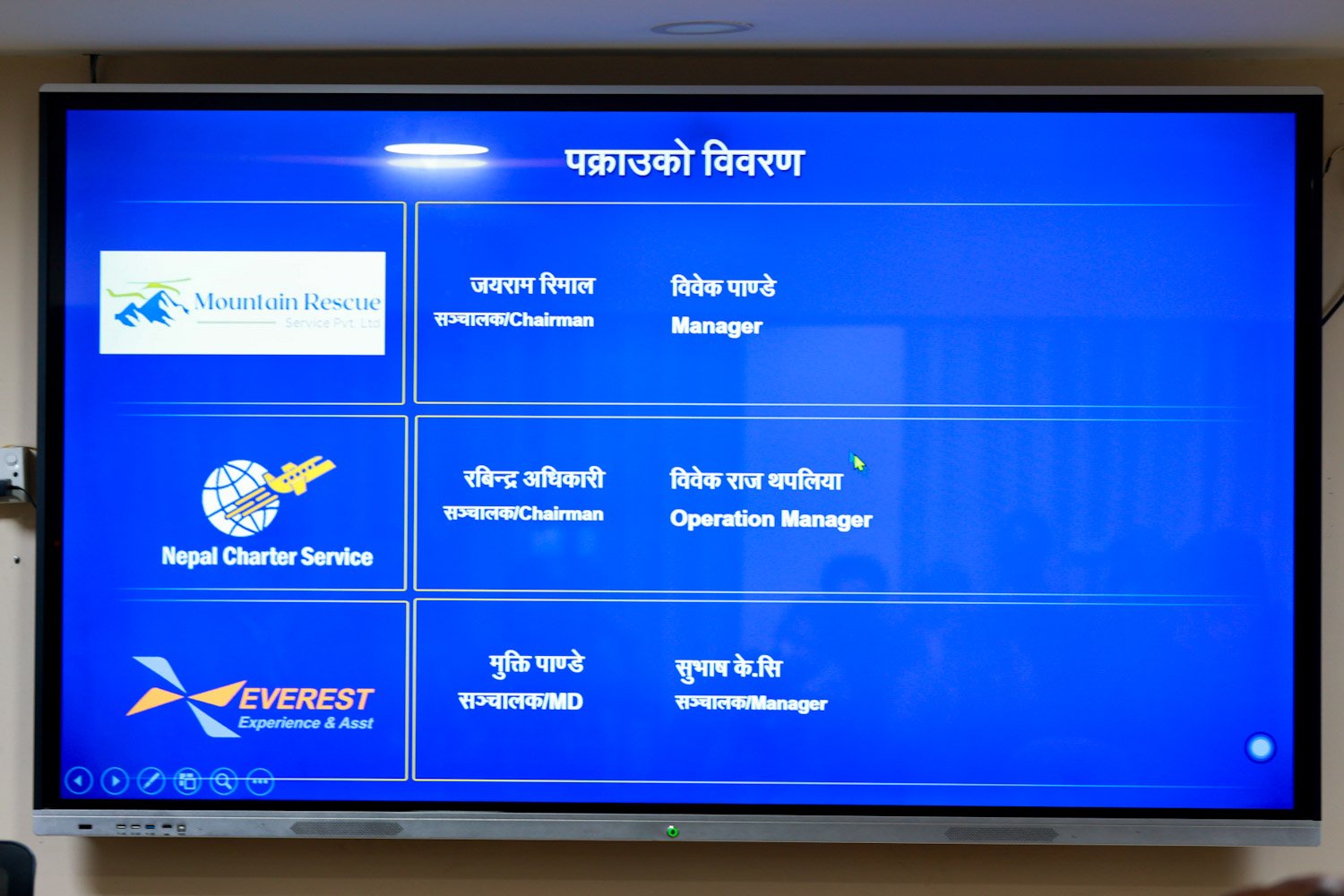
AIG KC stated that for this investigation, the police examined the flight schedules and billing of the concerned helicopter companies, hospital documents, and details of insurance claims and financial transactions made with the relevant travel insurance companies. The CIB reported studying over a thousand SWIFT transactions from the last four years. Based on this, Jayaram Chhatkuli, operator of Mountain Rescue Service, and manager Vivek Pandey; Rabindra Adhikari, operator of Nepal Charter Service, and manager Vivek Raj Thapaliya; and Mukti Pandey, operator of Everest Experience & Assistance, and manager Sushil Sitoula were arrested.
Although this case has been pending for a long time, the police only investigated from 2078 BS (2021/2022 AD) onwards due to the statute of limitations and data availability. The police stated that the investigation was advanced based on the Ministry's report and complaints, as a fake rescue complaint was also filed as recently as last Ashoj (September/October).
- Image Tarnished Internationally
When it comes to mountains and mountaineering, this news becomes a matter of international interest rather than just national concern. The fake rescue case also became a subject of significant international interest.
The international news agency AFP wrote an article in 2018 titled 'A Scam on the Roof of the World.' France 24 published news titled 'Unnecessary Rescue Soars in Nepal on Profit from Insurance Payout.' Dozens of other international media outlets also prioritized and published news on this topic. These reports sent a message worldwide that Nepal is not a safe destination. Organizations like World Nomads even issued warnings to tourists, calling it the Nepal Helicopter Rescue Scam. The increased insurance premiums following this incident remain high even now.
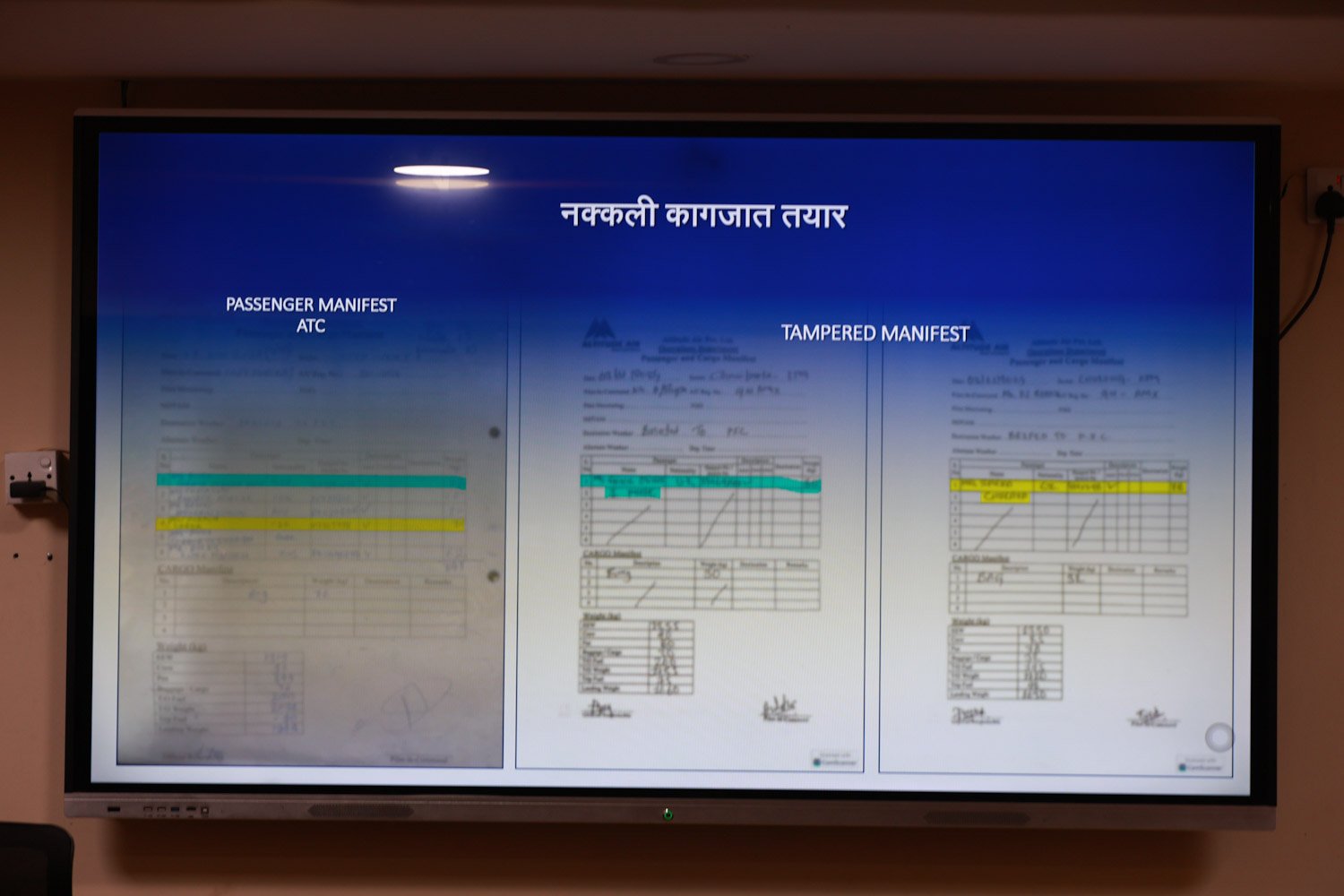
The police stated that they have only taken action on the first layer of this case so far. In the initial phase, action has been taken against the three transport service companies that filed claims with the respective insurance companies. While investigations against them are proceeding for forgery, fraud, and criminal gain, the CIB claims there are grounds to prove organized crime, money laundering, and offenses against the state.
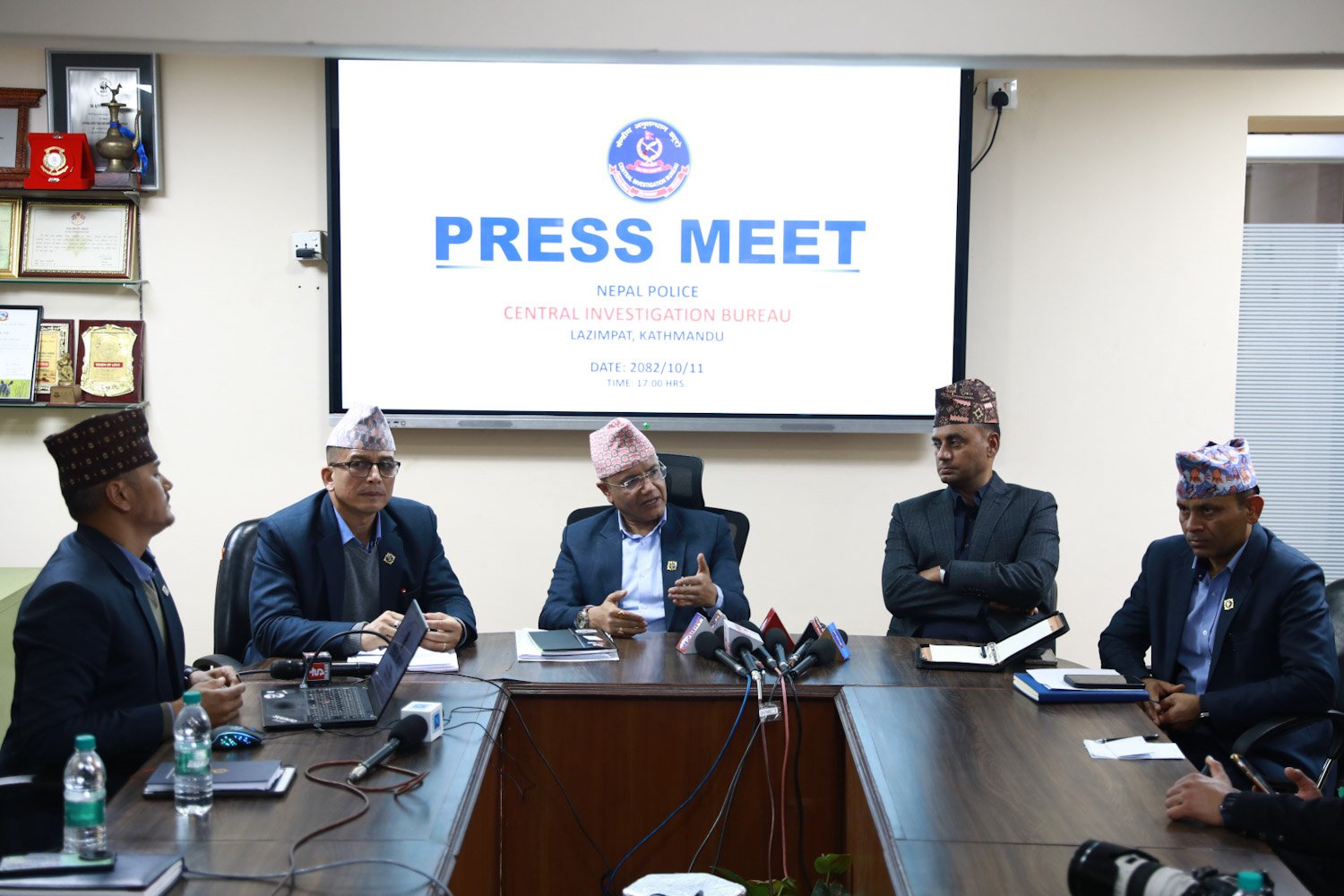
The CIB announced that further investigation will proceed in the next phase. The scope of this case could potentially include helicopter companies, hospitals, guides, and even travelers.
- What Do Stakeholders Say?
No concerned association or organization has officially commented on the arrest of Nepalis in the fake rescue case so far. More than half a dozen stakeholder organizations are connected to this issue.
However, they view this investigation as a positive step. Karma Sherpa, Vice President of the Trekking Agencies' Association of Nepal (TAAN), stated that while the investigation should have happened five to seven years ago, the process moving forward now is positive. He emphasized that while there is no doubt that the guilty parties involved in this case should face action, innocent individuals must not be punished.
The view of Nima Nuru Sherpa, former President of the Nepal Mountaineering Association, is similar. He said that the investigation and action taken by the investigating body based on evidence are positive, and this will help remove the stain on Nepal's tourism sector and improve its image.
This specific news has been automatically translated by AI. As a result, there may be some inaccuracies or language errors.