AI's Thirst for Water: Data Centers Pose Growing Public Health Risks Amid Expansion


As data centers, which consume vast amounts of water globally, expand, their impact on sanitation, inequality, and disease is emerging as a serious and under-addressed threat.
The word most associated with 'AI' (Artificial Intelligence) right now is perhaps 'bubble'. But we are slowly realizing that this is not just an economic time bomb; it also carries a significant risk to public health.
Beyond emitting pollutants, the immense amount of clean water required by AI data centers can increase sanitation shortages and enteric diseases in nearby communities, further burdening local health infrastructure.
- AI's energy consumption is massive, and it is becoming increasingly water-dependent
Generative AI, which can create new text, photos, code, etc., has entered the lives of many people worldwide. Statistics show that ChatGPT alone receives about a billion queries in a single day, indicating its huge demand at a personal level.
However, this is just a small part of the problem. Companies like Google, Apple, and Microsoft are now incorporating AI into their core products.
AI is being established as the new standard for search engine results. Whether shopping on Amazon or booking flights and hotels, AI is now used for searching, and this demands a lot of energy. For example, an AI-powered Google search is estimated to consume 30 times more energy than a normal search.
As a solution, the industry is currently using Graphics Processing Units (GPUs). These chips consume a lot of energy and generate heat. While thousands of small cores in GPUs help perform the vast and repetitive mathematical tasks done by AI algorithms, a single chip can use up to 700 watts of energy. This means just three chips consume as much energy as a household electric oven.
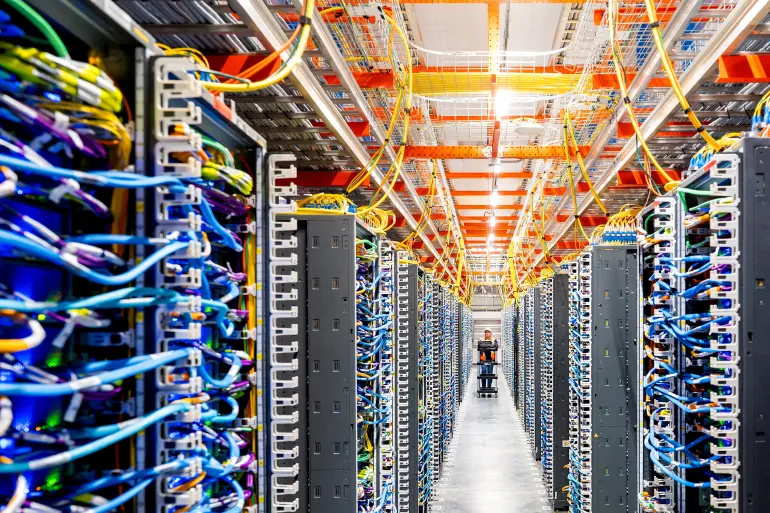
Millions of gallons of clean water are used daily to cool this massive amount of heat discharged from data centers. Thousands of hot chips stacked together cannot be cooled by ordinary fans. Therefore, water is pumped between and around the chips to prevent the system from overheating. According to a recent report by the UK's 'Government Digital Sustainability Alliance', AI is projected to increase global water consumption from 1.1 billion cubic meters to 6.6 billion cubic meters by 2027.
Some companies are attempting to use seawater for cooling. However, clean water is still widely used in most facilities. Water reprocessing is another alternative, but it is not easy.
Some companies use 'closed-loop systems' to reduce overall water consumption. However, dust and minerals accumulating during the cooling process degrade water quality over time, necessitating treatment or water replacement.
- How does AI-induced water scarcity endanger public health?
Where water scarcity already exists, placing data centers adds a burden to health services even before pollution issues arise. In 2023, Microsoft reported that 41 percent of its water withdrawal came from water-stressed areas.
On the other hand, Google stated that 15 percent of its water consumption was in high water-stress regions. Amazon has not published comparable statistics.
It is already established that water scarcity leads to infection, malnutrition, and reduced sanitation. Although most studies focus on already poor areas, data centers are often planned for construction in such locations.
When clean water becomes scarce for the local population, households are forced to prioritize drinking and cooking over washing hands, cleaning food, or bathing. Naturally, this leaves less water available for domestic sanitation.
The World Health Organization (WHO) acknowledges that unsafe drinking water and poor sanitation and hygiene help spread cholera and other diarrheal diseases, along with various pathogens. Worse still, many diseases linked to water scarcity are transmitted from one person to another, increasing the risk of local infection spread.
The health impact on children is particularly worrying, as they have higher rates of infection and mortality compared to adults. In fact, children under five bear 84 percent of the global burden of diarrheal disease, and diarrheal infection is linked to impaired cognitive development in later childhood.
While it may be premature to establish a direct cause-and-effect relationship between AI data centers and waterborne diseases, the known facts make this a serious concern. It is already established that AI data centers can significantly deplete local water supplies. It is also established that communities with reduced water access face a higher risk of enteric diseases and other illnesses.
Stating that AI data centers are directly causing enteric diseases might be an oversimplification. However, it is becoming harder to ignore the warning signs. When risks are foreseeable and serious, governments should not wait for people to start dying before implementing preventative policies.

- Marginalized communities complain about polluted water
Meta has built an AI data center in Newton County, Georgia, USA, where residents have complained about muddy, murky water coming out of their taps, which they link to the facility.
Similarly, residents in Fayette County have also reported seeing sediment in their water, which they believe coincides with the construction of a nearby data center. Another report from California raised concerns that a planned data center in Bayview-Hunters Point in the San Francisco Bay Area would add environmental burdens to an already polluted community. In all these instances, there is a significant presence of Black and African American populations, raising questions of 'environmental justice'.
Water contamination can lead to acute gastrointestinal illnesses and long-term problems like cancer in humans. Microbial pollution can cause immediate illness through toxicity, while chemical residues are associated with long-term harm, often acting as slow, invisible threats.
With plans to open data centers in African countries like Nigeria, Egypt, and South Africa, further questions arise about who will bear the environmental impact and whether affected communities will receive adequate protection or support. In some of these countries, weak regulations make this uncertain. In many cases, the severe impacts on communities may go unreported.

- Why are corporate promises and regulation important?
Only 0.5 percent of the Earth's total water is freshwater. Water is needed not just for data centers, but also for the power plants that generate the electricity to run them. Water is also required in the manufacturing of chips and wires, making water usage an issue for the entire AI supply chain, not just data centers.
Many companies are making sustainability promises; some even claim to aim to become 'net water producers' or 'water positive'. Even if such goals are achieved (which is doubtful), they must benefit the communities from which the water is extracted. In places like Newton County, depleting local supply to provide more water to affluent areas might fulfill corporate accounting standards, but local residents will suffer the consequences.
To fulfill their moral obligation to the public, governments must keep pace with the rate of AI expansion and data center construction. A healthy population is a productive one, and reducing the burden of public health lowers government expenditure and aids development. More fundamentally, it is our collective moral duty to build a sustainable future for the coming generations by safeguarding water security and averting environmental catastrophe.
This should begin with legislation mandating transparent corporate reporting on water usage and implementing meaningful standards for sustainable management. Regulation must prioritize human welfare over short-term, exploitative technological development. Like climate change, unchecked innovation risks causing further harm to both people and the planet.
This specific news has been automatically translated by AI. As a result, there may be some inaccuracies or language errors.
_JVkBEtcczA.jpg)