Remembering Gajendra Narayan Singh on the 24th Anniversary of His Demise
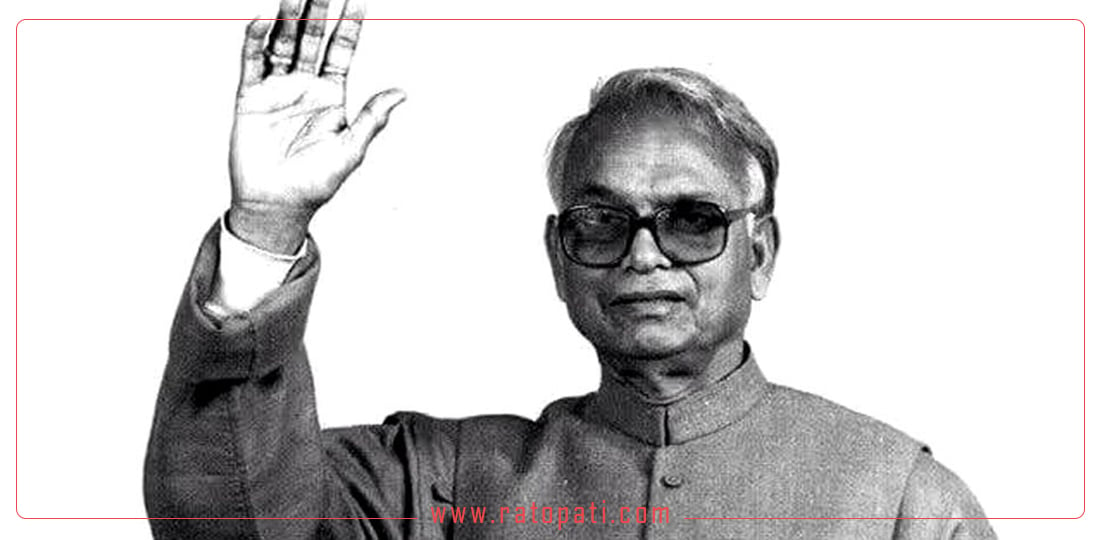
Twenty-four years have passed since the death of Gajendra Narayan Singh, the founding chairman of the Nepal Sadbhavana Party and a Madhesi leader. He passed away on Magh 10, 2058 BS, due to a heart attack. In the two decades since his passing, the country's national politics has seen many ups and downs.
The constitution has been drafted through a popularly elected Constituent Assembly. A Federal Democratic Republic has been established in the country. The people are now experiencing sustained peace with political stability prevailing.
The values, principles, and ideology upon which Gajendra Narayan Singh based his politics have now been discredited. Even his own followers have prioritized dynastic and caste-based politics, treating the Madhes issue as a means of personal gain. A few years ago, the Madhes Province Parliament declared the Madhes Province with a two-thirds majority, but if Gajendra Babu had been alive, such a naming would certainly not have occurred.
Many of the demands he put forward after establishing the Nepal Sadbhavana Party in 2047 BS have been addressed, while some of his own Madhesi colleagues are no longer serious about other demands.
Gajendra Narayan Singh was a Madhesi leader, but the nation and democracy were paramount to him. Honesty, morality, integrity, discipline, and love for the Dalits were his primary political weapons. He was a staunch opponent of casteism, nepotism, and corruption. He chose the path of peaceful struggle to resolve Madhesi problems. He desired that the Madhesi issues be resolved within the geographical boundaries of Nepal and under the country's constitution. He wished to see an end to the economic, social, and political inequality rampant in the nation.
Currently, about five years have passed since the Nepal Sadbhavana Party established by him ceased to exist. The political greeting he championed, 'Jai Matrubhumi!' (Hail Motherland!), has also been abandoned. Gajendra Narayan Singh's name is now proving to be nothing more than a source of income for a few individuals. Those who dismantled the political party he founded are now establishing institutions and trusts in his name, earning money under the guise of these organizations. A political figure lives on through their ideas, not through hospitals and schools named after them. Mahatma Gandhi, Marx, Lenin, the late B.P. Koirala, and Madan Bhandari are considered ideal figures because of their ideologies, not because of hospitals or schools.
Gajendra Narayan Singh's political journey began with active participation in the movement against the Rana regime. He started his political career affiliated with the Nepali Congress. In the 2015 general election, he was the District President of the Nepali Congress in Saptari. After the events of 2017, he went to India. Due to his democratic stance, he was imprisoned multiple times. His mother passed away while he was in jail. The police allowed him to attend his mother's cremation while still handcuffed.
While he was alive, the term 'Madhesism' was never used in Nepali politics. Currently, there is an campaign underway to erase the name, the party he founded, and his contributions, but history cannot forget the contributions of those who considered the welfare of the nation and society paramount.
That same day, the police arrested him again. His only son passed away while he was in custody. Thereafter, he remained without descendants for the rest of his life. Around 2032 BS, following disagreements with some top leaders of the Nepali Congress, he co-founded the Purwanchal Congress with Bhadrakali Mishra. In 2036 BS, he openly supported the multi-party parliamentary system, but the non-party system won that election.
In 2040 BS, the Panchayat rulers formed a commission under the chairmanship of demographer Dr. Harka Bahadur Gurung to investigate the reasons for the growing population in the country. Gajendra Narayan Singh, along with Ram Janam Tiwari, submitted a memorandum to the Royal Palace opposing the commission's report. Protests against this report also took place in the district headquarters of the Terai-Madhes region. Eventually, the report was not implemented. Around that time, he formed the Nepal Sadbhavana Parishad, whose objective was the development of the language and culture of the Terai-Madhes. In the 2043 general election, he was elected as a member of the National Panchayat from Saptari. As a member of the National Panchayat, he praised the King but in every address, he opposed the existing economic, social, and political discrimination and demanded its end.
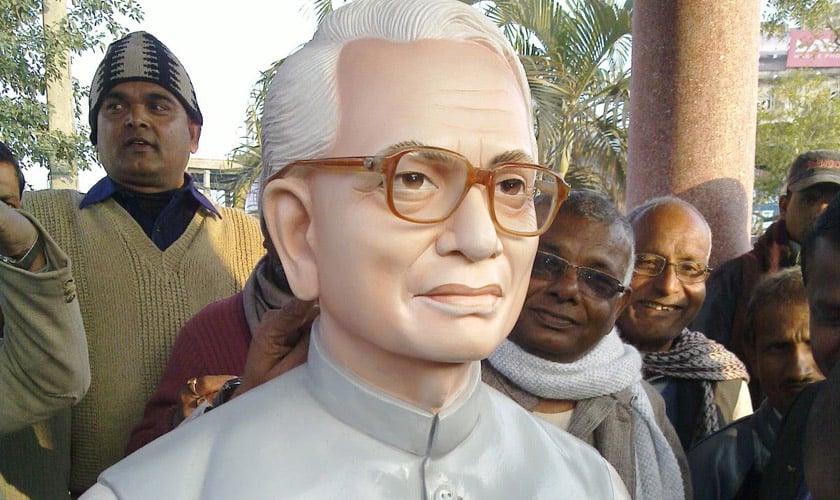
At the end of 2046 BS, leaders and cadres of the Nepal Sadbhavana Parishad also participated in the anti-Panchayat movement. Following the success of the popular movement, the Nepal Sadbhavana Party was established in the first week of Baisakh 2047 BS. Gajendra Narayan Singh was unanimously elected as the party chairman in the Janakpur convention of 2047 BS, the Birgunj convention of 2050 BS, and the Biratnagar convention of 2054 BS.
Among the important demands Gajendra Narayan put forward when establishing the Nepal Sadbhavana Party, the resolution of the citizenship issue has been addressed, and reservation (proportional inclusion) has been implemented for Madhesis, Dalits, Khas Aryas, women, and Janajatis in the country.
He advocated for five provinces in Nepal based on social, economic, and community homogeneity: Eastern Hills, Eastern Terai, Kathmandu Valley, Western Hills, and Western Terai, but that did not materialize. Now, the Madhes Province comprising eight districts has been declared. The country moving towards a federal structure is also the realization of Gajendra Narayan Singh's dream.
His significant demand regarding the formation of electoral constituencies based on population has also been nearly addressed. The government has adopted a flexible policy towards the entry of Madhesi youth into the Nepali Army. Many Madhesi youths have joined the army in the last three decades. The path to entry into the army is generally not as easy and straightforward as in the police force because it requires rigorous physical training and exercises. Perhaps that is why educated Madhesi youth tend to focus more on jobs in teaching, administration, and technical fields.
The Federal Democratic system of governance is considered the best system in the world to date because the government is formed under the leadership of popularly elected representatives. These elected representatives are accountable to the country's parliament. Some of the major issues raised by Gajendra Narayan Singh, such as providing Madhesi landless people with the same facilities as other squatters for settlement, granting Hindi the status of Nepal's second national language, and provision of primary education in the mother tongue, do not seem to be of high priority currently.

Gajendra Narayan Singh desired solutions to problems through peaceful and non-violent politics. While he was alive, no armed groups existed in the Terai-Madhes, nor did anyone talk about national disintegration. While he was alive, his party never resorted to protests like bandhs, strikes, or violent demonstrations. In 2050 BS, Gajendra Narayan Singh himself went on a hunger strike for nine days in the capital Kathmandu, and in 2055 BS, party leaders observed a fast-unto-death for ten days. Gajendra Narayan Singh was the one who brought the politics of hunger strikes to prominence in Nepal. It is a different matter that political party hunger strikes have proven weak compared to the fasts observed by Dr. Govinda KC.
Gajendra Narayan Singh was a staunch opponent of casteism, nepotism, and corruption. He was a proponent of Nepal-India friendship. His contributions toward establishing democracy, federalism, and social justice in the country will always be unforgettable. While he was alive, the term 'Madhesism' was not used in Nepali politics. Currently, there is an campaign underway to erase the name, the party he founded, and his contributions, but history cannot forget the contributions of those who considered the welfare of the nation and society paramount.
This specific news has been automatically translated by AI. As a result, there may be some inaccuracies or language errors.