China's trade with US shrinks as tariff war worsens
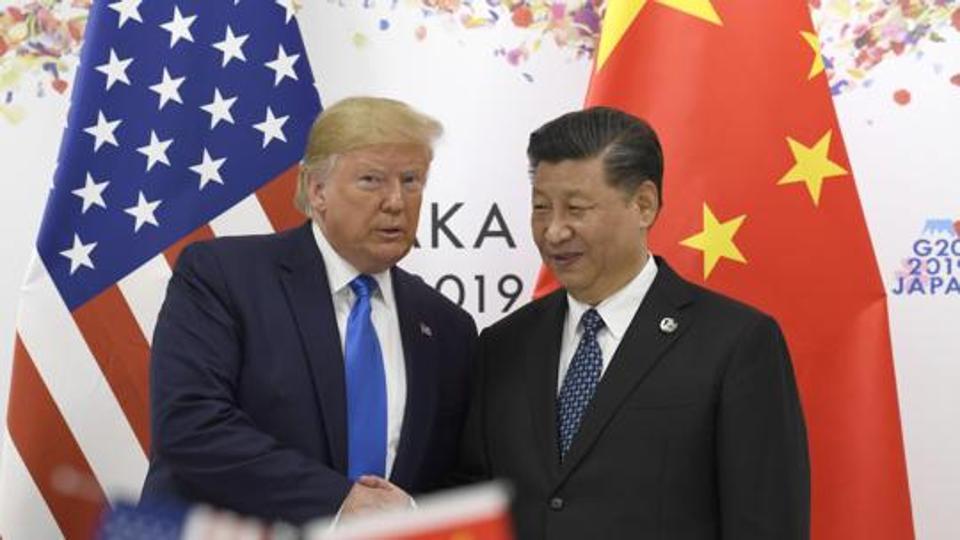
BEIJING–China's trade with the United States is falling sharply as the two sides prepare for more negotiations with no sign of progress toward ending a worsening tariff war that threatens global economic growth.

Imports of U.S. goods fell 22% in August from a year earlier to $10.3 billion following Chinese tariff hikes and orders to companies to cancel orders, customs data showed Sunday.

Exports to the United States, China's biggest market, sank 16% to $44.4 billion under pressure from punitive tariffs imposed by President Donald Trump in a fight over Beijing's trade surplus and technology ambitions.

Beijing is balking at U.S. pressure to roll back plans for government-led creation of global competitors in robotics and other industries.

The United States, Europe, Japan and other trading partners say those plans violate China's market-opening commitments and are based on stealing or pressuring companies to hand over technology. U.S. and Chinese tariff hikes on billions of dollars of each other's imports have disrupted trade in goods from soybeans to medical equipment and battered traders on both sides.

Chinese exporters also face pressure from weakening global consumer demand at a time when Beijing is telling them to find other markets to replace the U.S.China's politically sensitive trade surplus with the U.S. narrowed to $31.3 billion in August from $27 billion a year earlier. China's global exports fell 3% to $214.8 billion, while imports were up 1.7% at $180 billion.

For the first eight months of 2019, exports were off 1% from a year earlier and imports were down 5.6%. China's global trade surplus rose 25% from a year earlier to $34.8 billion.

Exports to the European Union rose 3% from a year earlier to $38.3 billion. U.S. and Chinese negotiators are preparing for talks in October, later than initially planned, but neither side has given any sign of offering concessions that might break a deadlock over how to enforce a deal.Beijing says Trump's punitive tariffs must be lifted once an agreement takes effect. Washington says some must stay to ensure Beijing carries out any promises it makes.

The decision to go ahead with talks despite the latest tit-for-tat tariff hikes on Sept. 1 encouraged global financial markets. In their latest escalation, Washington imposed 15% tariffs on $112 billion of Chinese imports and plans to hit another $160 billion on Dec. 15. That would extend penalties to almost everything the United States buys from China. Beijing responded by imposing duties of 10% and 5% on a range of American imports.

More increases are due on Dec. 15 in line with the U.S. penalties.U.S. tariffs of 25% imposed previously on $250 billion of Chinese goods are due to rise to 30% on Oct. 1. China has imposed or announced penalties on an estimated $120 billion of U.S. imports. Some have been hit with increases more than once, while about $50 billion of U.S. goods is unaffected, possibly to avoid disrupting Chinese industries. Beijing also has retaliated by canceling purchases of soybeans, the biggest single U.S. export to China.

The Chinese government has agreed to narrow its trade surplus with the U.S. but is reluctant to give up development strategies it sees as a path to prosperity and global influence.

Some analysts suggest Beijing is holding out in hopes Trump will feel pressure to make a more favorable deal as his campaign for the 2020 presidential election picks up. Trump has warned that if he is re-elected, China will face a tougher U.S. negotiating stance.

Related Articles

Koshi Province Government Allocates Budget for Small-Scale Projects Over Provincial Priorities

Koshi Province Government Allocates Budget for Small-Scale Projects Over Provincial Priorities

Biratnagar. The Ministry of Physical Infrastructure Development of the Koshi Province Government has seen a...
Nepal Rastra Bank Unveils Monetary Policy for FY 2081/82

Nepal Rastra Bank Unveils Monetary Policy for FY 2081/82

Kathmandu. Nepal Rastra Bank has unveiled the monetary policy for the current fiscal year 2081/82....
Prime Minister Balen Shah Discusses Economy with Private Sector

Prime Minister Balen Shah Discusses Economy with Private Sector

Kathmandu. Prime Minister Balen Shah has held discussions with the private sector to make the...
Prime Minister Balendra Shah Discusses Economic Reforms with Private Sector Representatives

Prime Minister Balendra Shah Discusses Economic Reforms with Private Sector Representatives

Kathmandu. Prime Minister Balendra Shah has discussed issues related to industry, business, investment environment, and...
NARC Acting Executive Director Emphasizes Integrating Farmer Experience with Modern Knowledge for Agricultural Research and Technology Development

NARC Acting Executive Director Emphasizes Integrating Farmer Experience with Modern Knowledge for Agricultural Research and Technology Development

Kathmandu. Nepal Agricultural Research Council (NARC) Acting Executive Director Dr. Shreemat Shrestha has stated that...
18 MPs Propose Amendments to Nepal Rastra Bank Bill

18 MPs Propose Amendments to Nepal Rastra Bank Bill

Kathmandu. Eighteen MPs have registered amendment proposals in the Nepal Rastra Bank (Third Amendment) Bill...
Gold and Silver Prices Decrease in Nepali Market

Gold and Silver Prices Decrease in Nepali Market

Kathmandu. On Wednesday, the prices of gold and silver decreased in the Nepali market.According to...
Prime Minister Holds Dialogue with Business Leaders on Economic Revitalization

Prime Minister Holds Dialogue with Business Leaders on Economic Revitalization

Kathmandu. Prime Minister Balendra Shah is holding a special dialogue with major industrialists and businessmen...