Nepal Begins Significant Electricity Exports to India and Bangladesh as Monsoon Arrives


Kathmandu. With the onset of the monsoon, Nepal has started exporting electricity to India and Bangladesh. While a small amount of export began in Chaitra-Baishakh, exports have started to increase with the arrival of the monsoon season.
According to the Nepal Electricity Authority, 40 megawatts of electricity has been exported to Bangladesh since last Monday. Permission was obtained on November 15, 2081 (Bikram Sambat) to export 40 megawatts of electricity to Bangladesh for five months from June 15 to November 15. Similarly, India has granted Nepal permission to export 1,165 megawatts of electricity.
According to the authority, additional electricity exports to India also began from June 15 as per the granted permission. Electricity exports from Nepal to India have significantly increased from Jestha 31, i.e., June 15.
Currently, Nepal is exporting approximately 650 megawatts of electricity daily to India and Bangladesh combined, the authority stated.
NEA Spokesperson Rajan Dhakal informed that electricity exports to India, as per bilateral agreements with Haryana and Bihar, commenced from June 15. He stated that currently, 650 megawatts of electricity is being exported daily to India through the day-ahead market and bilateral agreements.
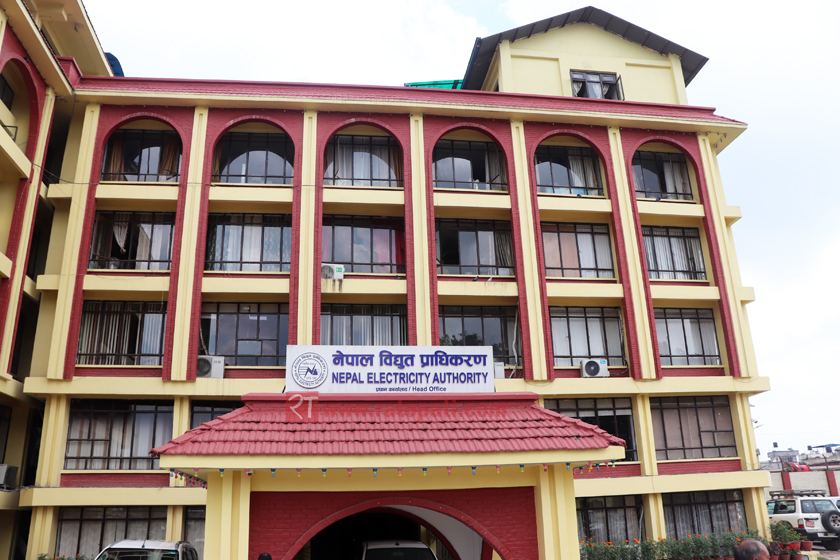
He said, 'We started exporting small amounts of electricity from the month of Baishakh. Since last Monday, we have started exporting electricity to India and Bangladesh as per the agreement. More than 600 megawatts of electricity is being exported to India. 40 megawatts of electricity export has started to Bangladesh.'
The authority has received permission to sell 1,125 megawatts of electricity in the Indian market alone. The average price for electricity sold to India is 5.25 to 5.45 Indian Rupees per unit.
The authority officially started selling electricity to India from Kartik 16, 2078 (Bikram Sambat). Initially, Nepal received permission to sell 39 megawatts, and now it has received approval to sell a total of 1,165 megawatts of electricity to India and Bangladesh.
According to the authority, in the nine months from Shrawan to Chaitra of the current fiscal year 2082/83 (Bikram Sambat), an income of 20 billion 415.6 million has been earned by selling electricity to India and Bangladesh. During the same period, Nepal imported electricity worth seven billion 390 million from India.
In the five months from Shrawan to Mangsir alone, Nepal exported a total of two thousand 714 gigawatt-hours of electricity. Currently, Nepal's installed electricity generation capacity has reached approximately 4,300 megawatts.
The government has set a target of generating 1,040 megawatts of electricity in the upcoming fiscal year. If this target is achieved, the total capacity will exceed 5,500 megawatts in the next fiscal year.
According to the authority, with the onset of the monsoon, electricity generation from the authority, its subsidiary companies, and the private sector is currently around 2,500 megawatts.
The authority states that the current electricity demand is over 60,000 megawatt-hours. The domestic consumption is 43,502 megawatt-hours. During peak demand, the domestic demand is only 2,176 megawatts, so the remaining electricity is being exported to India, the authority said.
However, as soon as the dry season begins, Nepal's domestic production decreases. With reduced production, Nepal imports electricity from India. Since last year, Nepal has been establishing itself as a net electricity exporting country. Electricity exports usually begin from the month of Mangsir every year. Most of Nepal's hydropower projects are run-of-river (RoR), which allows for full capacity production during the monsoon. In winter, electricity production is only around 20-30 percent of capacity.
_ogYMb2L0gc.jpg)
- Technical Hurdles in Bangladesh Exports
While exports to India are encouraging, the plan for electricity trade with Bangladesh appears somewhat slow. Nepal had aimed to increase the current export of 40 megawatts to Bangladesh by an additional 20 megawatts, reaching 60 megawatts.
Permission was obtained on November 15, 2081 (Bikram Sambat) to export 40 megawatts of electricity to Bangladesh for five months from June 15 to November 15. The authority has permission to export a total of 40 megawatts to Bangladesh, comprising 18.60 megawatts from the Trishuli hydropower project and 21.40 megawatts from the Chilime hydropower project.
However, this process has been halted as India's Central Electricity Authority (CEA) has not granted approval for further exports, citing a lack of capacity in the India-Bangladesh transmission line.
According to NEA Spokesperson Dhakal, the process has not moved forward due to the recently concluded general elections in India and the subsequent inability of bilateral mechanisms to convene meetings. 'The process of exporting to Bangladesh has not gained momentum due to delays in convening the mechanism meeting,' he said. 'The Ministry of Energy is coordinating for the meeting, and once it is held, this issue will be resolved.'
Nepal sells electricity to Bangladesh at a rate of 6.40 US cents per unit. If approval for an additional 20 megawatts is granted, exports will increase at the same rate.
Since Nepal and Bangladesh do not share a border, electricity must be sold using Indian infrastructure, which requires Indian approval. As per Indian approval, the electricity from two projects is permitted for export to Bangladesh until October 2, 2029.
However, Spokesperson Dhakal informed that this plan cannot be implemented immediately due to the lack of further transit and trade approvals from India.
According to the authority, approximately 147 gigawatt-hours of electricity were exported to Bangladesh from mid-June to mid-November last year. As per the agreement, electricity is being sold to Bangladesh at a rate of approximately 8.64 Rupees (6.40 US cents) per unit.
Nepal earned 9.436 million US dollars in five months last year. The 'wheeling charge' for using India's NVVN transmission line is borne by the Bangladeshi company.
Nepal sells electricity to India based on a meter installed at Muzaffarpur, India. The transmission loss incurred while exporting electricity to India from Muzaffarpur will be borne by the authority. Similarly, the electricity loss from Muzaffarpur to the Bangladesh border will be borne by the Bangladeshi side.
Nepal's electricity is delivered to Bangladesh via the 400 KV transmission line between Bahrampur (India) and Bheramara (Bangladesh).
This specific news has been automatically translated by AI. As a result, there may be some inaccuracies or language errors.