World Hepatitis Day: Raising Awareness and Combating Liver Disease

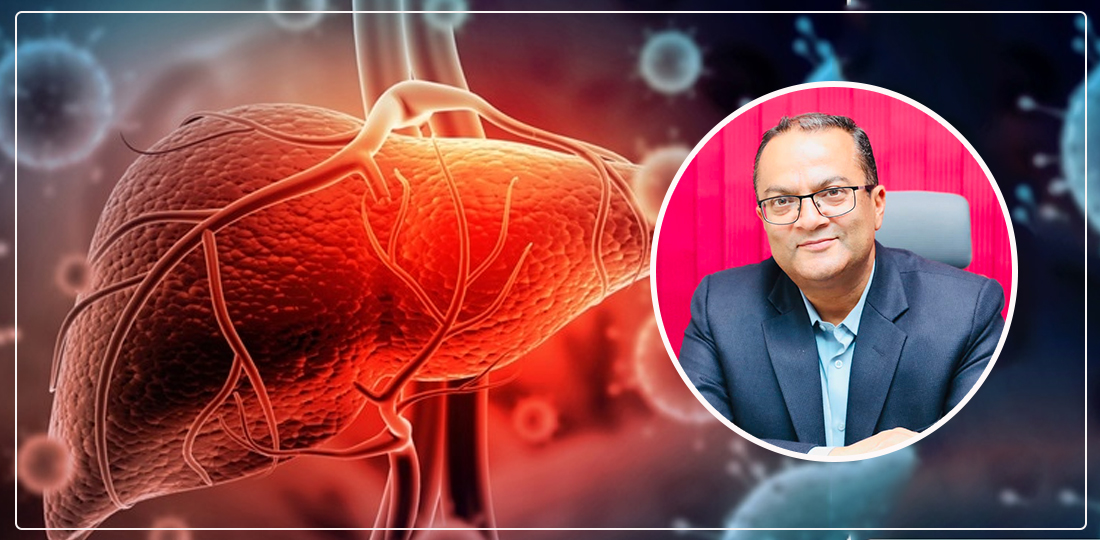
World Hepatitis Day, celebrated every year on July 28, is an opportunity to unite worldwide to reduce the risk of viral hepatitis and increase public awareness. Currently, this disease has become a serious global health challenge. Like HIV AIDS, malaria, and tuberculosis, hepatitis is also a dreadful disease that claims lives worldwide. In this context, we have a conversation with liver disease specialist Prof. Dr. Dilip Sharma.
It is World Hepatitis Day. Please tell us about the relevance of this day.
Every year, the World Health Organization celebrates July 28 as World Hepatitis Day. This day is celebrated on the birthday of the scientist Bloomberg, who discovered the Hepatitis B virus surface antigen. Its special purpose is to raise awareness about hepatitis in society. Even now, hepatitis is considered a stigma, a taboo, leading people to hide it, not seek timely treatment, and consequently, not get treated when the disease progresses. Since a large segment of the community only comes to the hospital when the problem is severe, this day is celebrated to raise awareness with the aim of overcoming the obstacles in hepatitis treatment.
Today, about 300 million people are living with chronic hepatitis. Hepatitis B and Hepatitis C are hepatitis viruses that have long-term effects on the body. There are also Hepatitis A and E, which are caused by contaminated water or lack of sanitation. In developing countries, most people understand this as jaundice.
Especially with improvements in sanitation, viruses like Hepatitis A and E have been seen to decrease, but the problem is still severe. More concerningly, patients with Hepatitis B and C still hesitate to get tested, believing there is no cure or that it doesn't cause significant harm, leading to liver cirrhosis or even cancer later on. Therefore, we celebrate this day to raise awareness in society.
Just as other infectious diseases are prioritized, for example, the government has given importance to HIV AIDS and made it a public health issue, hepatitis is not treated with the same significance. Therefore, in recent years, the World Health Organization has given more priority to hepatitis and organized various programs. We also organize programs on this day at various places, including Bir Hospital.
How can one identify if they have hepatitis?
There are three aspects to this. First, people who are engaged in 'high-risk behavior,' such as those working in the medical field, construction workers, sex workers, or individuals with a family history of Hepatitis B or a family member who has died from liver disease, should undergo screening.

Second, in the current context, during antenatal checkups for pregnant women, it is often detected whether they have Hepatitis B. Similarly, it is also detected during health checkups for those going abroad for employment. In most cases, its symptoms are not apparent in the early stages. Therefore, if a screening system can be established in high-risk communities or in certain districts of Nepal (hilly, mountainous, or terai regions) where its prevalence is high, significant loss of life and property can be prevented.
Among the different types of hepatitis (A, B, C, D, E), which is considered more risky? And how do their modes of transmission differ?
There are mainly five types of hepatitis viruses—from A to E. Among these, A and E are transmitted through contaminated water and food. In the case of Hepatitis E, most people recover on their own with good food and rest.
Hepatitis B, C, and D can lead to chronic infections. In the case of Hepatitis C, it can be completely cured with 12 weeks of medication. For Hepatitis B, long-term medication is required. Therefore, since Hepatitis B and C have long-term effects, they need to be focused on more.
Regarding the mode of transmission, B and C are transmitted from one person to another (who has not been vaccinated) through bodily fluids, unsafe needles, blood, or blood products.
Although we screen blood donations and transfusions, we also need to pay attention to the quality of the kits used and whether they provide accurate reports. The main thing is to spread awareness among citizens.
What should be done to prevent this?
Individuals should pay special attention to their diet to keep their liver healthy. We advise infected individuals to avoid alcohol. One should not consume unverified medicines that can damage the liver. There is a misconception in our society that herbs or traditional remedies can cure it; such things should not be consumed.
Another point is the misconception that one should not eat turmeric or be very restrictive with food after developing jaundice. Except for prohibited items (like alcohol), all clean and healthy foods can be consumed. Patients with hepatitis should get tested in time and consult a doctor to determine the type of their infection.
If it is a type that has long-term effects, follow-up should be done accordingly, and if it is acute hepatitis, it should be treated accordingly. To keep the liver healthy, alcohol consumption should be avoided. Most importantly, the scope of testing should be expanded, and medical consultation should be sought promptly.
This specific news has been automatically translated by AI. As a result, there may be some inaccuracies or language errors.