Six Ways to Get Children to Eat Vegetables

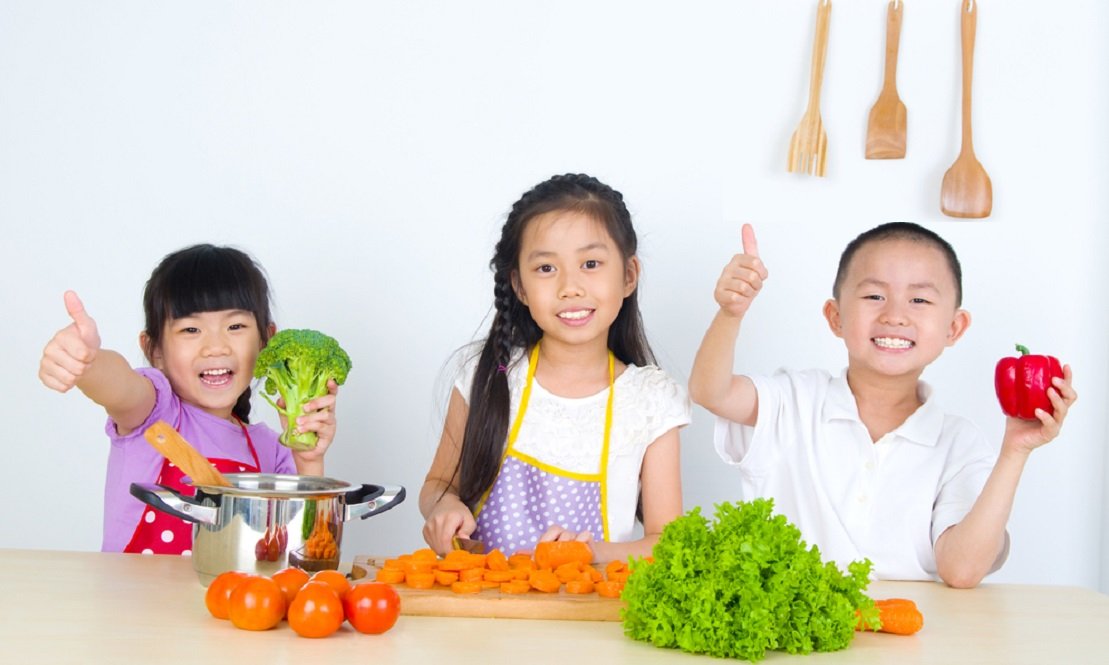
Small changes related to daily food can have a long-term impact on what children eat in the future.
Feeding children enough vegetables is a challenge for many parents. Questions like, 'My child only eats white or pale colored foods, is this normal?' are often seen in online discussions and forums among parents.
One of the main reasons for this is that children's preference for sweet taste develops from birth. Mother's milk also has a natural sugar, so its taste is sweet. Then, when the child starts eating solid food, making them eat a piece of broccoli or a spoonful of spinach can be very difficult.
However, for healthy development, children need to eat a varied diet that includes plenty of fruits and vegetables. Unbalanced eating can affect their thinking ability, concentration, behavior, and even their school studies.
Studies have shown that increasing obesity in children not only leads to long-term health problems but also affects academic achievement. The good news is that scientists are exploring new ways to improve children's eating habits. Research has also identified some effective methods that can be easily adopted at home.
1. Repeatedly introduce vegetables
According to Marion Hetherington, Professor of Biopsychology at the University of Leeds, UK, trying to feed children a variety of vegetables repeatedly from an early age plays a big role in increasing their interest in vegetables.
According to her, the pre-school age is the most suitable time to develop a liking for vegetables. She says, 'If a child is not introduced to various vegetables by the age of five, it becomes very difficult afterwards. Not impossible, but it requires a lot of effort.'
Various studies have shown that a child needs to see and eat a new food many times before accepting it.
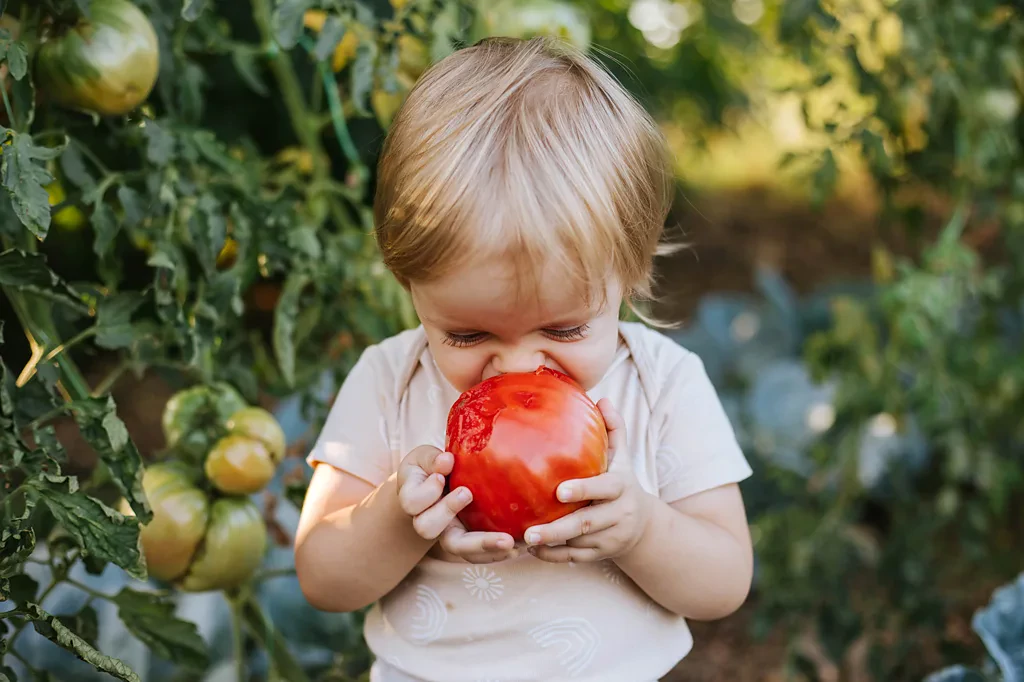
However, studies are not unanimous on how many times it should be offered. Some studies suggest five times is enough, while others say it may take up to 15 attempts. This is because each child's temperament is different.
For children under one year of age, fewer attempts may be sufficient to accept a new food. However, children aged three to four years may have a greater tendency towards food neophobia (hesitation to eat new foods), so more attempts may be needed for them.
This process starts even before birth
Research has shown that the taste of food eaten by pregnant mothers can reach the fetus through amniotic fluid.
This can also affect the child's future taste and eating preferences.
2. Serve vegetables first
Trying to make children eat vegetables by simply saying 'it's good for health' can be counterproductive. Research suggests that children are more likely to choose foods identified as 'tasty' over those labeled 'healthy'. Therefore, offering vegetables when the child is most hungry, right at the start of the meal, can be effective.
Hetherington says, 'A child eats their favorite food first. By the time they get to spinach or peas, they are no longer hungry.' Therefore, it is advisable to offer vegetables first to avoid competition with other high-calorie dishes.

According to Barbara Rolls, Professor of Nutritional Sciences at Pennsylvania State University, USA, starting the meal with vegetables can also reduce the likelihood of a child overeating.
Although eating vegetables for breakfast is less common in Western countries, scientists say it is possible.
For example, spinach and mushrooms can be added to omelets, or vegetables can be included in breakfast muffins.
A 2023 study in eight UK childcare centers showed that when vegetables were offered at breakfast, children ate them on more than 60 percent of occasions.
3. Increase the portion of healthy foods
If serving vegetables at the beginning of the meal or breakfast is not possible, another option is to change the proportion of dishes on the plate. That is, reduce the amount of high-calorie foods and increase the amount of vegetables.
For this, vegetables can be served as a larger side dish. Or vegetables like carrots and zucchini can be grated and mixed into sauces or other dishes.
Research shows that people tend to eat a similar amount of food (volume). So, by serving less meat and more vegetables, they naturally eat more vegetables.
One study found that increasing the portion of fruits and vegetables on a child's plate by 50 percent led to a significant increase in their intake.
4. Make vegetables look attractive
How children perceive food also greatly influences their decision to eat it or not. We evaluate food with our eyes before eating it. When there are many options, children tend to choose the food that looks most familiar and attractive to them. Therefore, how vegetables are presented can also encourage them to eat more vegetables.
In one study, researchers found that children showed more interest in eating new foods when they were artistically arranged on the plate.
Other research has also shown that children tend to eat vegetables and fruits with more enthusiasm when they are cut into fun shapes like butterflies, flowers, or teddy bears.
In other words, making healthy food fun and attractive increases its acceptability. Research also shows another important point: if healthy foods are placed in easily visible and accessible locations, children will eat more of them.
In a study of children aged 10 to 13, when different types of vegetables were placed in separate small portions within the same container, they chose and ate more vegetables. Conversely, when the same vegetable was placed on different plates, their interest was lower.
Similarly, research has shown that preschool-aged children ate 36 percent more vegetables when served food on plates divided into different sections.
5. Eat meals with family
The food parents eat has a huge impact on children's eating habits. If parents frequently eat unhealthy snacks, children are more likely to adopt the same behavior. Similarly, if parents eat a lot of fast food or skip breakfast, children are highly likely to develop the same habits.
A study of schoolchildren in New Zealand showed that children of parents who ate a healthy diet consumed fewer cakes, chocolates, and other unhealthy snacks.
Likewise, research has confirmed that children of parents who regularly eat healthy food and set an example tend to like fruits and vegetables even more.
Benefits of eating together
Children who eat with their families at least three times a week show many positive effects. According to research, these children have more balanced body weight. Their eating habits are healthier. They are more likely to eat fruits and vegetables.
If parents also eat healthy food, the effect is even stronger. Another long-term study has shown that children who eat regularly with their families have better physical fitness, drink fewer sugary soft drinks, and have a healthier overall lifestyle.
Thus, parents adopting healthy eating habits themselves is considered one of the most effective ways to get children to like vegetables and other nutritious foods.
6. Make food fun
What children eat does not depend solely on hunger or taste. Their relationship with food is equally important. According to researchers, forcing children to eat a certain food can be counterproductive. It can not only reduce their interest in food but also lead to unhealthy eating habits in the long run.
Similarly, giving chocolates, sweets, or high-sugar and high-fat foods as rewards after eating vegetables is not a good practice. It can create the perception in the child's mind that sweets are even more valuable foods, which further increases their attraction to such foods in the future.
Introduce food through play
Instead, scientists say, let children play with food. In one study, researchers encouraged children to touch, smell, and closely examine unfamiliar vegetables and ingredients like beetroot, chickpeas, and pak choi.
However, they were not pressured to eat these foods. The results were very interesting. Children who interacted freely with the food were later more willing to taste and eat those unfamiliar foods.
Research has shown that this helps reduce fear or hesitation towards new foods.
Involve children in cooking
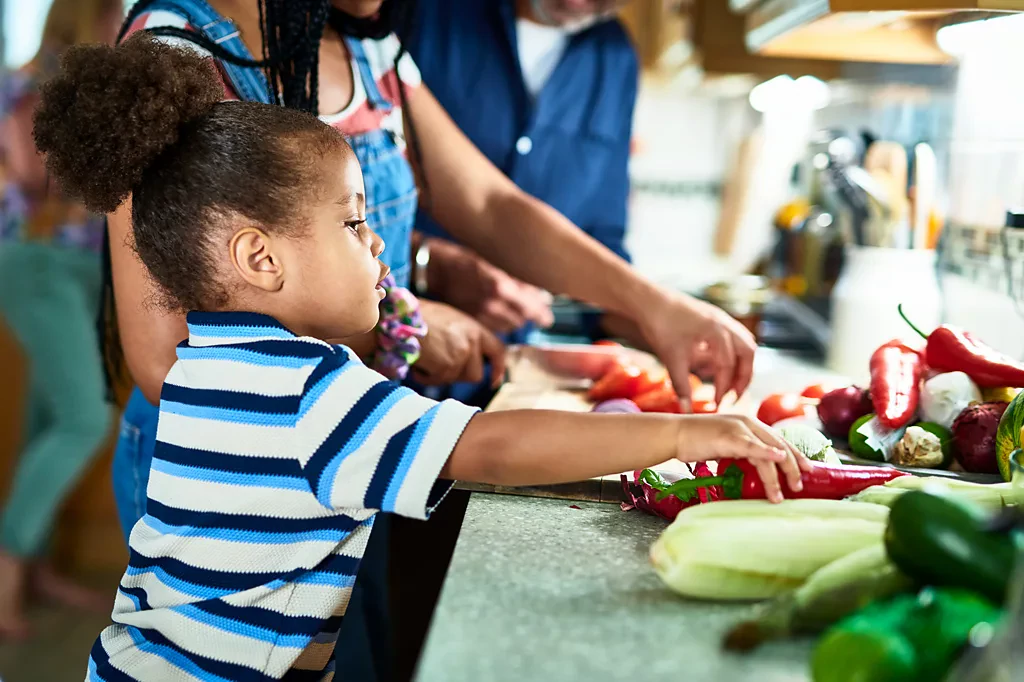
Another effective method is to involve children in the cooking process. Research shows that children who help with cooking are significantly more likely to taste foods they haven't eaten before or are unfamiliar with.
Chef Joseph Yusuf, who collaborated on this study, says, 'The main thing is to change how children experience food.'
According to him, activities that make eating like play and experience through the senses are very effective for children. He adds, 'When there is no pressure, the environment is relaxed and fun, then children are more willing to play with food, taste it, and try new things.'
Foundation for long-term healthy habits
According to experts, instilling healthy eating habits in children from an early age does not mean forcing them to eat a lot of vegetables one day. Rather, small practices like repeatedly introducing new vegetables, offering vegetables before other foods, increasing the proportion of vegetables on the plate, presenting vegetables attractively, eating together as a family, and making food a fun experience can have a lifelong positive impact on their eating habits.
Perhaps by adopting these methods, your child will not only eat white or pale colored foods but will also happily start eating fruits and vegetables of various colors.
Author: Melissa Hogenboom is a senior health correspondent for the BBC. She regularly writes on health, nutrition, and longevity lifestyles.
This specific news has been automatically translated by AI. As a result, there may be some inaccuracies or language errors.