Asian Teams Face Disappointment in Expanded 2026 FIFA World Cup
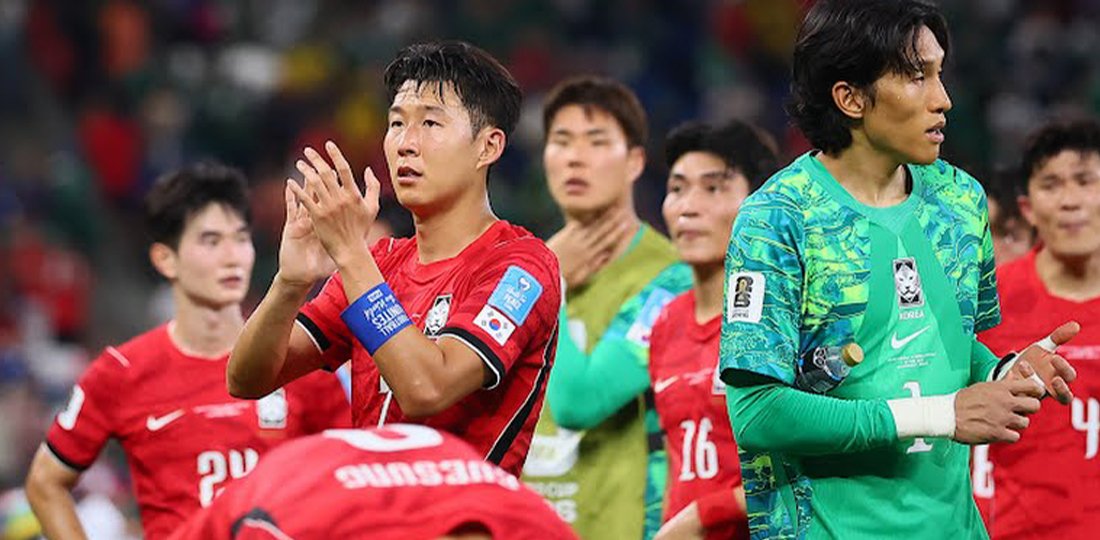
The expanded 2026 FIFA World Cup has seen the most disappointing and shameful performance by Asian nations in history.
Although a record number of 9 nations from the Asian Football Confederation (AFC) reached North America to play in the World Cup, 7 teams were eliminated in the group stage itself. Only Japan and Australia managed to qualify for the knockout stage of the final 32.
It was expected that Asian football would see a major rise after FIFA increased Asia's quota from 4.5 to 8.5 (9 including play-offs). However, 78 percent of Asian teams returned home from the first stage due to the intense pressure of the world stage and technical weaknesses, which has raised serious questions about the standard of football on the Asian continent.
What are the specific reasons for the collective failure of Asian nations in the FIFA World Cup? Why did Asian teams appear so helpless?
Historic Opportunity but Poor Results
For the first time in World Cup history, when FIFA increased the number of teams to 48, Asia benefited the most. But when the main competition began, teams considered the big powers of Asia lost points even to teams ranked much lower in the FIFA rankings. All four semi-finalists of the Asian Cup 2023 (winners Qatar, runners-up Jordan, and continental powerhouses Iran and South Korea) were eliminated from the competition without advancing from the group stage. This failure proves that there is still a huge gap between Asia's internal competition and world-class football.
Performance and Statistics of the 7 Eliminated Asian Teams
Iran (Group 'G' – Third place, 3 points, 0 goal difference): Despite remaining undefeated by drawing all three matches, they were unfortunately eliminated in ninth place in the third-place wild-card rankings.
South Korea (Group A – Third place, 3 points – 1 goal difference): Despite defeating Czechia, they were eliminated after losing to Mexico and South Africa and falling behind on goal difference.
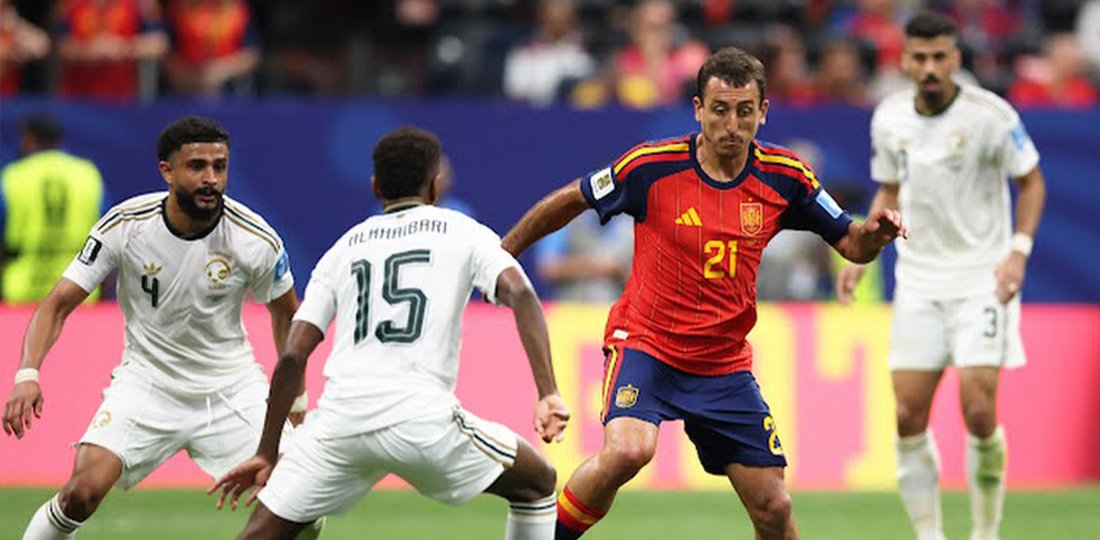
Saudi Arabia (Group H, Fourth place, 2 points, -4 goal difference): After drawing with Uruguay, they suffered a shameful 4-0 defeat against Spain and finished at the bottom of the group.
Qatar (Group B, Fourth place, 1 point, -8 goal difference): Asian champions Qatar suffered a heavy 6-0 defeat against Canada and managed to score only 1 point in 3 matches.
Jordan (Group J, Fourth place, 0 points, -5 goal difference): Jordan's lack of experience was evident in a tough group that included Argentina, Algeria, and Austria.
Uzbekistan (Group K, Fourth place, 0 points, -5 goal difference): Uzbekistan, playing in the World Cup for the first time, lost all three matches against Colombia, Portugal, and DR Congo.
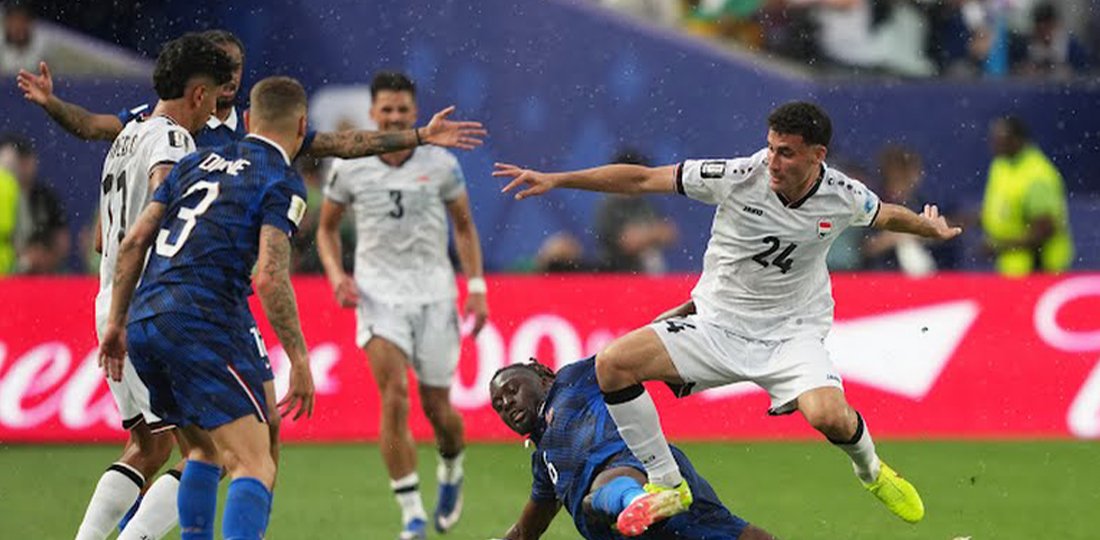
Iraq (Group I, Fourth place, 0 points, -8 goal difference): They lost to France and Norway, and were defeated by Senegal with a heavy 5-0 goal difference, finishing with zero points.
Major Disappointment: Elimination of Iran and South Korea
Asian football fans were stunned when Iran and South Korea, considered two of Asia's biggest contenders, missed out on the wild-card criteria despite finishing third.
Iran's Unfortunate Journey: Iran earned 3 points in Group 'G' after tough competitions against New Zealand (2-2), Belgium (0-0), and Egypt (1-1). However, after the African team Senegal, which also had 3 points, defeated Iraq 5-0, they improved their goal difference to +2, pushing Iran (0 goal difference) to ninth place. Consequently, Iran missed out on reaching the knockout stage by just one place.
South Korea's Weak Performance: Led by star player Son Heung-min, Korea could not maintain their reputation in the group stage. After suffering a 1-0 defeat against South Africa, Korea's chances of advancing were over, leading Korean media to label it a 'shameful exit'.
Main Reasons for This Collective Failure of Asia
According to international sports analysts, there are three main reasons for the 'flop' of Asian teams in the World Cup:
a) Lack of High-Level European Experience
Most of Japan's players regularly play in top European leagues, which allowed them to play fearlessly against the Netherlands and Sweden and reach the knockout stage. In contrast, players from teams like Qatar, Saudi Arabia, and Iraq are limited to their domestic leagues. According to Chinese sports commentator Xiao Nan, as long as Asian players do not compete in top European leagues, the technical gap with the world's top teams cannot be bridged.
b) Helplessness Against Physical Strength and High Pace
Compared to African (CAF) and South American (CONMEBOL) teams, Asian players appeared significantly weaker in physical competition. The 5-0 loss of Iraq to Senegal and the 6-0 loss of Qatar to Canada show that Asian defenses were completely unable to cope with the pace and modern counter-attacks of opposing teams.
c) Lack of Youth Player Production
Except for Japan and Australia, most other Asian countries have outdated youth football academies and player development structures. South Korea and Iran, still heavily reliant on their older, experienced players, could not handle the pressure of the world stage with the new generation.
Japan and Australia Saved Asia's Honor
Amidst this disappointing scenario, Japan and Australia have saved Asia's honor. Japan reached the knockout stage by drawing with the Netherlands (2-2), defeating Tunisia 4-0, and drawing 1-1 with Sweden, finishing second with 5 points in Group 'F'. Japan will now face Brazil in the final 32.
Similarly, Australia, despite losing to the United States, secured second place with 4 points by defeating Turkey 2-0 and drawing a crucial 0-0 with Paraguay in Group 'D'. Australia will now play Egypt in the final 32.
The 2026 World Cup has become a lesson for Asian football. This result proves that increasing the quota does not necessarily increase the level of the teams. With 90 percent of African teams (9 out of 10 teams) reaching the knockout stage, while only 22 percent of Asian teams advanced, the Asian Football Confederation (AFC) is under immense pressure to make significant improvements to its leagues and youth development strategies.
This specific news has been automatically translated by AI. As a result, there may be some inaccuracies or language errors.
_I9kqvKlvYm.png)