Government Accelerates Efforts to Revive Historic Hetauda Textile Industry


Kathmandu. The government has intensified policy and on-site preparations to revive the country's historic Hetauda Textile Industry, which has been closed for more than two decades.
The Ministry of Industry, Commerce and Supplies has stated that work is underway to bring the industry into operation within this year.
While preparing a framework for large investment to bring the sick textile industry into long-term operation, a proposal has been sent to the Ministry of Finance requesting a budget of 3.3 million rupees to repair old machines and start initial work for the immediate period.
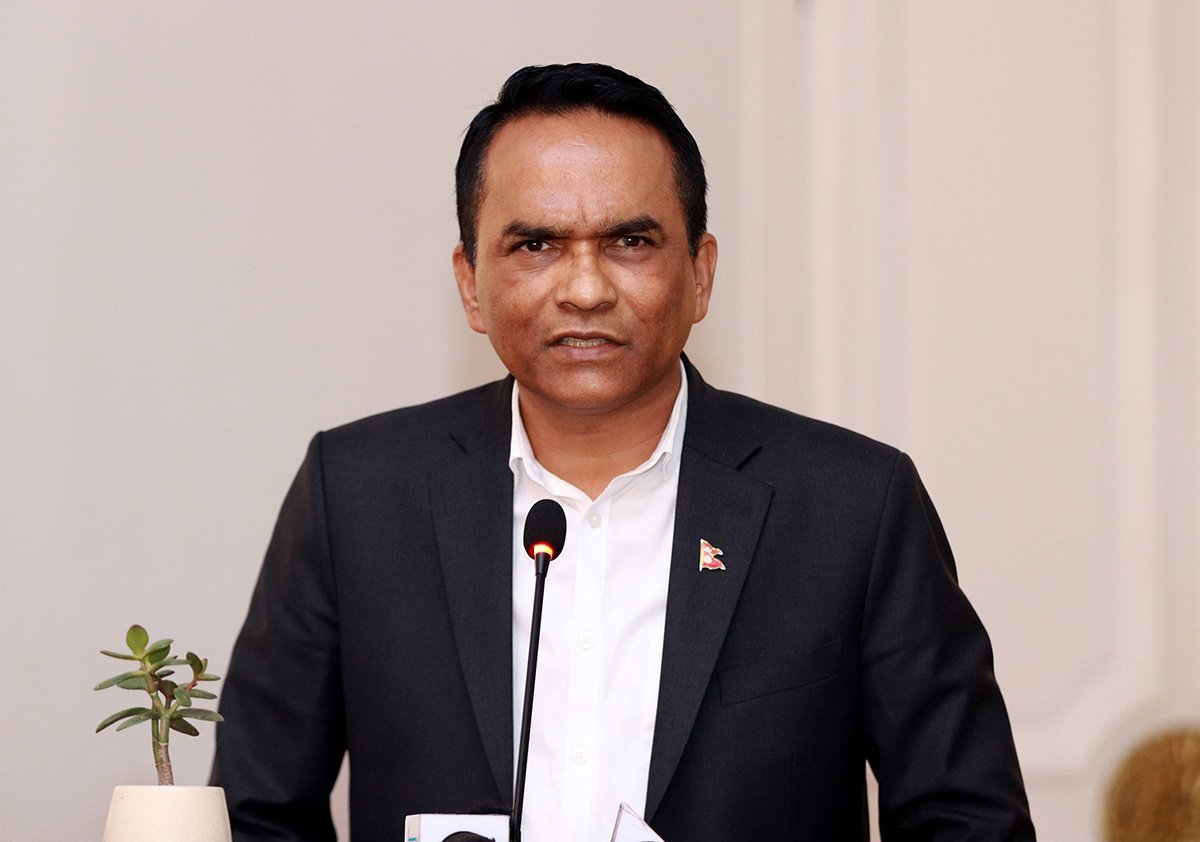
According to Netra Subedi, Joint Secretary and Spokesperson of the Ministry of Industry, after the technical assessment by the Nepali Army, an initial expenditure of 3.3 million rupees has been deemed necessary to operate the old machines immediately. However, Spokesperson Subedi stated that by repairing the old machines and starting work immediately, even if full efficiency is not achieved, it will be seen as progress from the government's side, hence the immediate option was chosen.
He said, "A budget request including 3.3 million rupees required to repair and operate the old machines immediately has been sent to the Ministry of Finance, but we have not yet received information about a decision from there."
In the long term, the ministry's conclusion is that new machinery needs to be purchased and significant improvements made to systematically manage the industry. The task force formed to study the modality of operating the sick industry has also submitted its report. Spokesperson Subedi informed that the issue of operating sick industries is also mentioned in the government's '100-day agenda', and it is being reviewed.
Minister Yadav's Commitment
Industry, Commerce and Supplies Minister Gauri Kumari Yadav, who recently visited the Hetauda Industrial Estate and inspected the industry, has pledged to bring the Hetauda Textile Industry into operation first among the sick industries.
While responding to questions on the budget of the Ministry of Industry in the House of Representatives on Asar 3, Minister Yadav said, "The Hetauda Textile Industry, which is a sick industry, will come into operation this year. In line with the government's policy to revitalize state-owned industries, the Hetauda Textile Industry has been given first priority."
Admitting that some structures of the industry have become dilapidated due to a long period of non-operation, Minister Yadav informed that the ministry is seriously working on necessary repairs, management, and appropriate investment modalities.
Strategic Collaboration with the Army
Industry Secretary Krishna Bahadur Raut clarified that this time the process of reviving the industry is moving forward with the technical support of the army. He said, "The ministry has started strategic collaboration with the Directorate of Military Equipment Production of the Nepali Army to revive the Hetauda Textile Industry, which has been on the list of closures for years."
_PA70c3UpF6.jpg)
He stated that under this, the repair of the industry's machines and reconstruction of buildings are currently progressing rapidly. The ministry also clarified its belief that bringing this industry into operation will contribute positively towards Nepal becoming self-reliant in textile production.
Secretary Raut said that to reduce dependence on industrial raw materials, cotton cultivation is also being prioritized simultaneously. According to him, to produce the raw materials required for the textile industry within the country, work has begun to expand cultivation on the land of the Cotton Development Committee and other government lands in collaboration with the Ministry of Agriculture.
Army's Detailed Report and a 1.93 Billion Long-Term Plan
As per the government's policy and programs for the fiscal year 2080/081, which includes the revival of closed industries, the Nepali Army had conducted a detailed feasibility study for the re-operation of the industry.
The report estimates that the initial cost to revive this textile industry will be 1.93 billion rupees, with an annual operating cost of 780 million rupees. The task force concluded that the industry could become profitable and replace its costs nine years after resuming operations.
According to the study, some existing structures and machines of the industry are in a condition that can be repaired and operated. The industry owns 166 ropanis of land and has the necessary minimum infrastructure.
_5GVvYWcGfJ.jpg)
Furthermore, the report mentions that most of the raw materials required for operating the industry are available within the country, and there will be no market problems as the demand for clothing for the Nepali Army and government employees can be met from here. It is stated that sufficient budget for this is available in the Nepali Army's welfare fund.
The army had proposed a modality with a three-year work plan for the revival of the industry. Accordingly, in fiscal year 2080/081, policy decisions would be made and the industry handed over to the Nepali Army, a detailed project report (DPR) would be prepared, and the selection and procurement of new machinery would be completed; in 2081/082, infrastructure construction and machinery procurement would be completed, and trial production would begin; and in 2082/083, machinery would be added, capacity expanded, and feasibility study for Butwal Thread Industry would be conducted, leading to regular production with raw material management.
However, work could not proceed according to that modality due to various reasons including political changes.
History and Reasons for Closure
The Hetauda Textile Industry was established in 2032 BS with financial and technical assistance from the Chinese government and investment from the Nepal government. It started commercial production in 2035 BS.
Due to political interference, weak management, and increasing financial liabilities, production stopped in 2056 BS, and the industry completely shut down in 2057 BS.
In 2059 BS, the then government made a formal decision to completely close the industry. In the past, this historic industry collapsed due to inability to manage the market, lack of timely technological modernization, load shedding problems, financial burden from having more manpower than necessary, and weak managerial capacity.
Hope After Two Decades
The task force has proposed policy and legal cooperation from the Nepal government for the revival of the industry. Accordingly, the report includes proposals for ease in policy and legal processes for industry operation, settlement of outstanding liabilities and transfer of industry ownership to the Nepali Army, and policy arrangements to make the consumption of products manufactured by the industry mandatory within government bodies.
_K82QXmjQaR.jpg)
With the government taking initiative to revive the industry after a long time, the Hetauda Industrial Estate Management Limited, local levels, and security agencies have also increased their activity. Recently, the Armed Police Force, Nepali Army, and Nepal Police cleared the bushes in the industry premises and prepared the environment for further repair of machinery and buildings.
Once the industry is operational, the government's targeted plan is to produce uniforms required for the Nepali Army, Nepal Police, Armed Police, and government employees, as well as school uniforms, domestically in the first phase.
This specific news has been automatically translated by AI. As a result, there may be some inaccuracies or language errors.
_cvUCBlwFTZ.jpg)